Herbalith - Franz Woggen
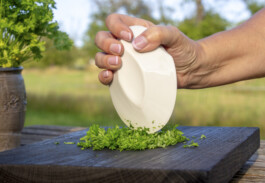
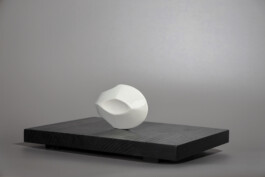
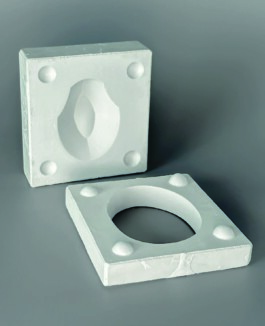
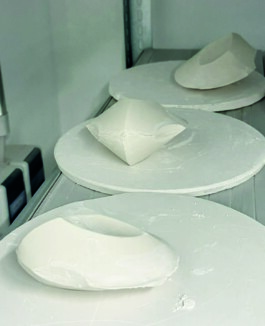
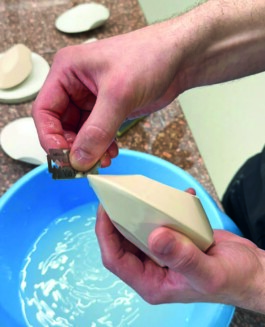
The object explores the hand axe, one of the earliest known cutting tools in human history. Its archaic form is reinterpreted and placed in a new context: the originally robust tool is crafted from porcelain, whose fragility creates a deliberate contrast to its historical predecessor. A tool once associated with strength and survival is transformed into an object for the precise preparation of delicate ingredients such as herbs.
In contrast to conventional knives, which are primarily designed for speed and efficiency, this object demands a careful and attentive way of handling, transforming the act of cutting into a sensory experience. The cutting process is slowed down and focused on the conscious movement of the hand. As a result, tactility, control, and perception come to the forefront. The object questions established notions of functionality and efficiency, proposing that cutting should not be understood solely as a task-oriented activity, but as a mindful, sensory, and deliberately slowed-down gesture.