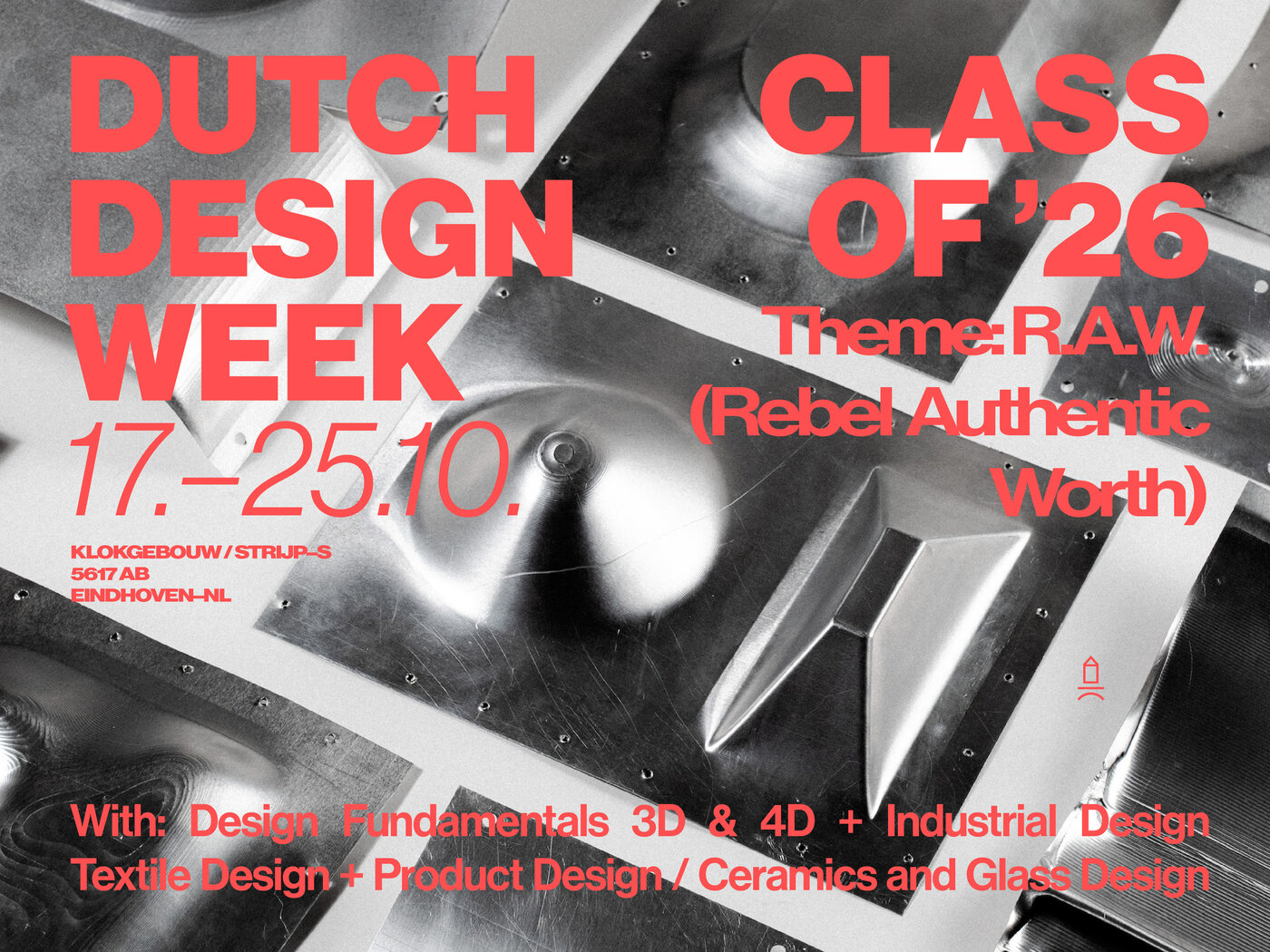
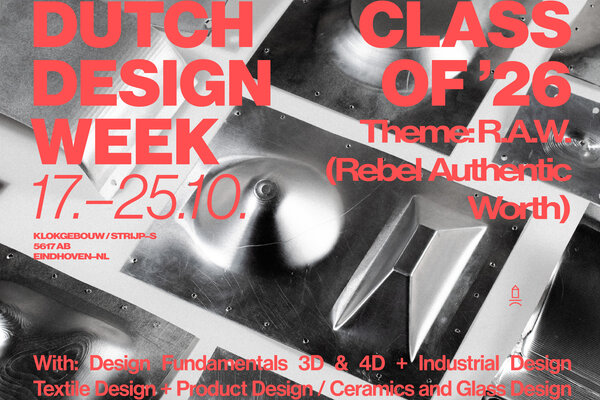
Burg Giebichenstein University of Art and Design Halle brings experimental and research-driven design projects to Dutch Design Week in Eindhoven from 17 to 25 October 2026. BURG will take part in “Class of 26”, a shared platform for Dutch and international design schools. Offering insights into design education, it introduces a broad audience to the perspectives of a new generation of designers.
Under the title BURG – Projects Driven by Curiosity and Experimentation, the exhibition explores experimentation and research as starting points for design. The projects investigate new and established technologies, test materials and forge unexpected connections between processes and media. Their explorations extend beyond physical materials to include digital formats, embracing trial and error as a productive part of the design process.
The exhibition features work from Industrial Design, Textile Design and Product Design/Ceramics and Glass Design, alongside projects from the Design Fundamentals studies in the first and second semesters. Together, they show how curiosity and a research-driven approach shape students’ work from their first experiments through to their Master’s theses. This approach resonates with the DDW 2026 theme R.A.W. (Rebel Authentic Worth), which puts the unpolished, experimental and authentic centre stage and understands design as an open process of exploration, questioning and testing new possibilities.
The Projects:
Design Fundamentals (1st year of study) – 3D Material, Form and Object
Led by Prof. Miriam Amelung & Marianne Sellmaier
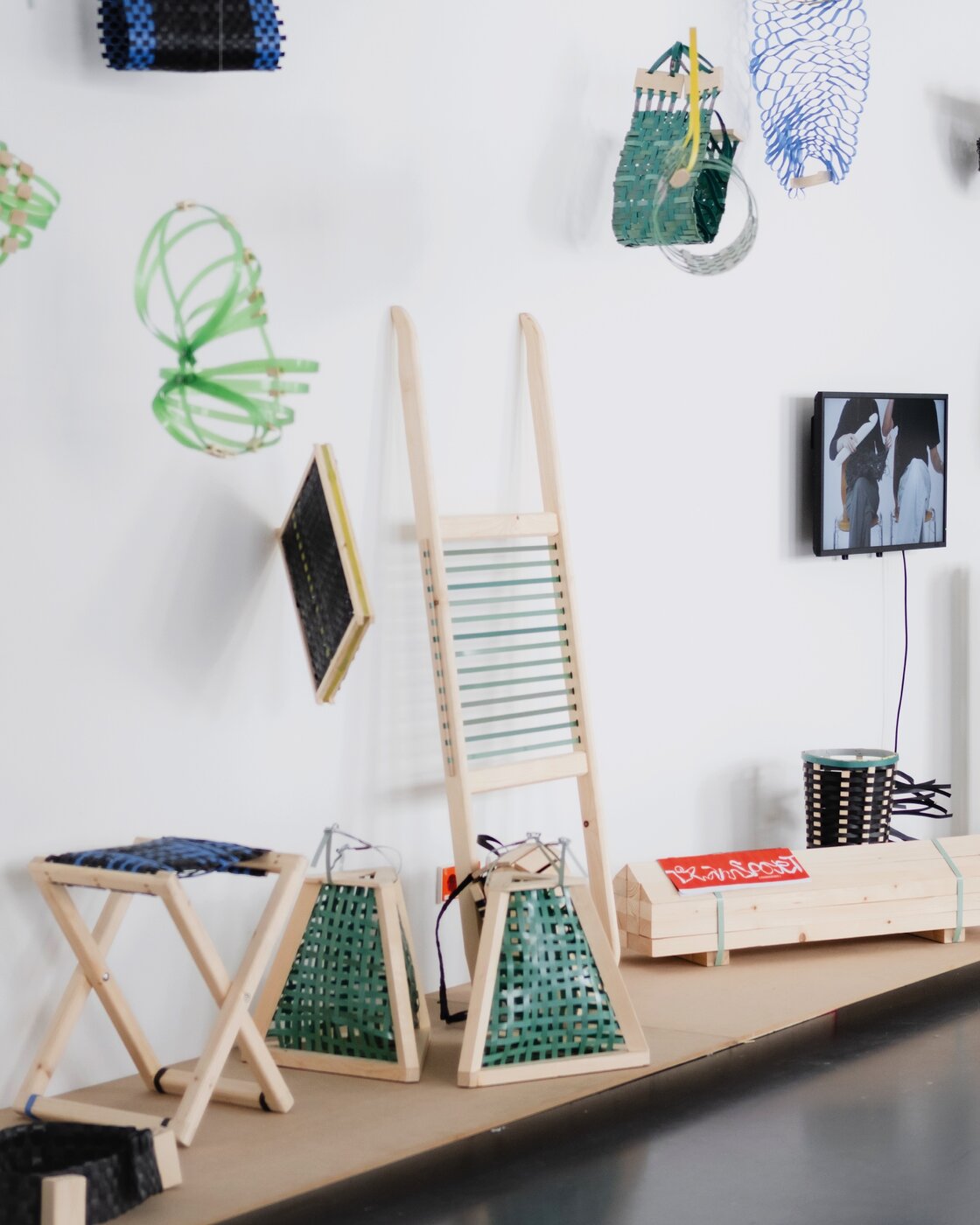
In “Transport with Wood and Strapping”, a project from 3D Design Fundamentals, first-year students explore the interplay of two contrasting materials. Over five days, they develop experimental structures and objects for carrying, bundling and taking things along. Wood and discarded strapping are tested for their properties, processing methods and design potential. The focus is on carrying as an activity closely connected to the body, explored through playful experiments in joining and construction.
Design Fundamentals (1st year of study) – 4D Process, Interaction and Media
Led by Prof. Florian Kühnle & Valeriia Shakhova
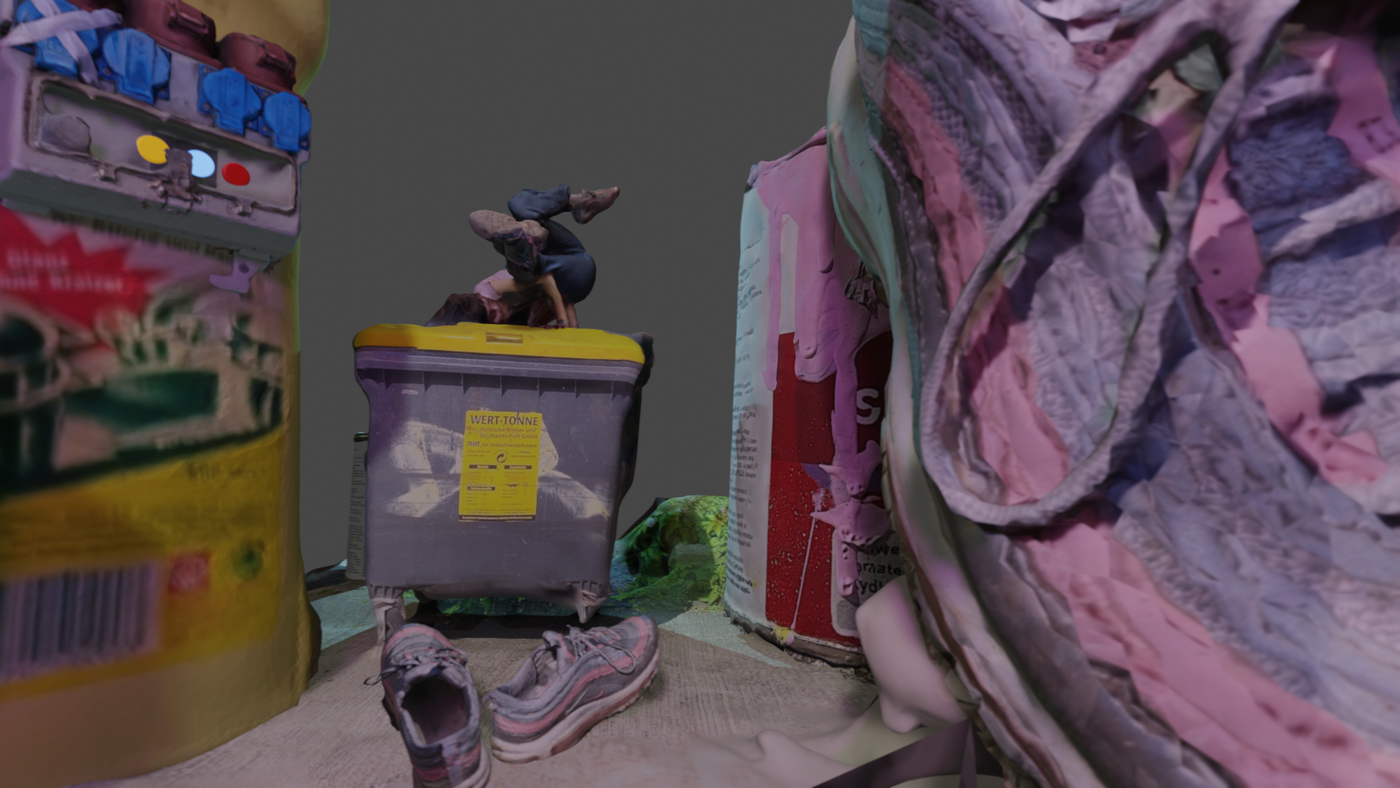
Four projects from 4D Design Fundamentals explore transitions between analogue and digital design through experimentation. In “People, Data, Machines”, body movements control interactive video collages. “Motion and Matter” stages materials using light, camera and movement. “Scalable Worlds” turns 3D scans into virtual worlds. In “Transformations”, everyday objects undergo successive changes to create image series. Together, they reveal how design ideas emerge through open-ended, hands-on exploration.
3D BRAIDING – Robot-assisted thread laying in three-dimensional space
By Emil Löber (Study programme MA Industrial Design)
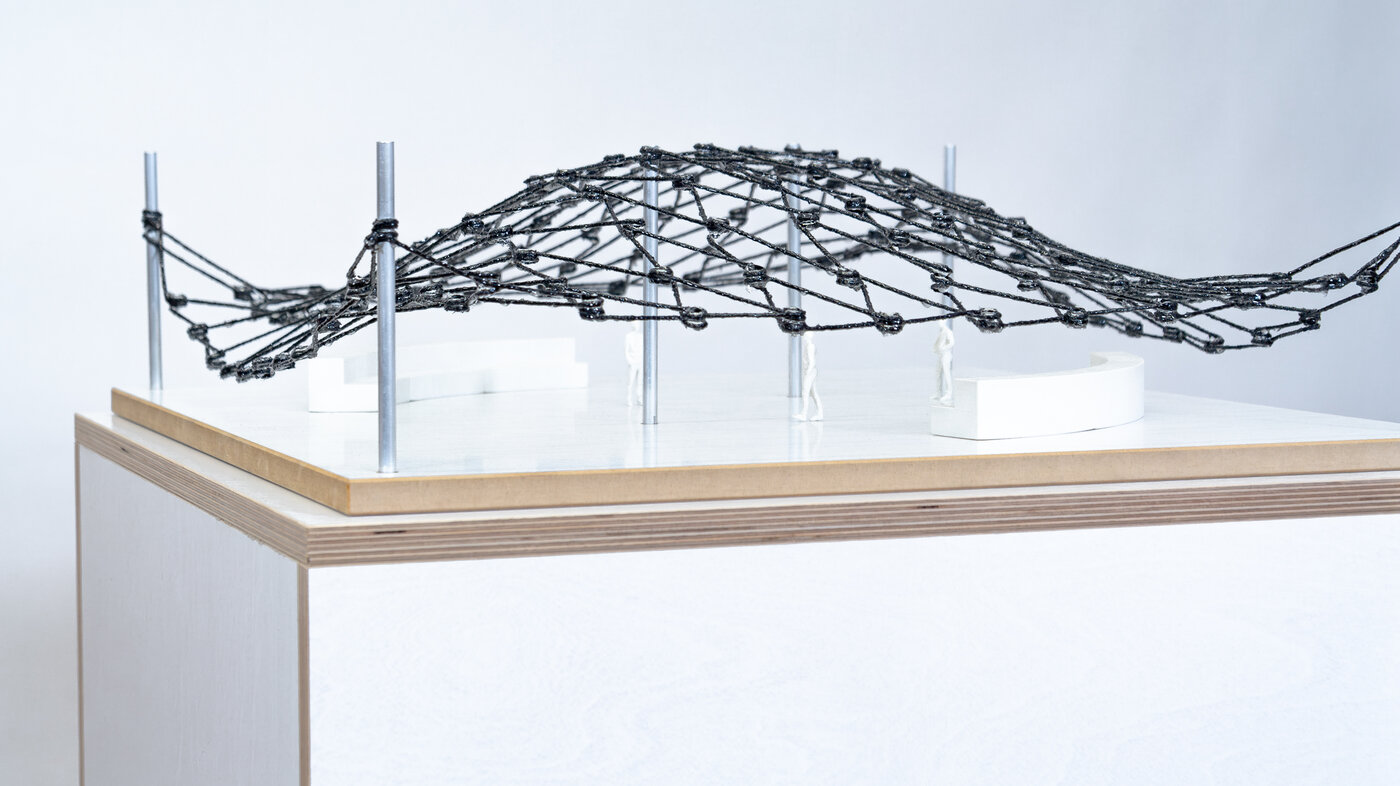
Robot-assisted braiding of a continuous filament enables complex two- and three-dimensional structures. An adjustable work platform with vertical supports allows the fabrication of parametric roof, tent, membrane, and cable structures as physical prototypes. The filament path and support positions control geometry, tension, and structural behavior. The project explores material-efficient fabrication linking parametric design, robotic manufacturing, and physical construction.
Changing footprints
By Jakob Trepel (Graduation MA Industrial Design)
Every second, 1,533 pairs of shoes are produced using materials that cannot be recycled. Changing footprints uses robotics to manufacture a shoe using only two materials a single production step. Through the robot’s precise dipping motion, hemp and PHA fibers are applied layer by layer. The individual layers allow the required material properties to be precisely adjusted. This process thus enables new material cycles and services.
Incremental Chair
By Paul Dieckmann, Pia Schlegl & Julian Linden (Study programme BA Industrial Design)
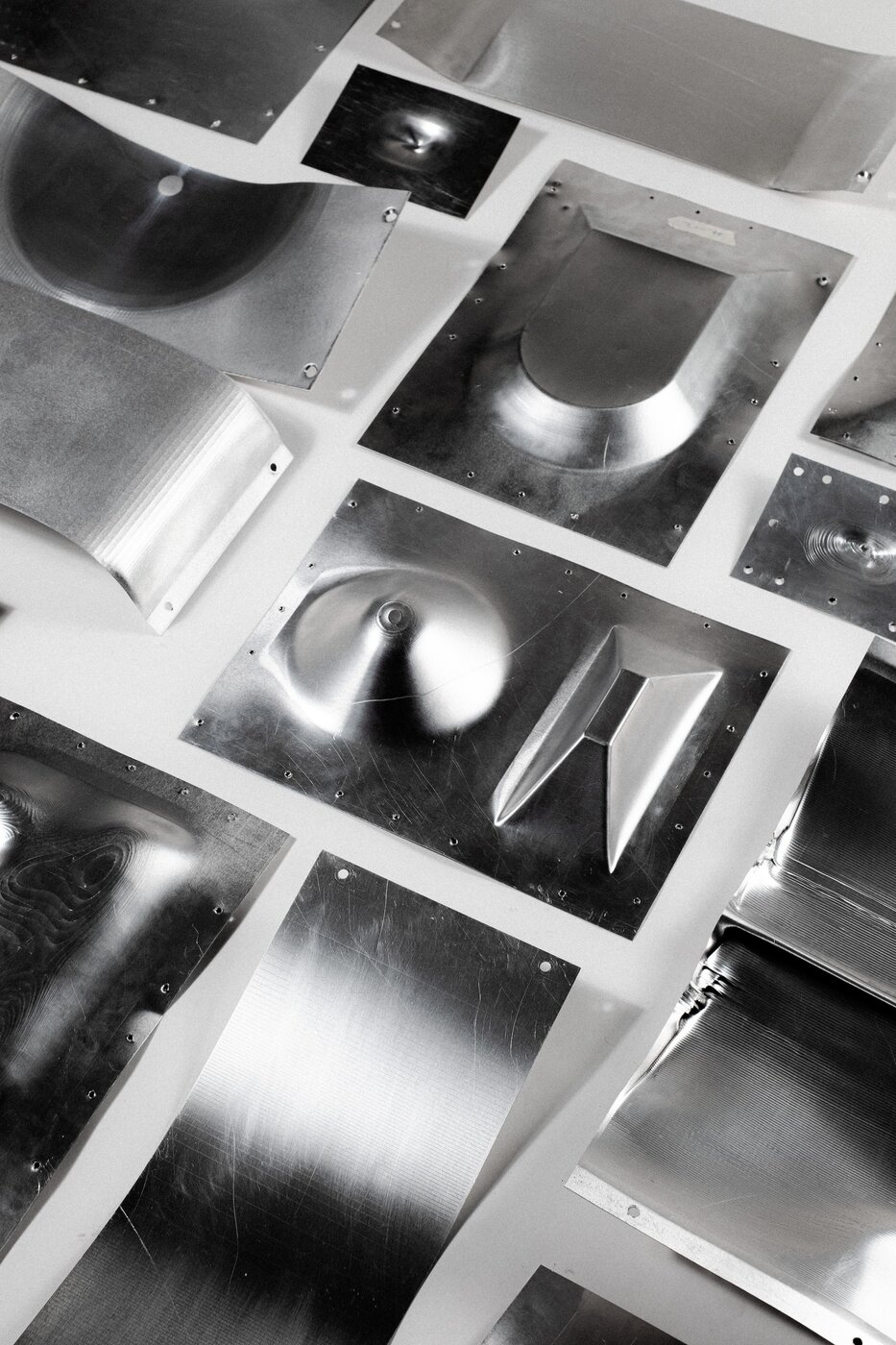
Incremental sheet forming expands the scope of CNC-assisted sheet metal forming, particularly for small-batch production without form-specific tools. The Incremental chair explores fully digital production. The seat and backrest are formed from aluminium sheet, whilst the frame is CNCmilled from plywood. The integration with parametric design enables a wide range of iterations in the design process.
ARBO – A stool made from what's otherwise left over
By Julius Zieger & Leon Ehrmann (Study programme BA Industrial Design)
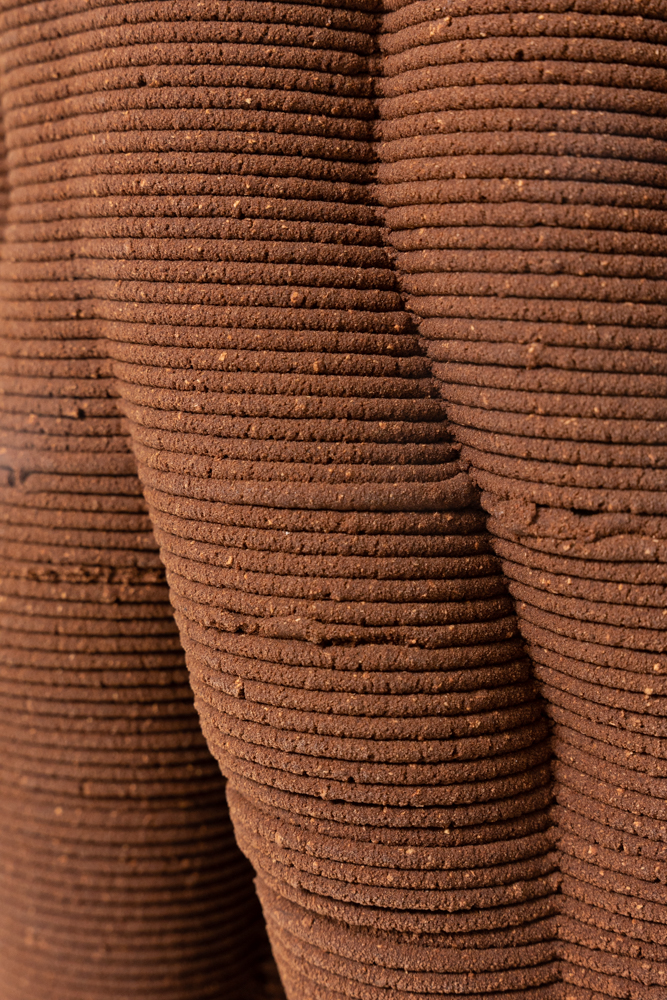
ARBO is a fully 3D-printed stool whose form is based on tree support structures. In 3D printing, these are normally used only temporarily and then discarded, but here they take on a load-bearing and form-giving function. Printed from a biodegradable blend of cork powder and gelatin, the branching structure evokes branches and roots. ARBO turns disposable structures into a functional object, connecting digital fabrication with sustainable material use.
SimbioTEK
By Giorgi Tsutskiridze (Study programme MA Industrial Design)
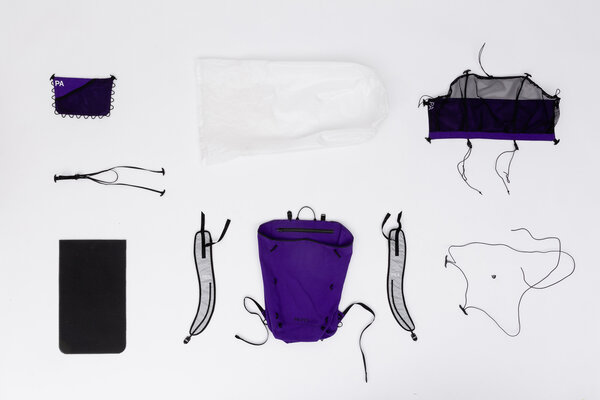
SimbioTEK is exploring how industrial methods and machine-assisted cultivation platforms can expand the potential applications of bacterial cellulose as a sustainable, multifunctional material. By integrating plant-based reinforcements and optimising growth conditions, bacterial cellulose gains structural versatility and can thus be used for a wider range of applications – for example, in technical outdoor clothing. A key innovation is the PFAS-free plasma coating, which imparts waterrepellent properties to the material without the use of environmentally harmful chemicals. Bacterial cellulose is thus positioning itself as a renewable alternative for the future of functional textiles.
CIRCOLAR
By Josephine Hartmann & Clara Kirsch (Study programme BA Industrial Design)
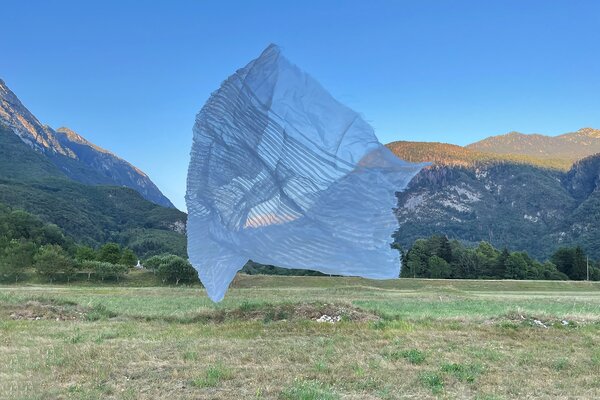
CIRCOLAR is a recyclable indoor solar system that combines energy generation and recycling in one product. All materials are separable by type and designed to return to the resource cycle. A film welding process eliminates the need for adhesives, individual strips are held in place by vacuum between TPU films and can be removed without residue. Damaged components can be returned, reconditioned, and reprocessed. For flexible window use, the system can be rolled up by inflating diamond-shaped air chambers. A telescopic pole allows installation in the window frame without drilling. Lightweight, compact, and easy to transport.
LOCAL SOILS – from ground to table
By Fritz Breuer (Graduation BA Product Design/Ceramics and Glass Design)
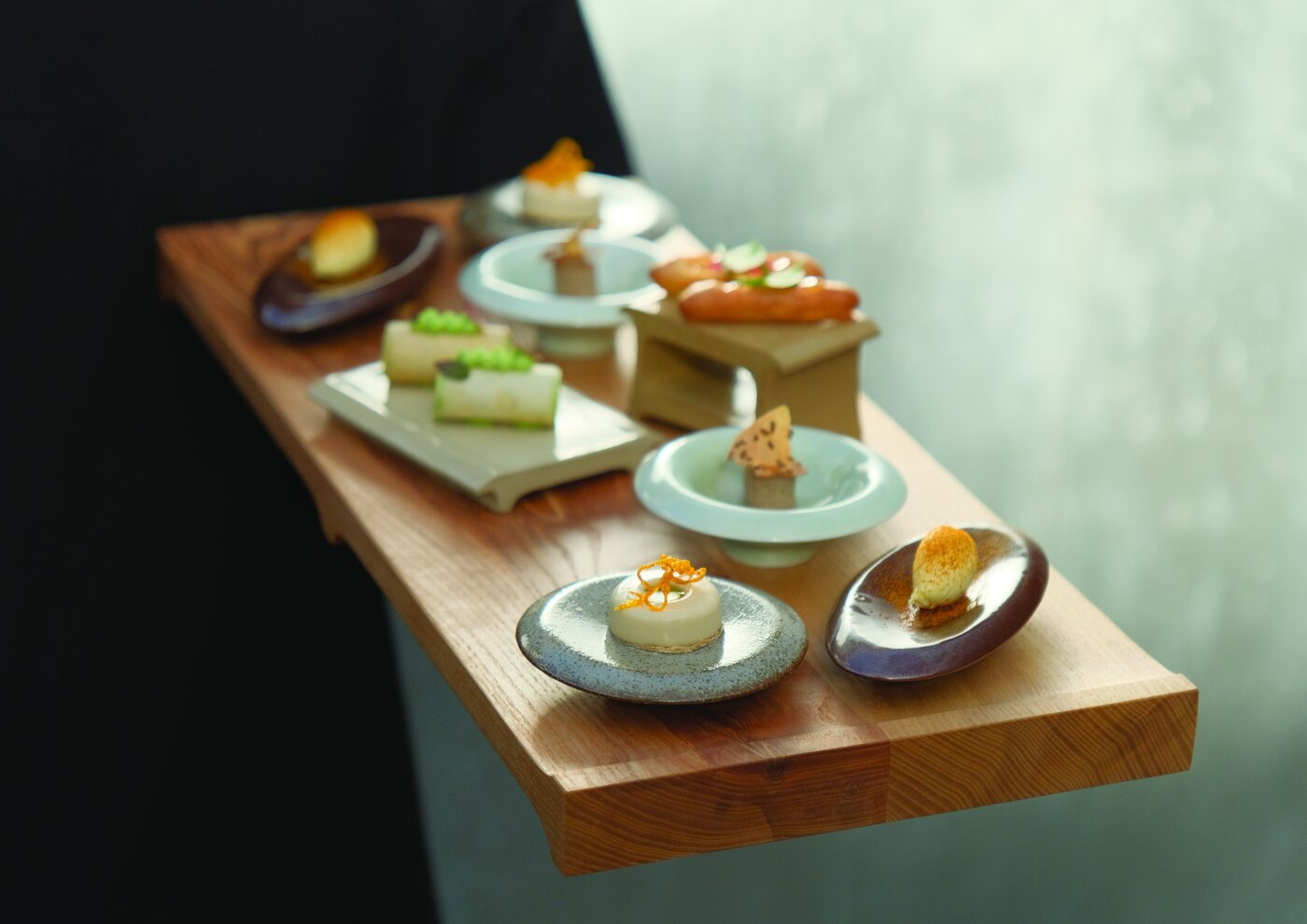
Local Soils explores the potential of locally sourced ceramic materials. Developed for the restaurant “Speiseberg” in Halle (Saale), Germany, a nine-piece amuse-bouche set made with materials from Halle was designed. These local materials are understood as vehicles of regional history. Their unique colours and unpredictable properties shape the character of the objects. Local Soils unites regional materiality with the culinary experience and widens the idea of locality to include the origin of the tableware.
Re:slump - from Surface to Volume
By Franziska Ruh (Study programme BA Product Design / Ceramics and Glass Design)
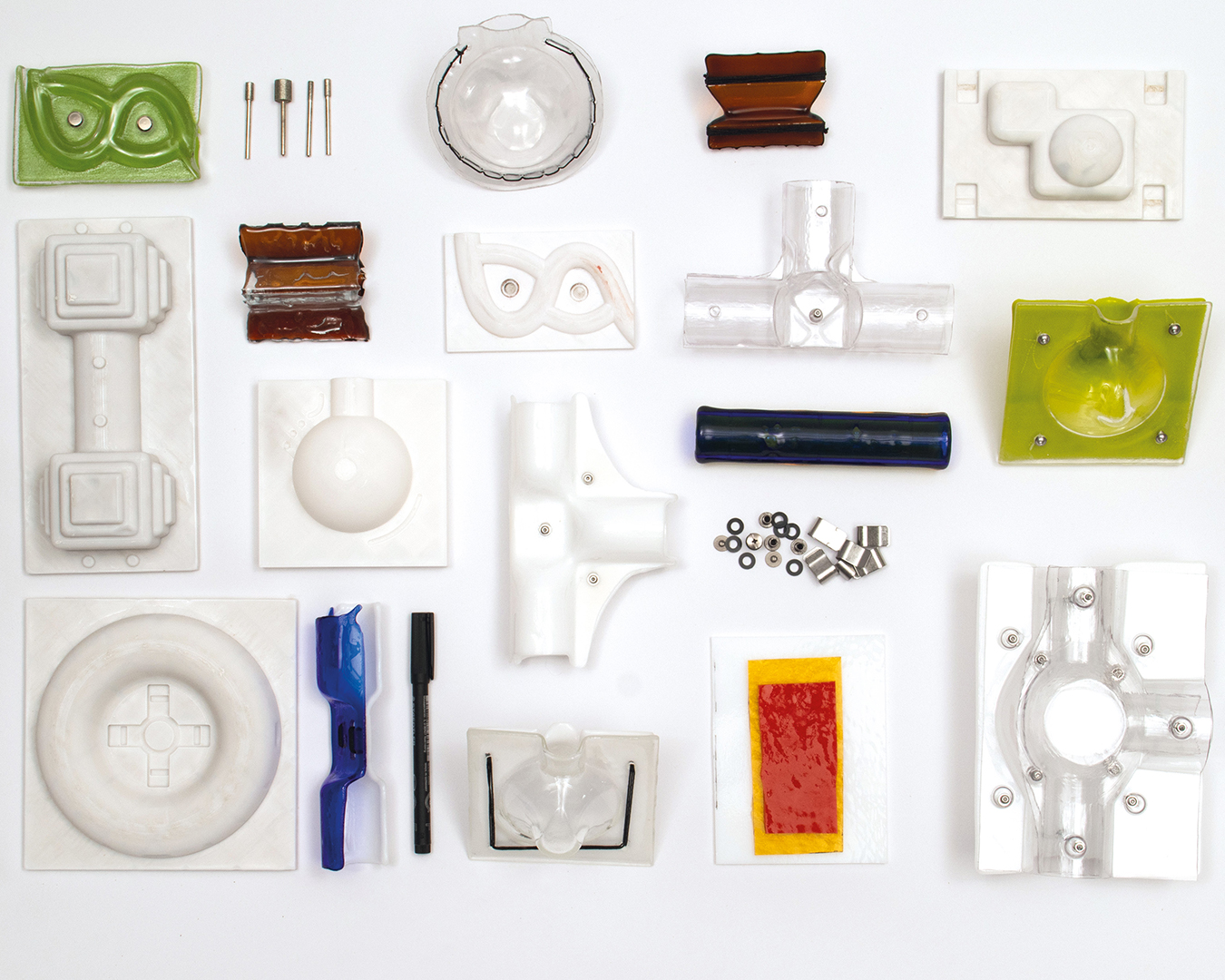
Re:slump explores how flat glass can be transformed into spatial, modular volumes using the slumping technique. The goal is to develop a new design language beyond decorative glasswork. The focus lies on innovative connection methods such as screws, clamps, and textile elements. Digital tools like 3D-printed molds meet hands-on glasswork, pushing the material‘s limits through hot and cold working. Re:slump positions itself as material-based research, opening new perspectives for glass as a structural, design-driven material.
Dyeing with bacteria – A relationship between textiles and microorganisms
By Nena Ellermann (Graduation MA Conceptual Textile Design)
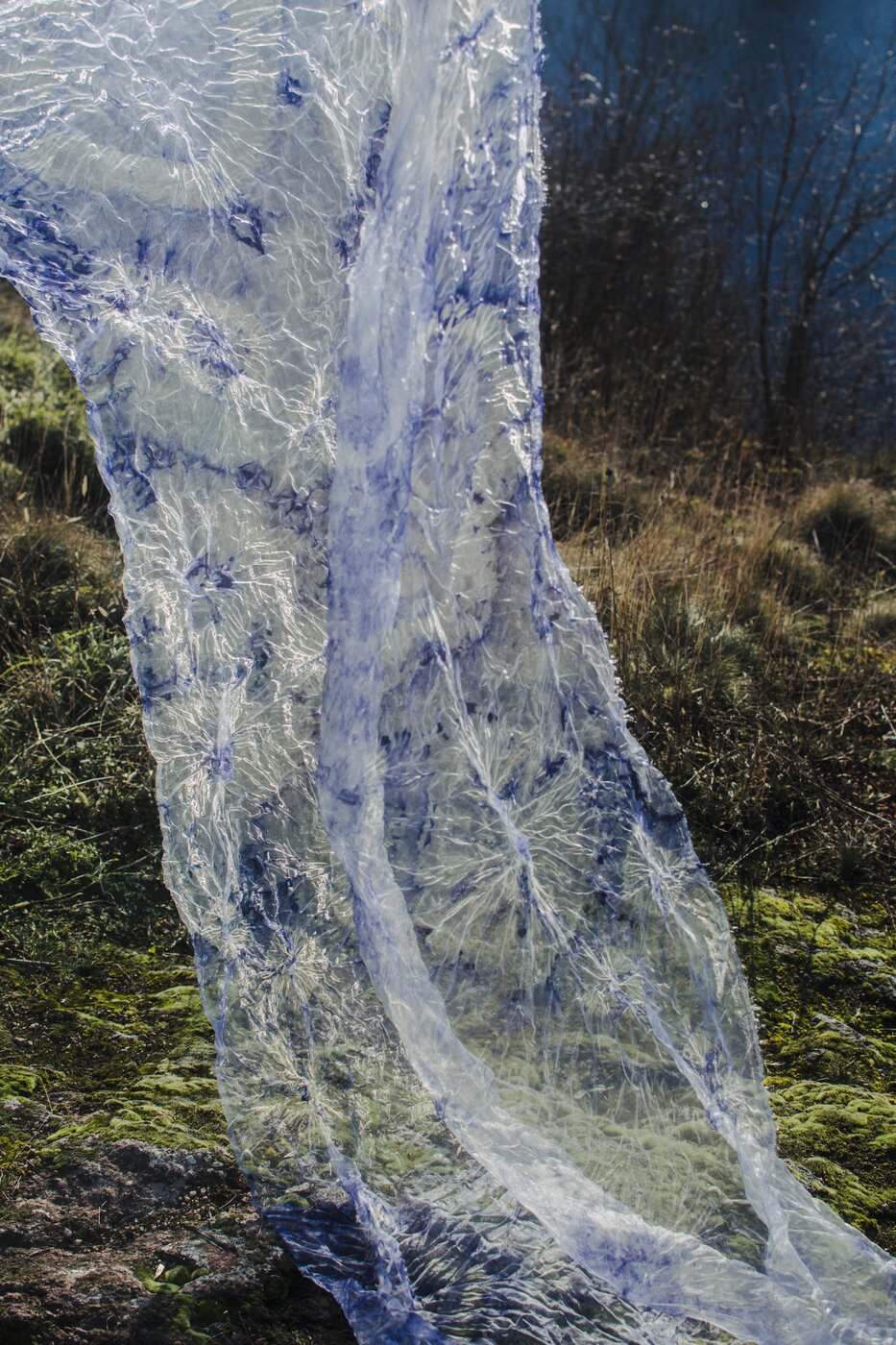
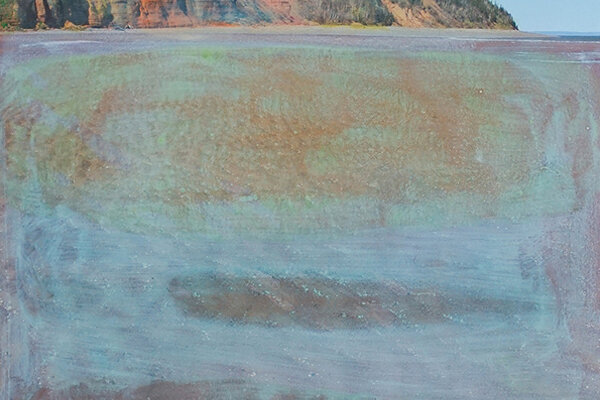
This project explores pigment-producing bacteria as a sustainable alternative to conventional textile dyeing. Through a co-design process with microorganisms, organic colorways emerge in collaboration with living organisms rather than through rigid control. Positioned at the intersection of design, biology, and material research, this work shifts design from control to cooperation and opens new perspectives on future textile production.
Re:dust x Dust Formations – Collaborative experiments between paper and textiles
By Joela Rohlfing & Malin Trepel (Study programme BA Textile Design)
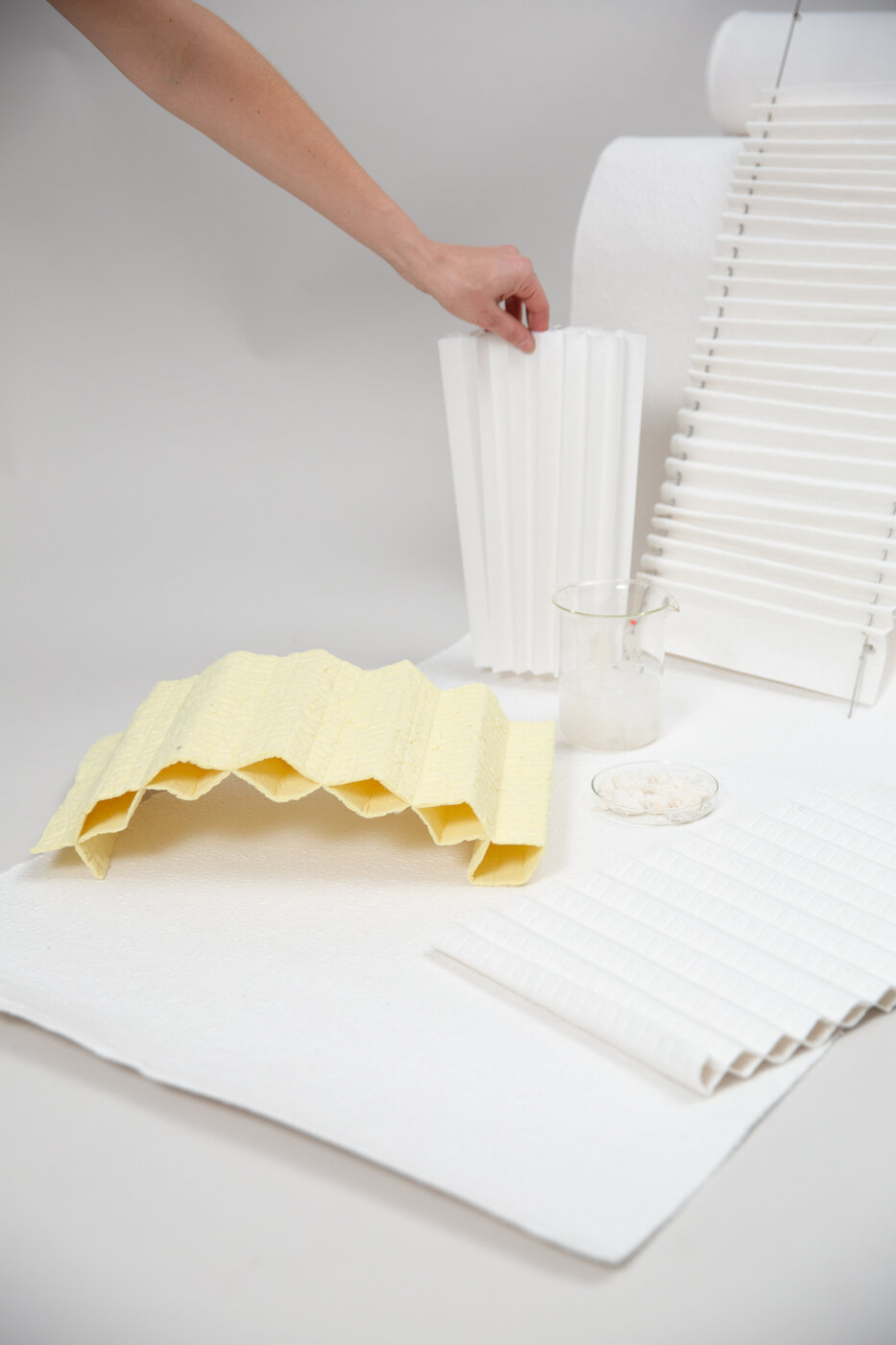
Fibre dust is a by-product of the textile industry that has primarily been disposed of until now. That’s why both researchers and the industry are urgently seeking new applications for it. At the intersection of paper and textile, we investigated the functional and aesthetic potential of short fibres. As part of this research, we experimented with fibre pulping, papermaking and a dustalginate composite. We then formed these into textile using a wet-laid nonwoven system at „Sächsisches Textilforschungsinstitut“. The project shows application scenarios as interior design and bags.
Wiederwulst
By Mathilda Scheer (Study programme BA Textile Design)
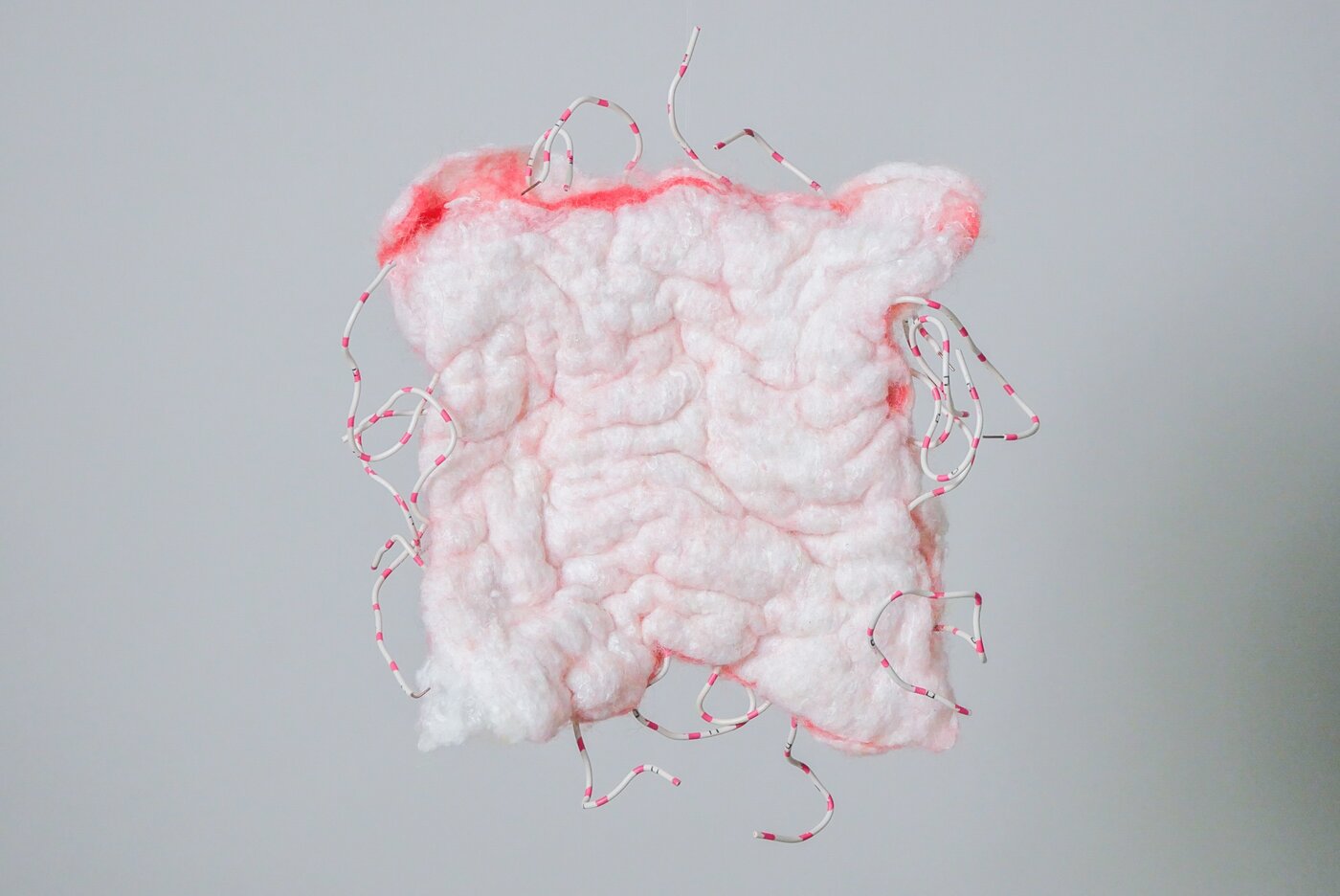
We often encounter recycled fibers in the form of technical non-woven fabrics. In this application, functionality and material efficiency take center stage, while the materiality itself usually remains hidden. Through wet felting, organic structures emerge from recycled fiber blends and waste materials that defy standardization into flat surfaces. Folds, compacted areas, and hairy surfaces make the material’s texture visible and tangible. Building on these artisanal experiments, this work explores how industrial needle punch Technology can be specifically manipulated.
Burg Giebichenstein University of Art and Design Halle
Burg Giebichenstein University of Art and Design Halle has a distinctive profile in the German university landscape. Featuring two departments, Art and Design, BURG has offered excellent conditions for education and study since 1915. With over 1,100 students, it is one of the largest universities of art and design in Germany. Visionary ideas and design are the focus of its 20-plus disciplines of study, alongside the development of practical professional skills. The university’s studio and workshop facilities are thoroughly equipped for learning and BURG is part of an active network of research institutes, institutions, and companies. Burg Giebichenstein University of Art and Design Halle confers bachelor’s, master’s, and teaching degrees, as well as the traditional Diplom. Students can also complete a “Meisterschüler” (Master Class) course at BURG. BURG also has the right to award doctorates in both faculties.
The Dutch Design Week
Founded in 1998, Dutch Design Week (DDW) takes place annually in Eindhoven, the Netherlands, and is now one of the largest design events in Europe. More than 2,600 designers present their work at over 110 locations in the city, attracting around 300,000 visitors. The fair focuses on future-oriented, social and technological innovations and offers a platform for creative solutions with lectures, exhibitions and discussions.
BURG at Dutch Design Week in Eindhoven
Period: 17 to 25 October 2026, every day from 11 am to 6 pm
Location: Klokgebouw 50, 5617 AB Eindhoven, Netherlands
Exhibition Support: Philipp Witte
Further Information: https://ddw.nl/
Social Media: BURG communicates the trade fair appearance on social media with the hashtags #BurgHalle, #Curiosity and #Experimentation