
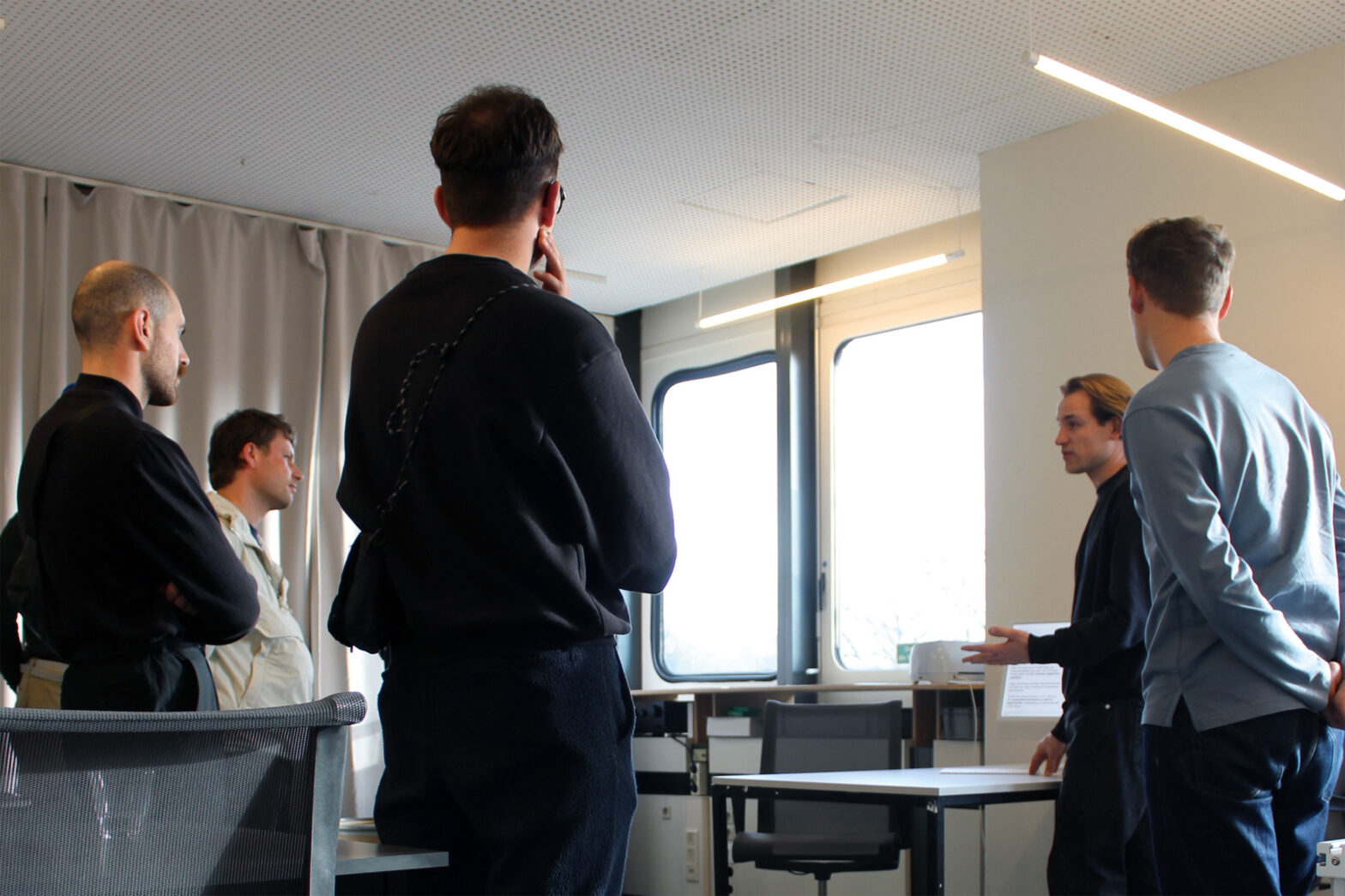
Exkursion to WINT Design Lab 26.03.2025, Berlin (DE) The WINT Design Lab is made up of industrial designers Felix Rasehorn and Robin Hoske and has established itself as an innovative research and design laboratory that develops sustainable products. Based in Berlin, the two designers combine technological innovation with new bio-based materials and circular products. By …
Autor-Archive: Mareike Gast
Exkursion to Laurence Douny from Matters of Activity (II)
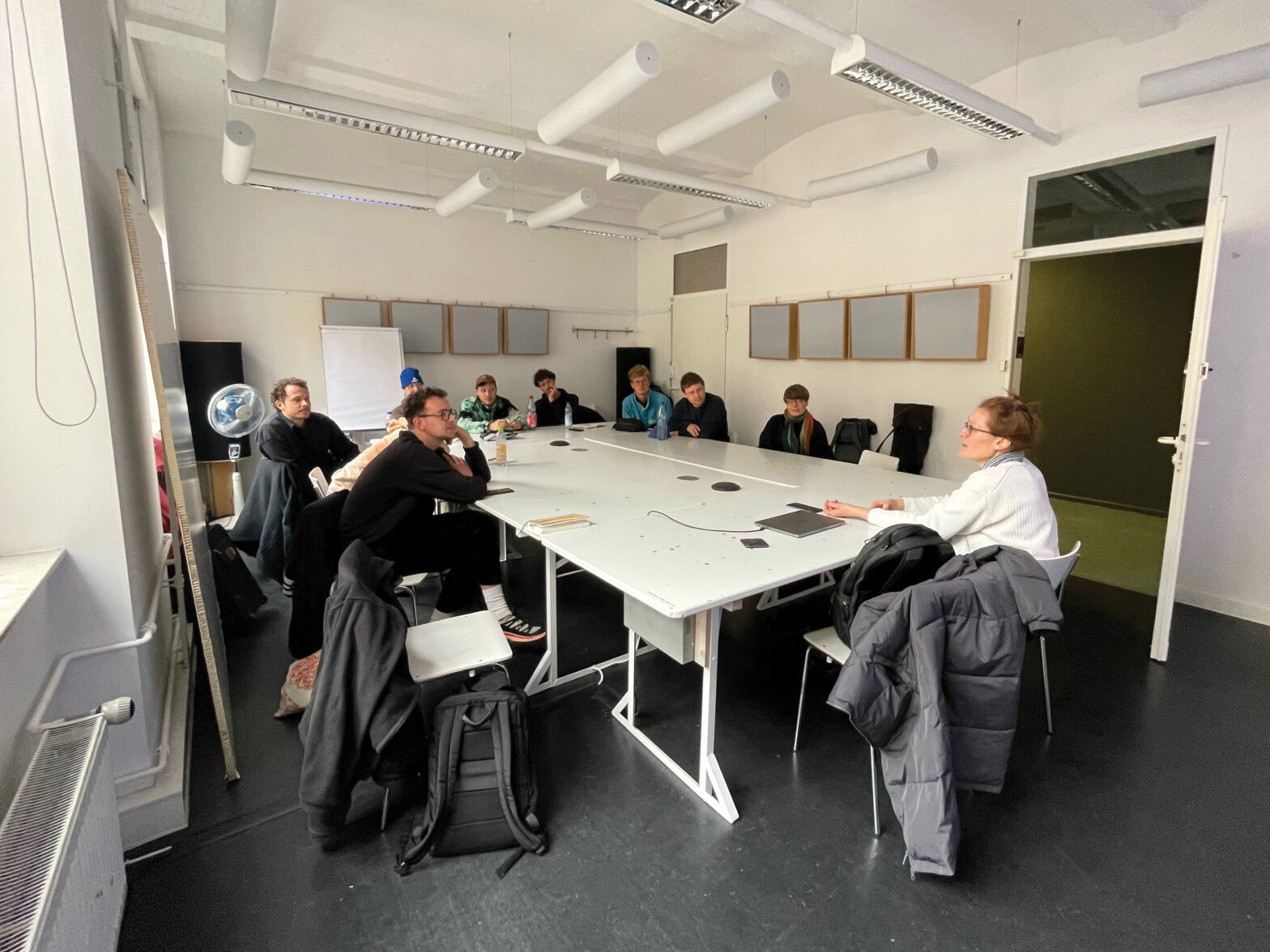
Exkursion to Laurence Douny from Matters of Activity (II) 27.03.2025, Berlin (DE) The next session of our excursion brought an important shift in perspective, from biological material practices to anthropological insights on materials, making, and meaning. Mareike Gast once again opened the session, this time introducing the work of Laurence Douny, an anthropologist and archaeologist …
„Exkursion to Laurence Douny from Matters of Activity (II)“ weiterlesen
Exkursion to Deutsches Technikmuseum
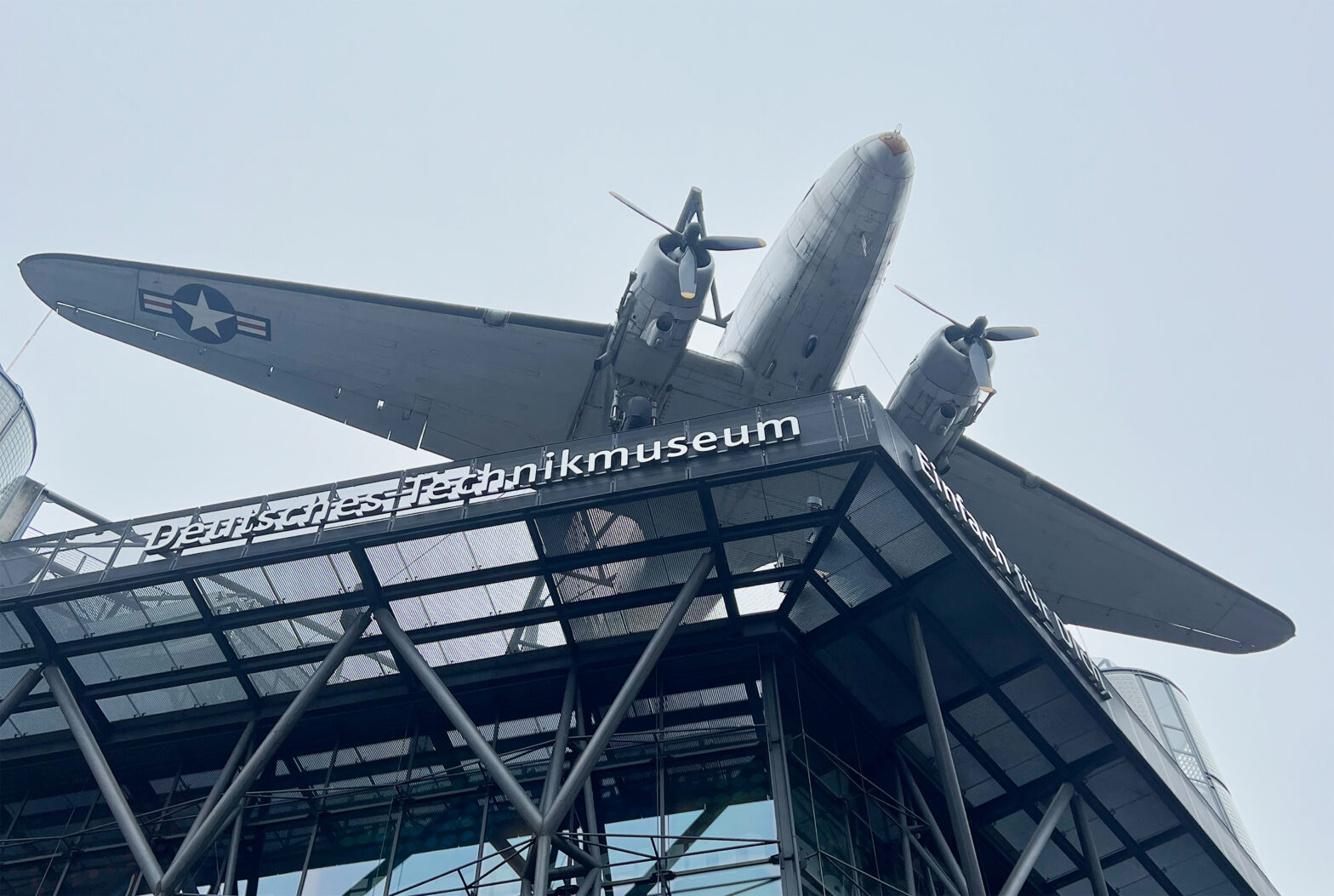
Exkursion to Deutsches Technikmuseum 27.03.2025, Berlin (DE) At the end of the multi-day excursion, we visited the German Museum of Technology in Berlin. After an intense and content-rich program over the previous days, this museum visit served as a calm and reflective end to our time together. The goal was to give us the opportunity …
Reading Report „Experimentieren“ (1. homework assignment)
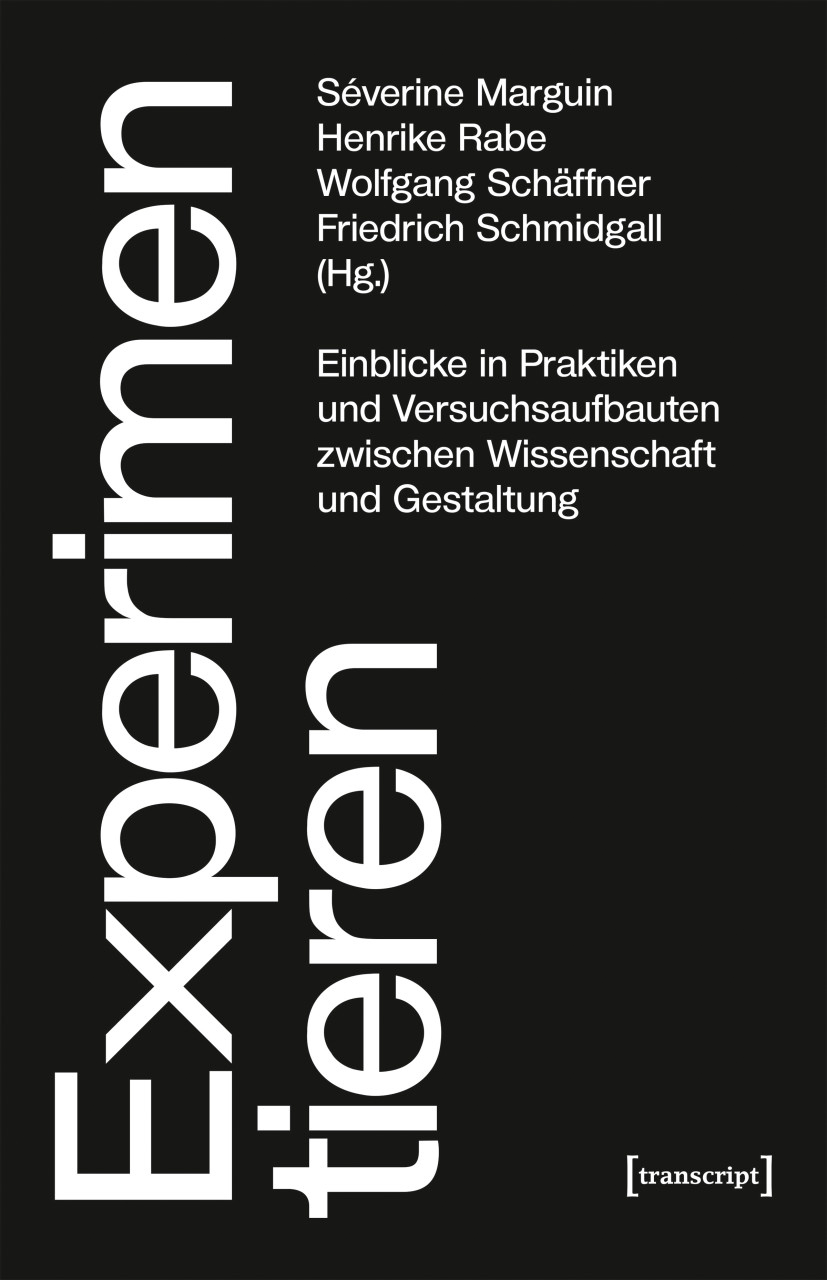
Reading Report „Experimentieren“ (1. homework assignment) 31.03.2025, Halle (DE) During the semester break, we were assigned to read the book “Experimentieren” („Experimenting“) and present a chapter. In this collection, researchers from 23 disciplines share insights into their experimental methods and approaches. Despite the diversity of fields, the texts opened up new perspectives relevant to our …
„Reading Report „Experimentieren“ (1. homework assignment)“ weiterlesen
Cultivation in Motion (2. homework assignment)
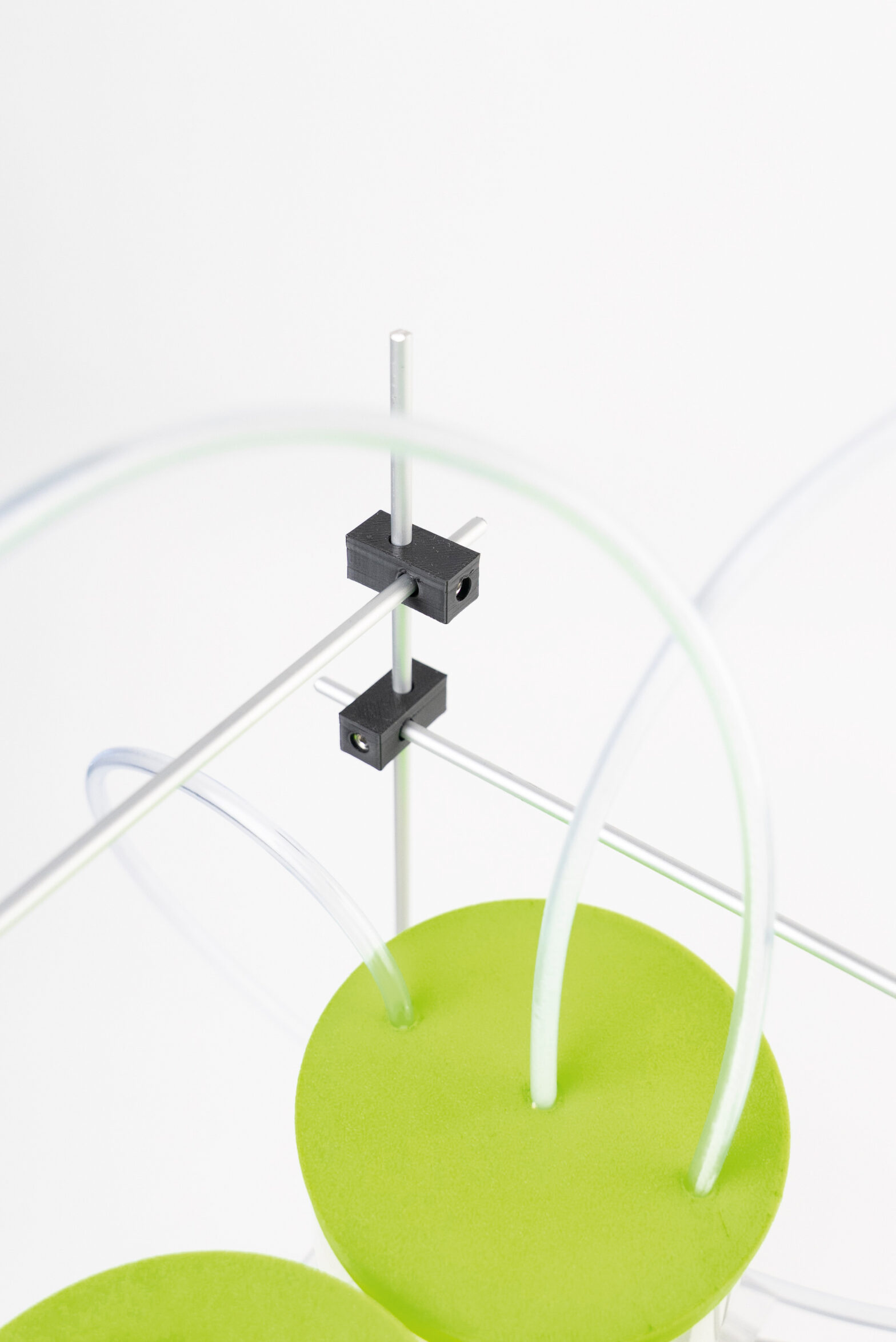
Cultivation in Motion (2. homework assignment) 31.03.2025, Halle (DE) As preparation for the upcoming semester, each student received a Kombucha culture. Kombucha is a fermented drink made from sweetened, caffeinated tea and a so-called SCOBY (Symbiotic Culture of Bacteria and Yeast). Within a few days, this living culture forms a layer of pure bacterial cellulose …
„Cultivation in Motion (2. homework assignment)“ weiterlesen
Pecha Kucha (3. homework assignment)
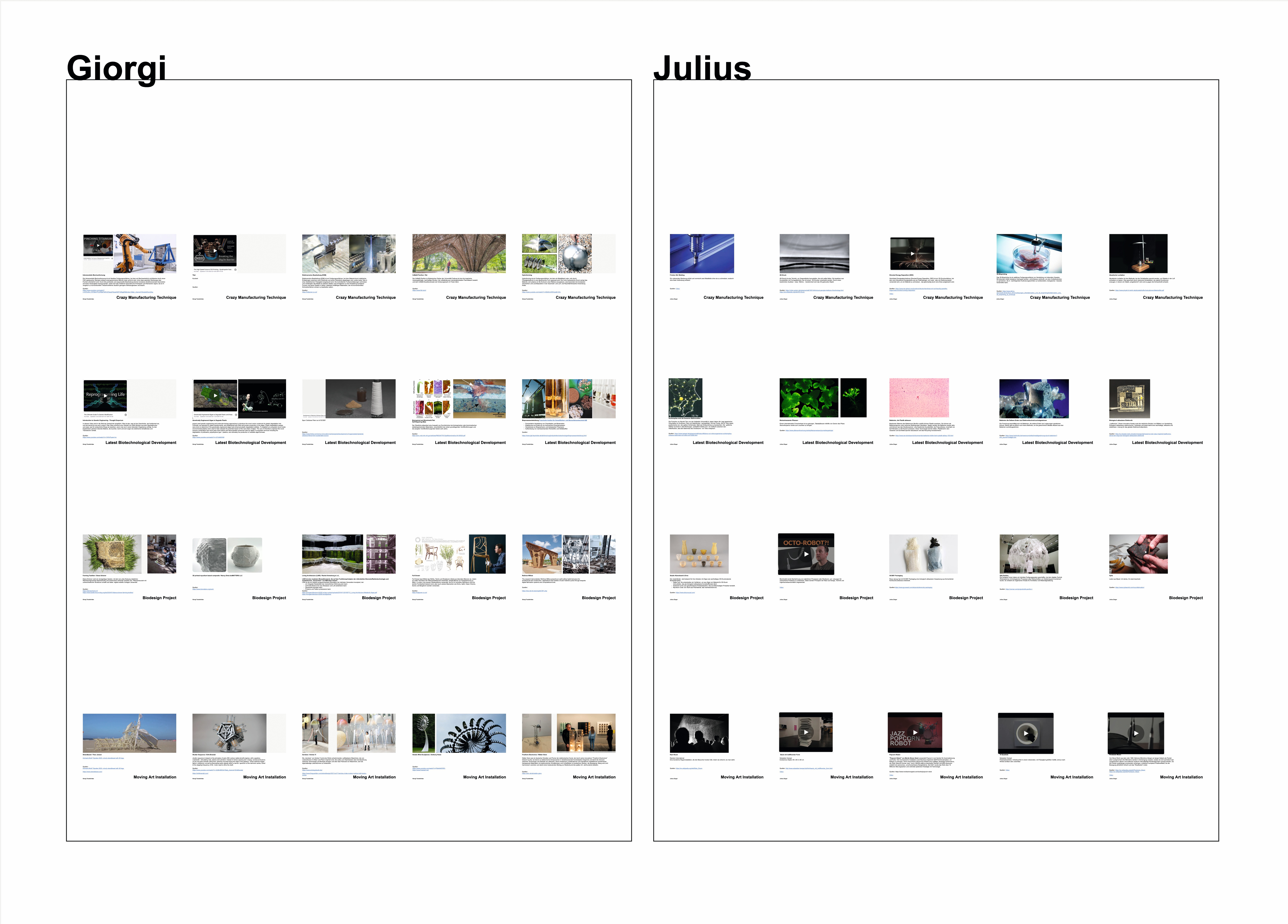
Pecha Kucha (3. homework assignment) 31.03.2025, Halle (DE) The last of the three assignments was to conduct detailed research on the project topic and present the findings in the form of a Pecha Kucha presentation on March, 31st. The presentations were intended to serve as a means of classification, relativisation, criticism or applause. Pecha Kucha …
Lecture: Structural Colour with Miriam Johnston
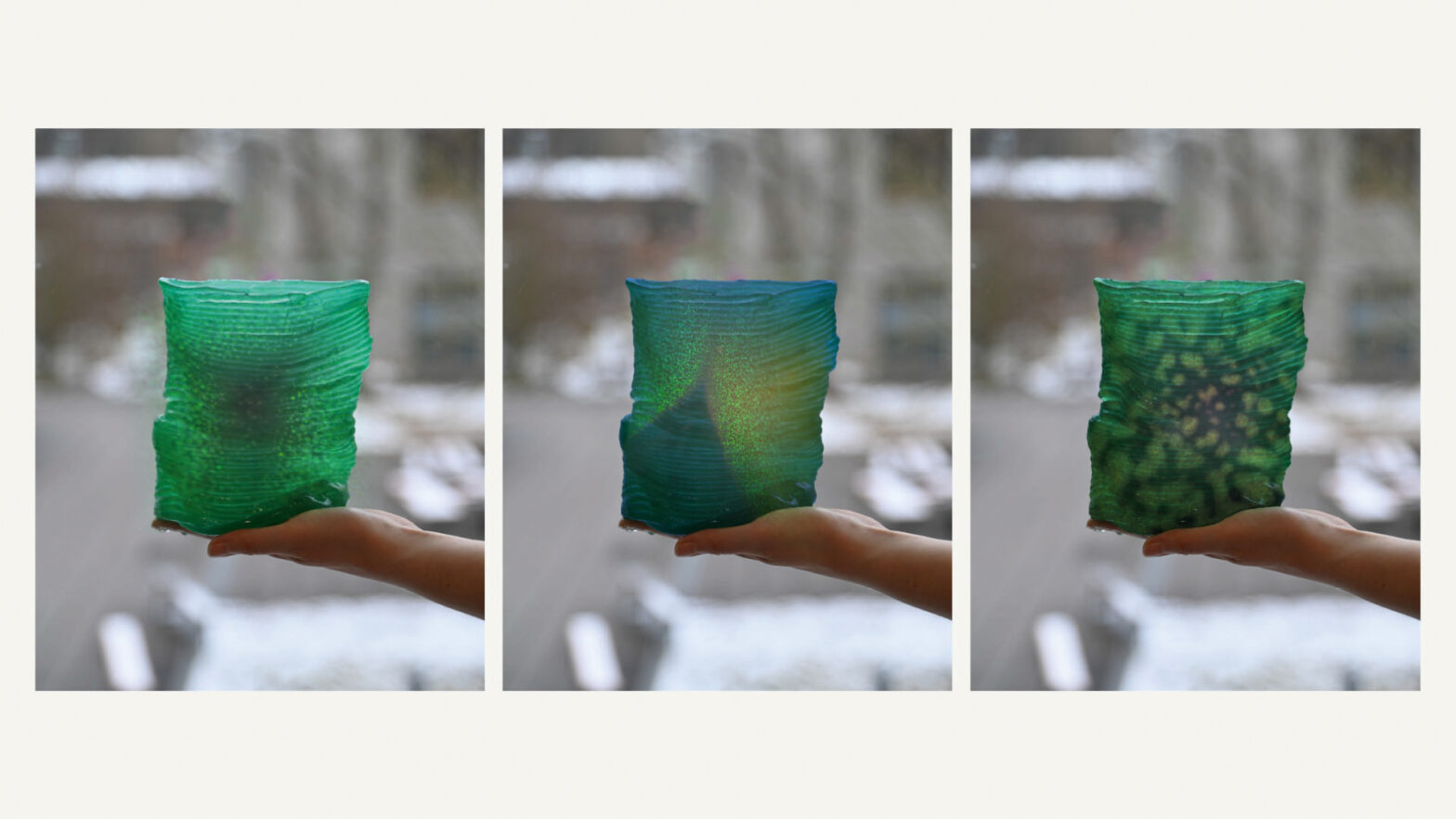
Structural Colour with Miriam Johnston (2. Lecture Series) 01.04.2025, Halle (DE) As part of her master’s program in Textile Design at Burg Giebichenstein University of Art and Design, Miriam Johnston is exploring the potential of structural color through biological systems. Under the guidance of scientific associate Johann Bauerfeind at the university’s BioLab – a space …
„Lecture: Structural Colour with Miriam Johnston“ weiterlesen
Workshop: Code of conduct with Vicky Tiegelkamp
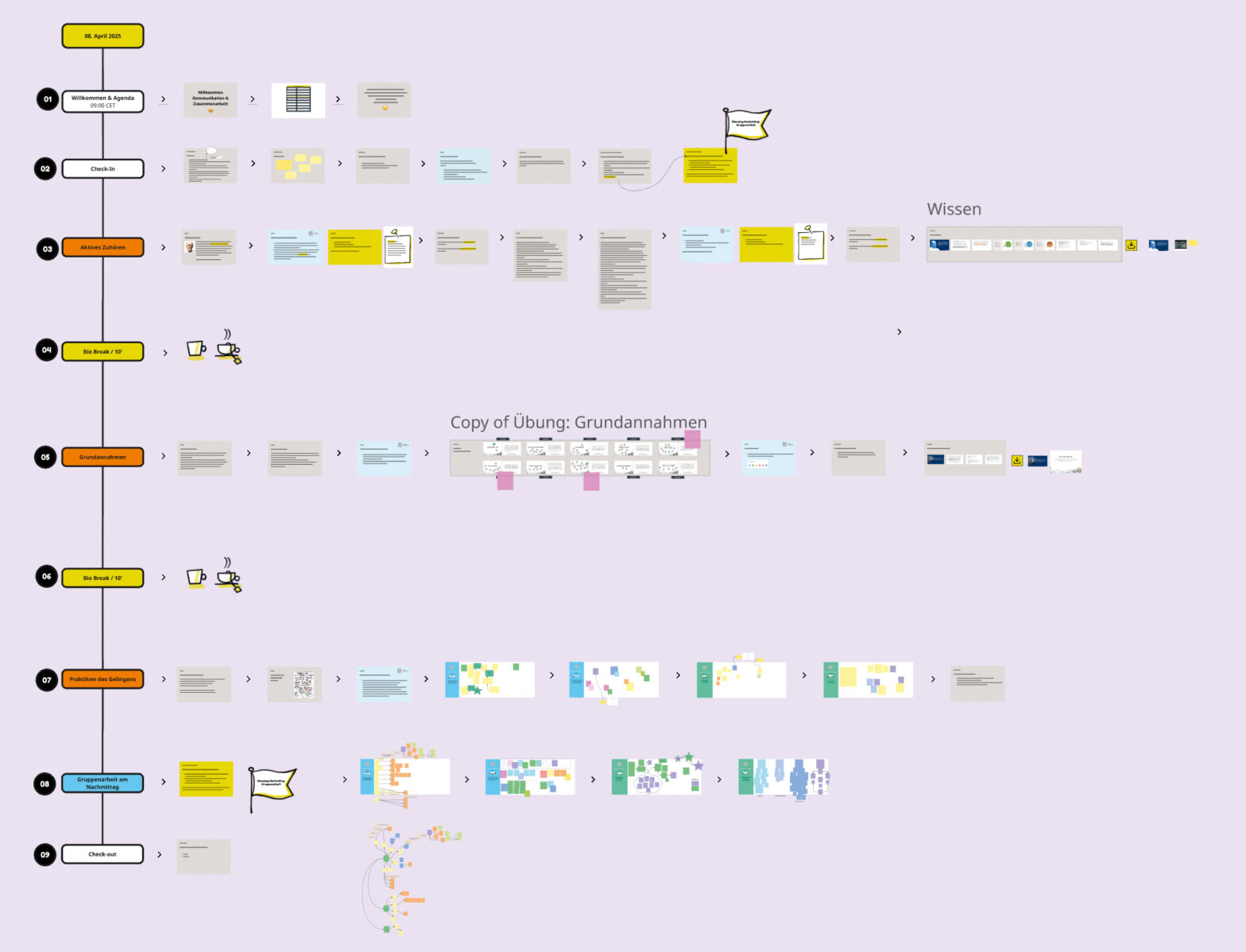
Workshop about code of conduct with Vicky Tiegelkamp 08.- 09.04.2025, Halle (DE) In the workshop with Vicky Tiegelkamp, the students learned and practised how to work together successfully. Through various exercises such as active listening, basic assumptions and practices for success, the students learned which aspects are important for good cooperation. In addition to short …
„Workshop: Code of conduct with Vicky Tiegelkamp“ weiterlesen
Workshop: Mini-Bio-Machines with Andi Wagner
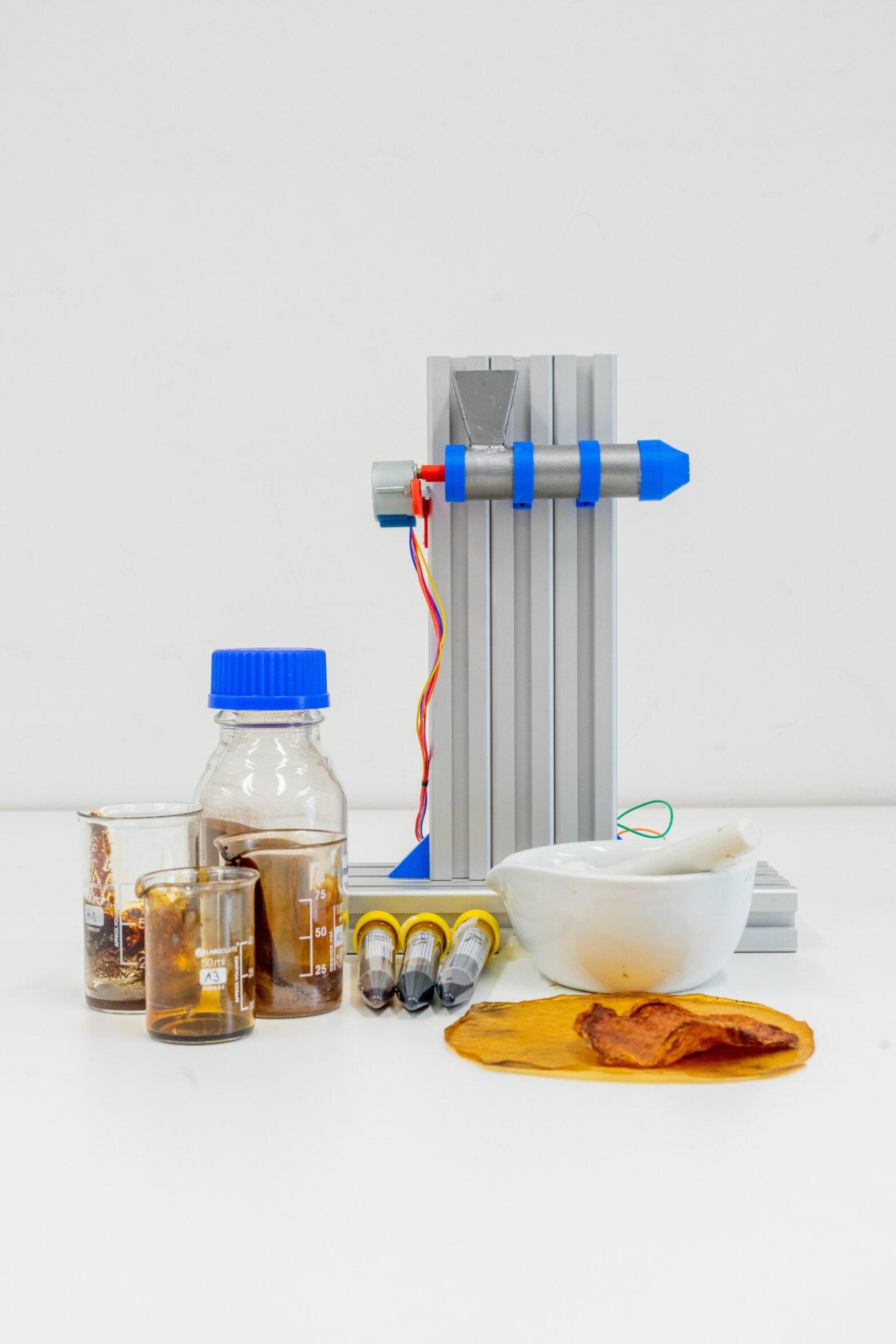
Workshop about Mini-Bio-Machines with Andi Wagner 14.-17.04.2025, Halle (DE) In the third week, Andi Wagner held a workshop with the aim of producing small machines and devices that incorporate or utilise biological processes. In addition to presenting basic mechanical principles from, for example, the website 507movements.com, a previously developed embossing machine and a dip moulding …
Symposium Collaborative Crossroads
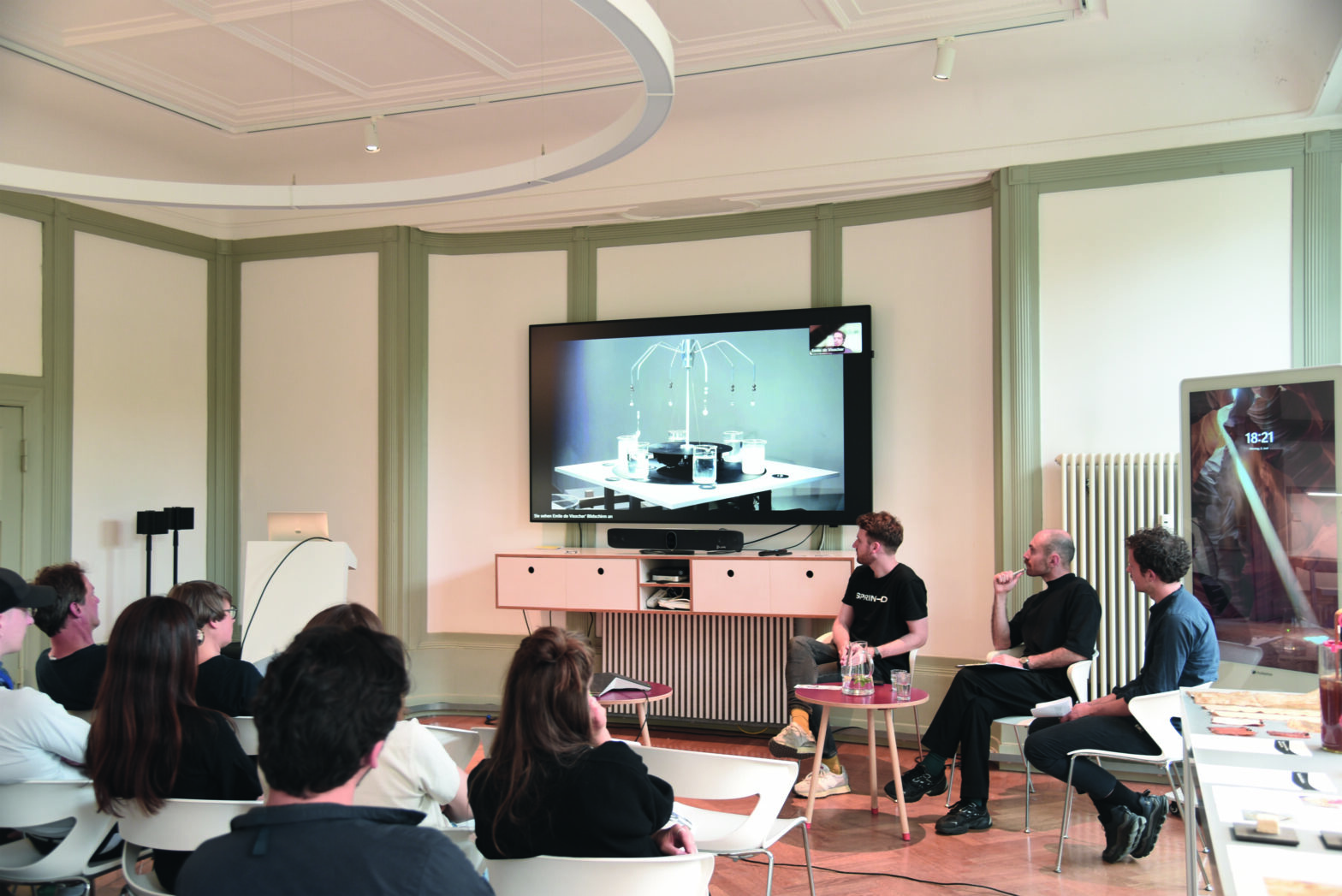
Symposium Collaborative Crossroads 02.06.2025, Halle (DE) Following the second interim presentation, the symposium Collaborative Crossroads took place. The event focused on the intersection of design and biotechnology, particularly in relation to emerging possibilities for material production. Central to the discussion was the question of what role designers can play in advancing biotechnological processes and translating …