EAT. [RE]ACT.
Esswerkzeuge für performative Handlungen
2-wöchige Fachaufgabe 1.Studienjahr
SoSe 2025
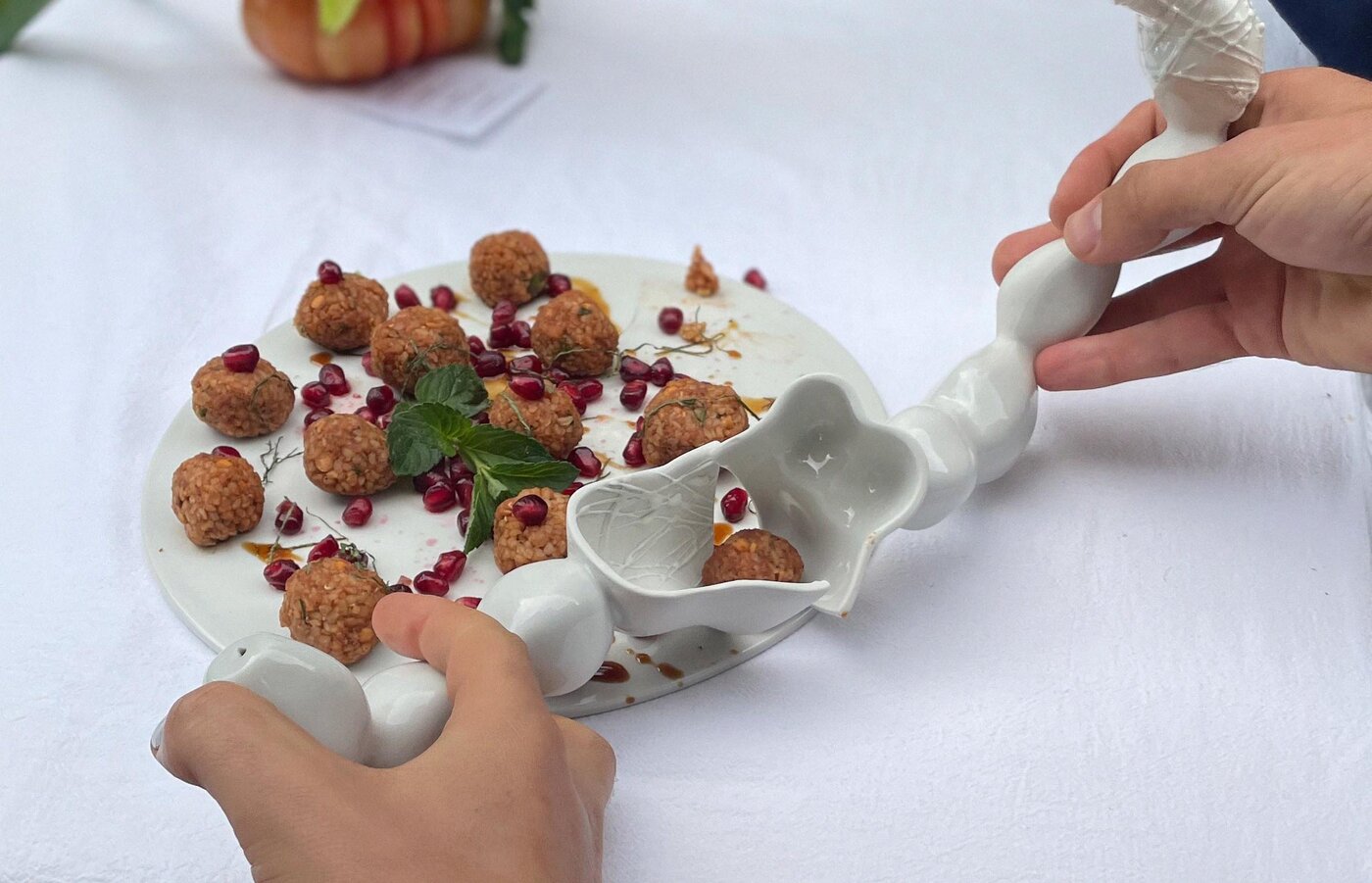
Beim Essen folgen unsere Hände, Münder und Gesten eingespielten Abläufen . Doch was passiert, wenn Esswerkzeuge nicht funktionieren wie erwartet? Wenn ein Griff zu lang und ein Mundstück zu breit sind? Die Fachaufgabe »EAT. [RE]ACT.« untersucht den Einfluss unerwartet gestalteter Objekte auf routinierte Handlungsabläufe.
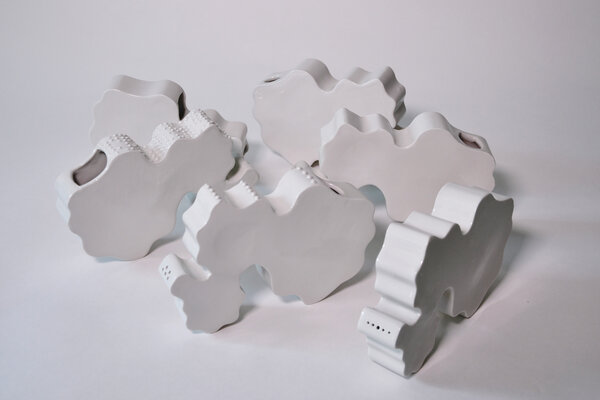
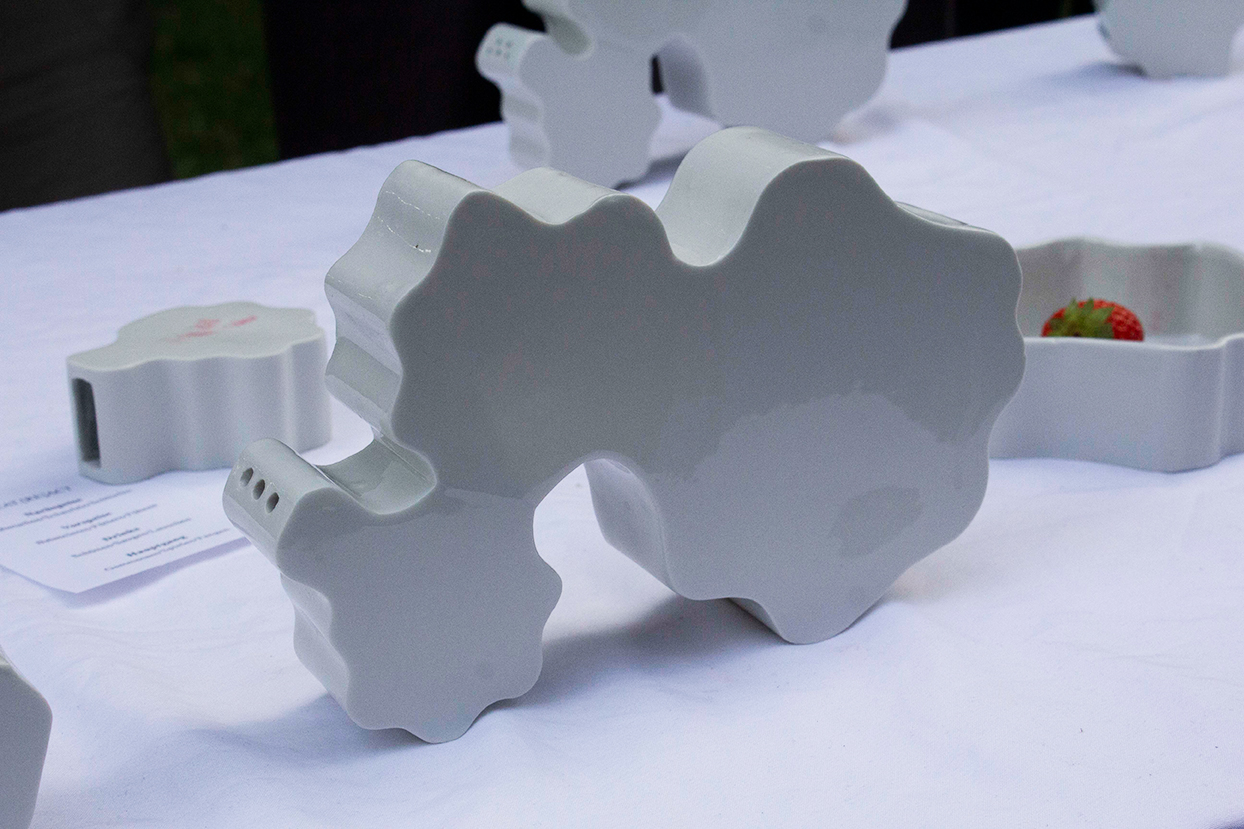
Im Zentrum standen die Entwicklung neuer Esswerkzeuge jenseits von Messer, Gabel und Löffel – und die Frage, wie damit das Essen selbst neu gestaltet werden kann? Die Ausführung erfolgte durch das Schnitzen in Gips, also einen direkten, subtraktiven Gestaltungsprozess und den anschließenden Schlickerguss.
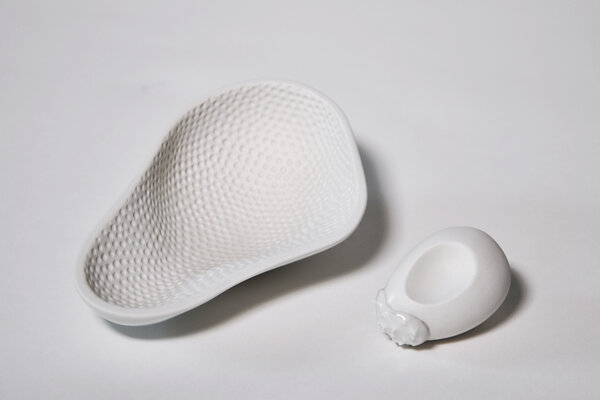
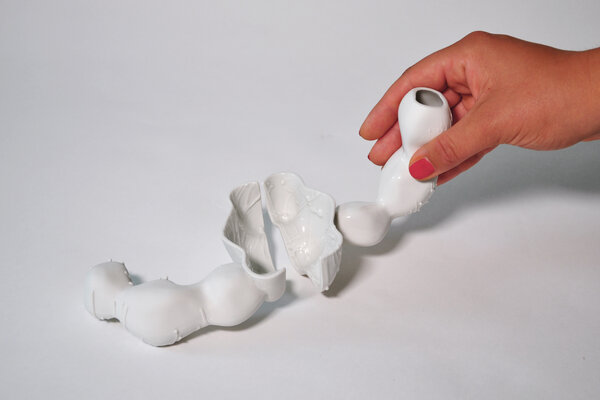
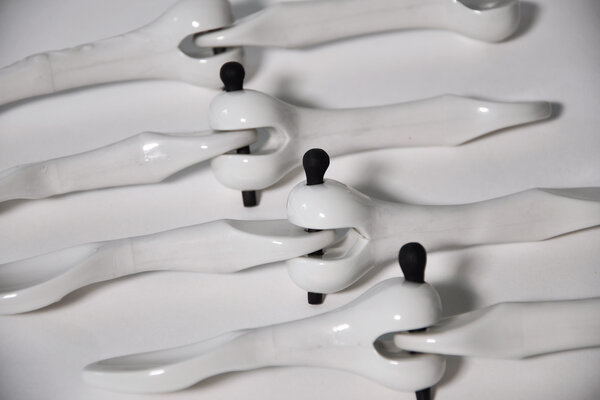
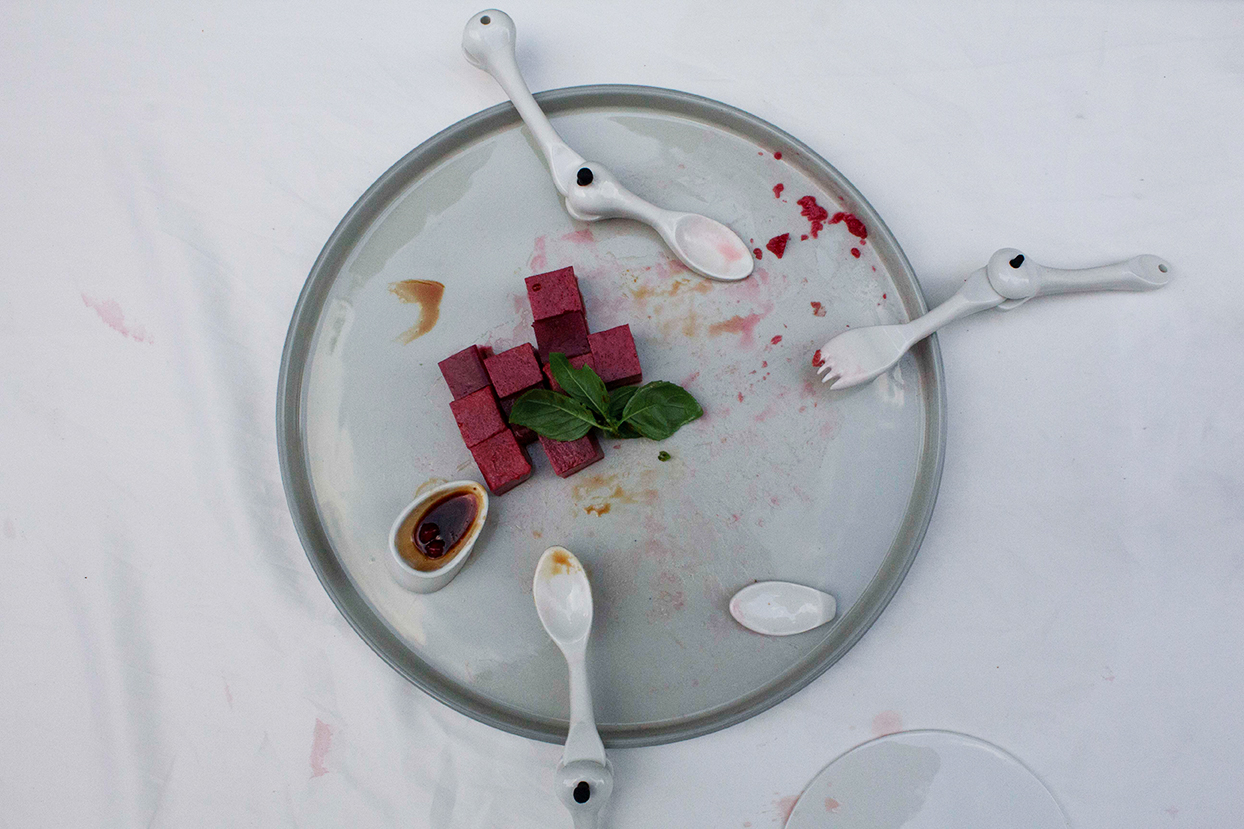
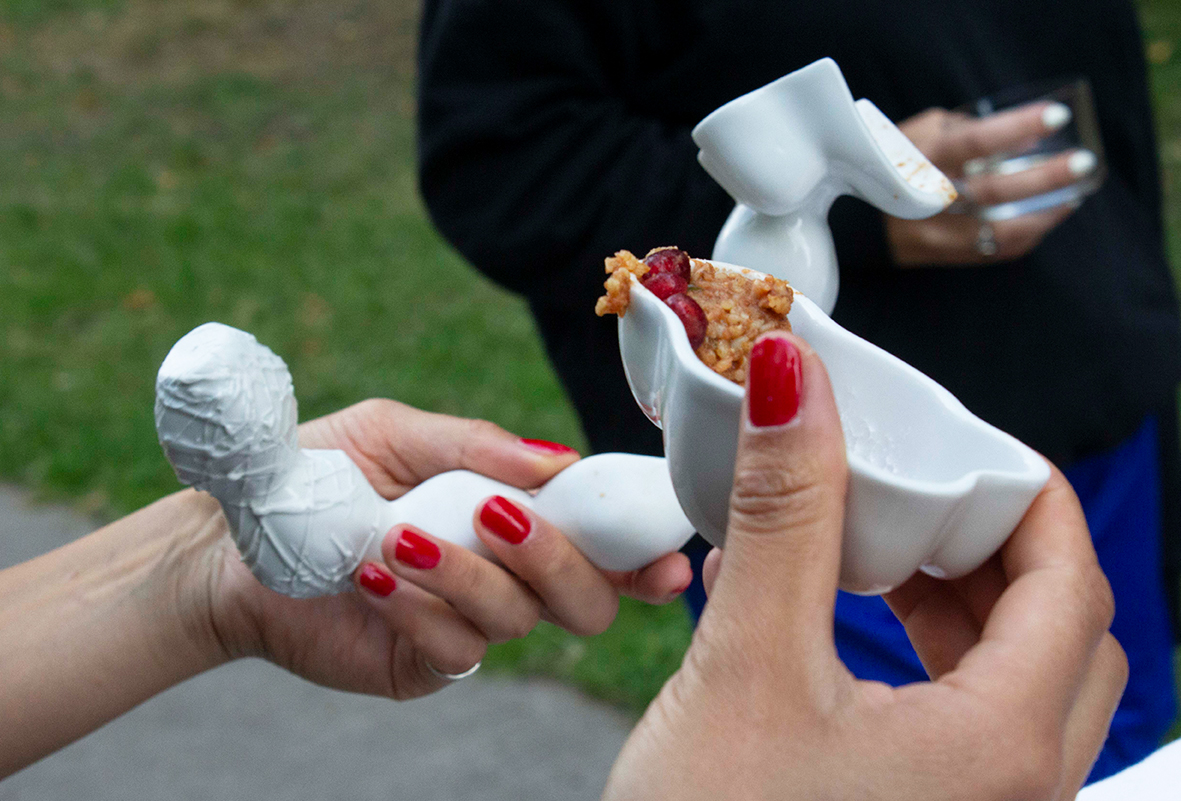
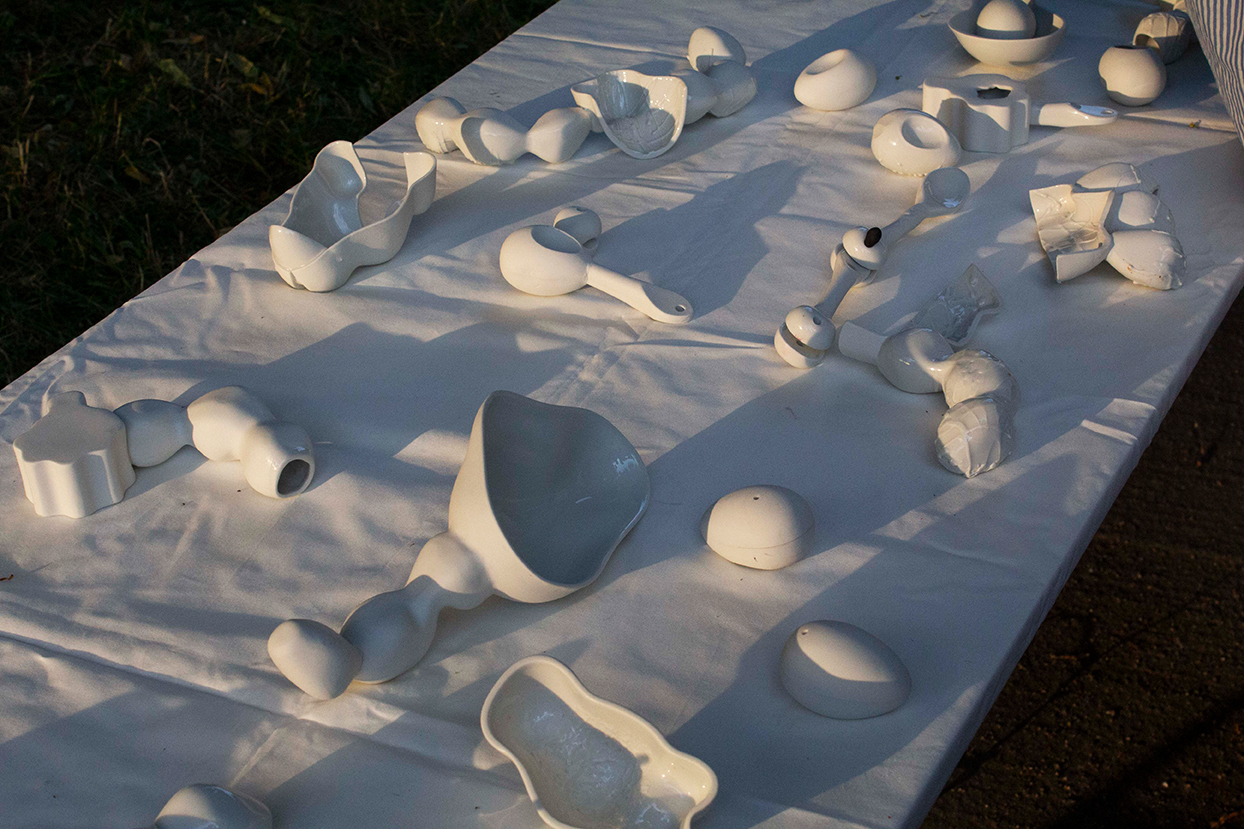
Entstanden sind Objekte, die zu einer Vielzahl an neuen Esswerkzeugen kombiniert werden können. Durch ihre Gestaltung provozieren sie bewusst die Kommunikation und Interaktion mit dem Gegenüber und formen Momente voller Spannung, Intimität und Überraschung.
EAT. [RE]ACT.
When eating, our hands, mouths, and gestures often follow familiar routines and table manners. But what happens when eating tools don’t work as expected? When a handle is too long, the mouthpiece too wide, too playful, or even absurd? In this design brief, we explored the potential of unexpected actions during eating: gestures that are allowed to fail, tools that demand interaction, objects that provoke confusion. The familiar relationship between body, object, and food was intentionally disrupted in favor of a new, performative eating experience.
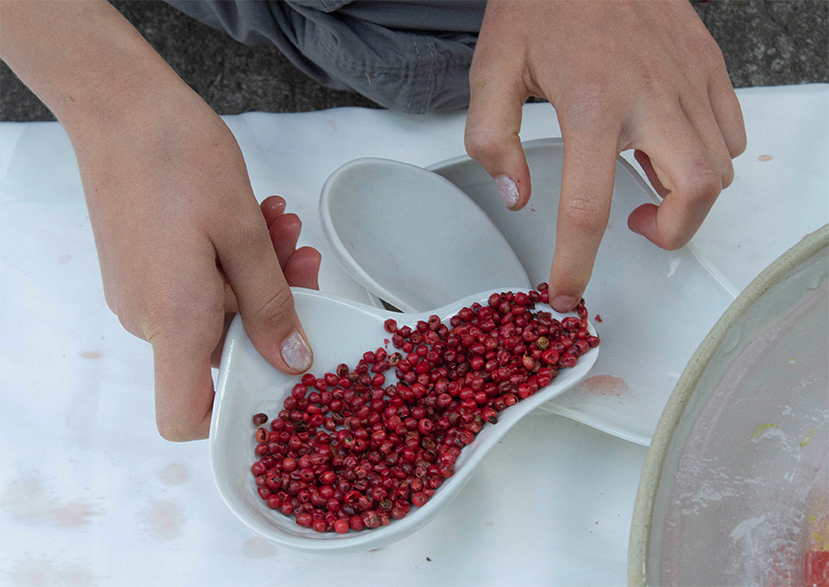
At the core of this two-week project was the development of new eating tools—beyond knife, fork, and spoon—and the question: Does food itself need to be redesigned? The starting point was carving in plaster: a direct, subtractive design process. The resulting objects were then translated into slipcasting molds for porcelain. The outcome was a set of combinable objects that could be assembled into a wide range of new eating tools—each enabling different gestures, functions, and uses.
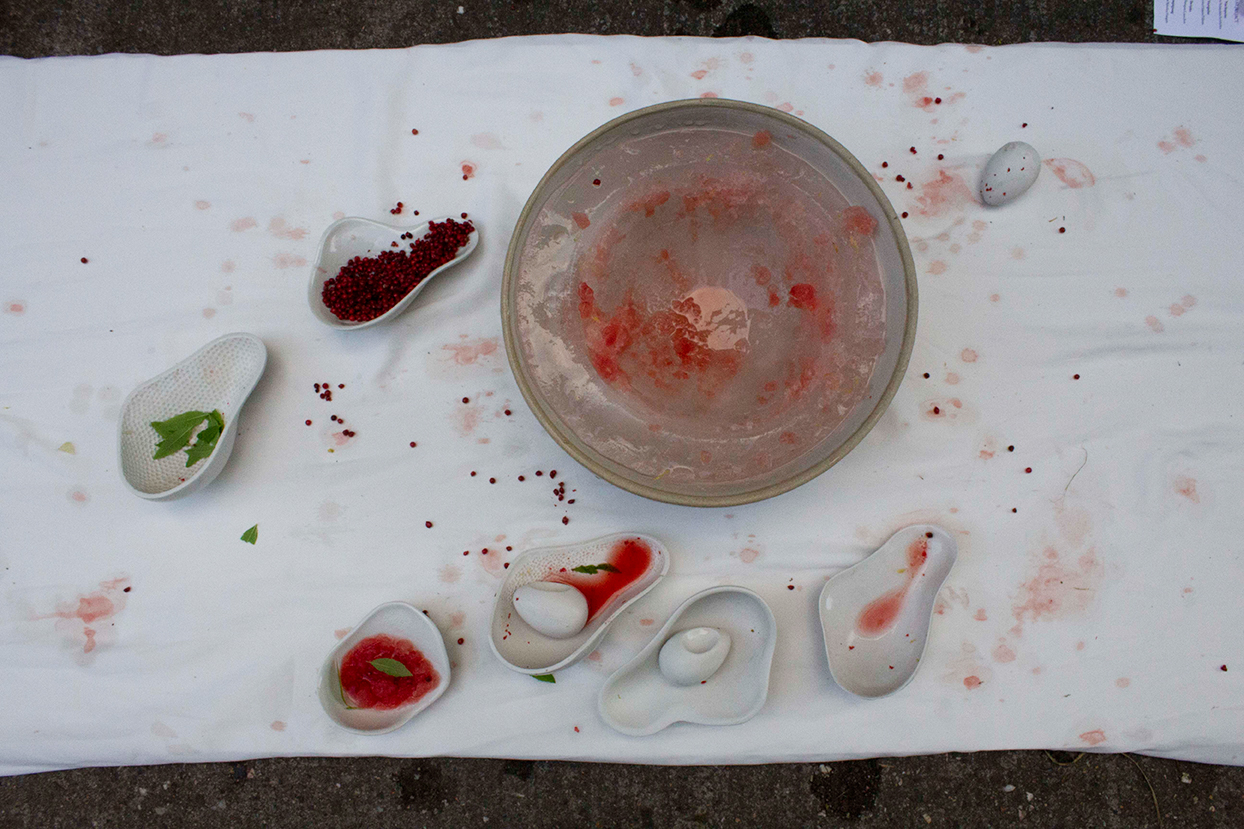
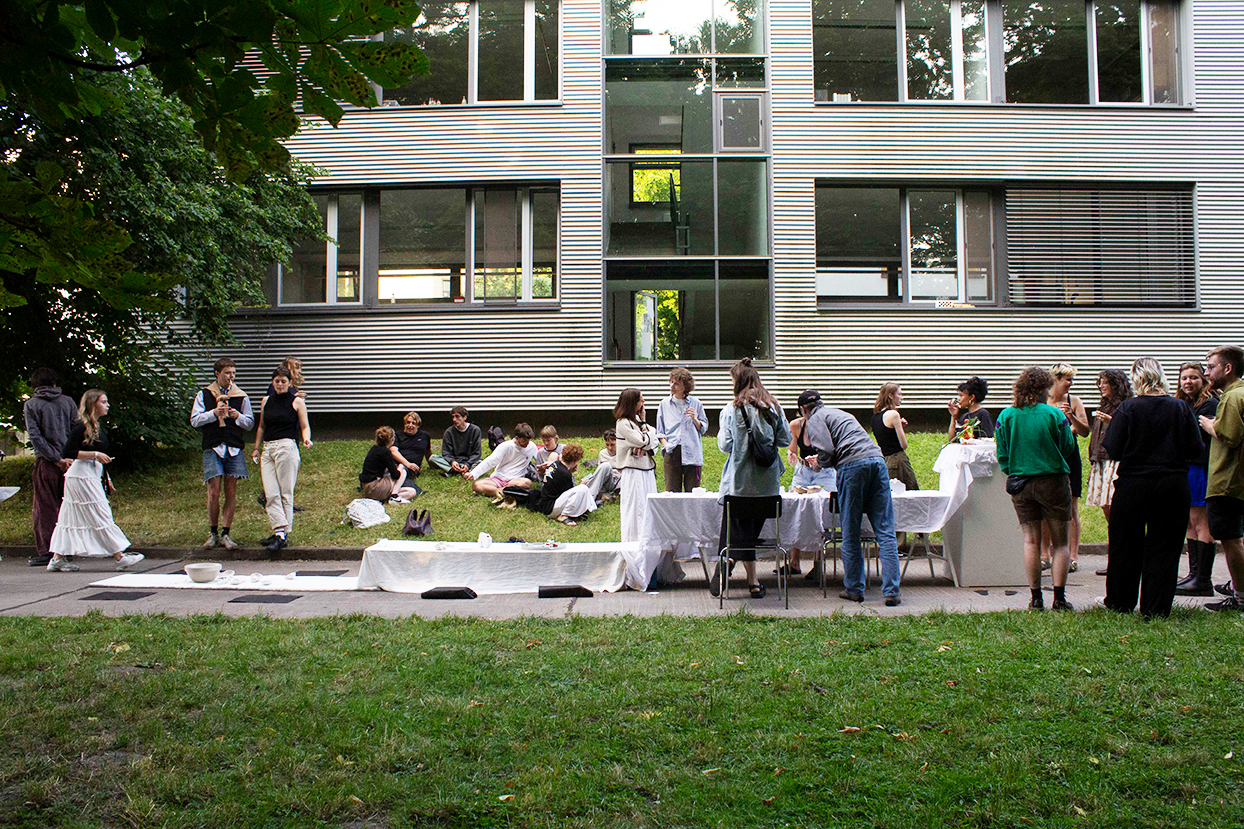
Because eating is never just an action—it is communication. Between hands, mouth, material—and most importantly, between people. The tools we created became mediators. They required negotiation and shaped closeness or distance. They invited sharing, feeding, and experimentation. What emerged were new forms of encounter: approachable, chaotic, and playful—beyond traditional table manners. Eating became an event, a choreography. It could be improvised, surprising, and even disorienting—and that’s where its design potential came to life.