- scroll down for English version -
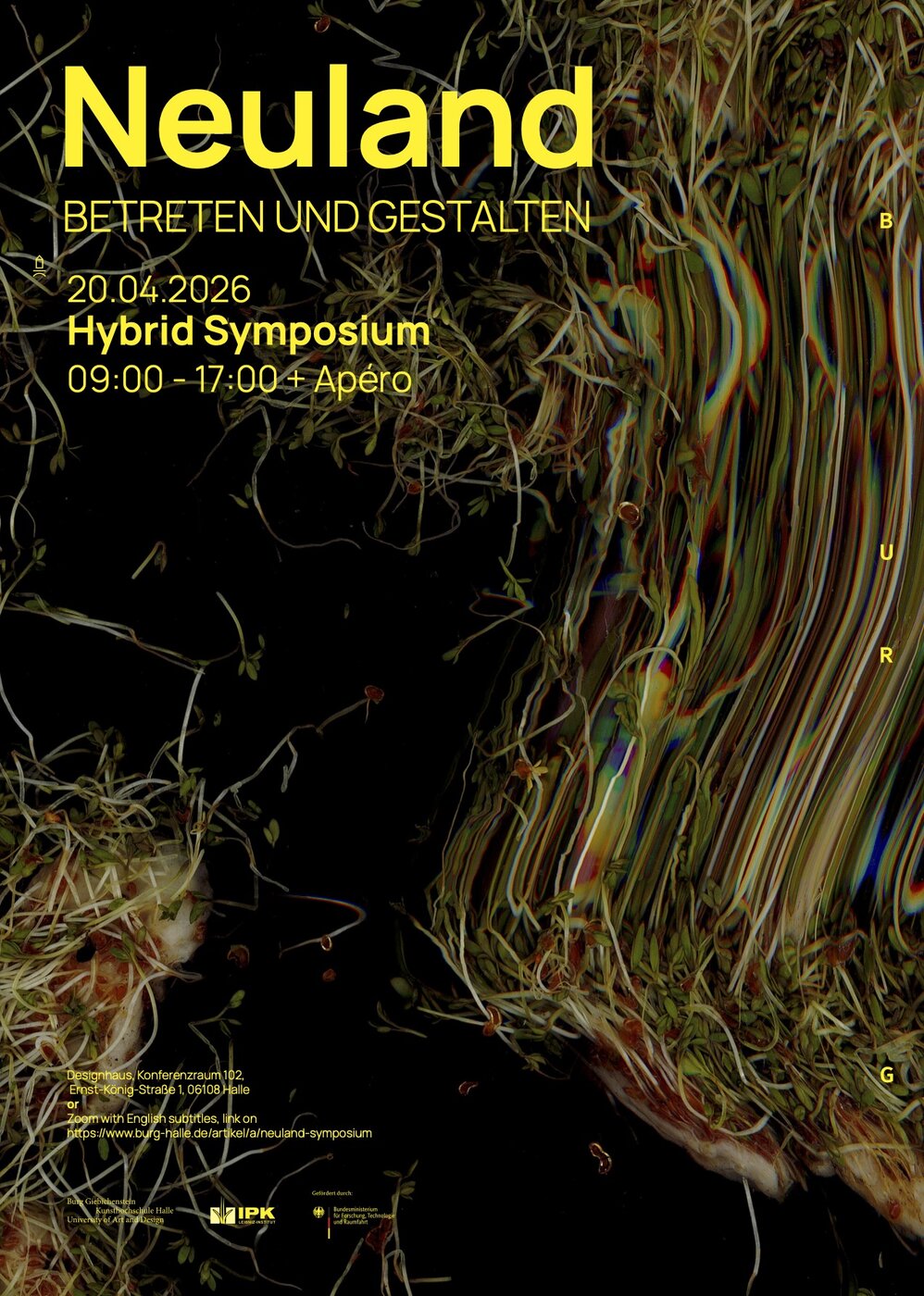
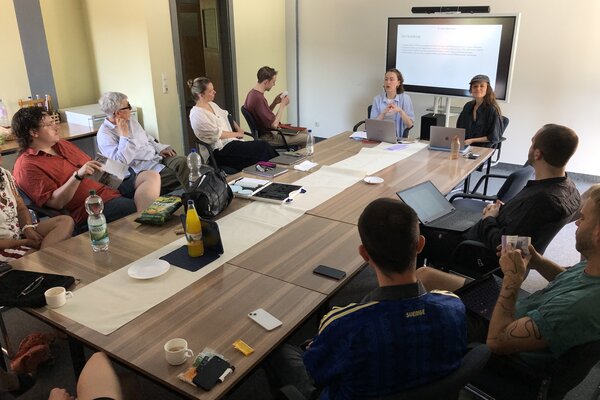
Welche Rolle spielen neue Technologien in der Pflanzenforschung und wer gestaltet ihre Zukunft? Das Symposium bringt Perspektiven aus Wissenschaft, Landwirtschaft, Design und Kunst zusammen, um Potenziale und Risiken gemeinsam zu verhandeln und einen Diskurs als Treiber für Innovation und gesellschaftliche Teilhabe zu fördern.
In Kooperation mit dem Leibniz-Institut für Pflanzengenetik und Kulturpflanzenforschung (IPK Gatersleben) arbeiten die BurgLabs im Rahmen des Diskursprojekts „Neuland betreten und gestalten“ für die Dauer von zwei Jahren zusammen. Im Mittelpunkt stehen neue Technologien aus der Pflanzenforschung sowie deren Potenziale und Risiken.
09:00 Thies Schröder / Forum Rathenau
Gestaltet den Wandel zur postfossilen Gesellschaft mit Fokus auf Kohlenstoffkreisläufe und transdisziplinäre Ansätze.
Ziel: ein zukunftsfähiges Mitteldeutsches Revier.
09:45 Leonie Steinherr / HNE Eberswalde
Forscht zu Agroforst, Anbauverfahren, Klimaanpassung
und Robotik – mit direkter Erprobung im Feld.
11:00 Dr. Jedrzej Jakub Szymanski / IPK
Erforscht molekulare Prozesse der Nutzpflanzenentwicklung mittels Datenanalyse und Machine Learning, u. a. zur Vorhersage von Phänotypen.
11:45 Dr. Knut Ehlers / Umweltbundesamt
Berät zu nachhaltiger Landwirtschaft und Bodenschutz, mit Fokus auf Umweltwirkungen agrarischer Praktiken und politischer Steuerungsinstrumente.
13:30 Hermann Hoyer / Landwirt
Bewirtschaftet seit 1991 über 1.200 ha pfluglos auf trockenen Schotterböden, konventionell und ökologisch. Vernetzt als Arbeitskreisleiter innovative Anbauverfahren.
14:15 nonhuman nonsense / Kunst- + Designkollektiv
Ergründen das Nicht-Menschliche und die Erscheinungen zwischen und jenseits von Kategorien in Form von Installationen, Workshops, Filmen und digitalen Projekten.
15:30 Prof. Dr. Katja Tielbörger / Universität Tübingen
Untersucht biotische Interaktionen im Wandel und diskutiert Chancen und Risiken neuer Gentechniken für Ökosysteme.
16:15 Alvaro Azcárraga / Künstler
Verbindet Molekularbiologie und Kunst, um koloniale Narrative rund um Mais zu hinterfragen und unsere Beziehung zur Pflanzenwelt neu zu denken.
- - -
What role do new technologies play in plant research and who shapes their future? The symposium brings together perspectives from science, agriculture, design and art to collectively negotiate potentials and risks, fostering discourse as a driver for innovation and public participation.
In cooperation with the Leibniz Institute of Plant Genetics and Crop Plant Research (IPK Gatersleben), the BurgLabs collaborate within the discourse project ‚Neuland betreten und gestalten‘ (lit. ‚entering and shaping new grounds‘) for a period of two years. The focus lies on new techologies in plant research as well as investigating possible potentials and risks.
09:00 Thies Schröder / Forum Rathenau
Shapes the transition to a post-fossil society, focusing on
carbon cycles and transdisciplinary approaches.
Goal: a future-ready Central German coal mining region (“Mitteldeutsches Revier”).
09:45 Leonie Steinherr / HNE Eberswalde
Researches agroforestry, cultivation methods, climate
adaptation, and robotics—tested directly in the field.
11:00 Dr. Jedrzej Jakub Szymanski / IPK
Studies molecular processes in crop development using data analysis and machine learning, e.g. to predict plant phenotypes.
11:45 Dr. Knut Ehlers / Umweltbundesamt
Provides advice on sustainable agriculture and soil conservation, with a focus on the environmental impacts of agricultural practices and policy instruments.
13:30 Hermann Hoyer / Farmer
Farms over 1,200 hectares of gravel soil without plowing since 1991, using both conventional and organic cultivating methods. He promotes innovative farming practices by leading a working group on the subject.
14:15 nonhuman nonsense / Art- + Design collective
Explore the nonhuman and the phenomena between and beyond categories, through installations, workshops, films, and digital projects.
15:30 Prof. Dr. Katja Tielbörger / Universität Tübingen
Studies biotic interactions in a changing world and discusses opportunities and risks of new genomic techniques for ecosystems.
16:15 Alvaro Azcárraga / Artist
Combines molecular biology and art to question colonial narratives of maize and rethink our relationship with the plant world.