Milestones, Manifestos, Ruptures and Reckonings
Danah Abdulla, Mahmoud Keshavarz, Tristan Schultz, Luiza Prado
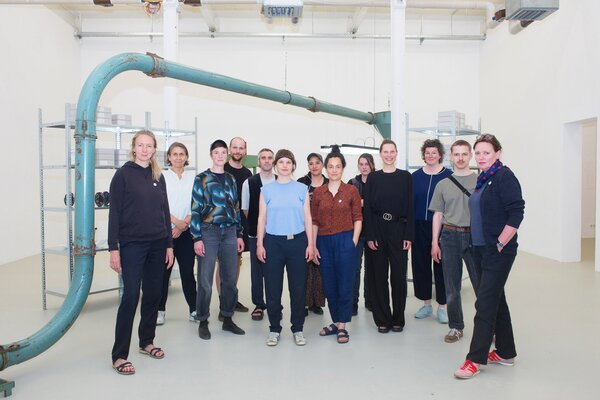
In the mid-2010s, a small collective of designers, researchers and educators from different parts of the world began asking an urgent and uncomfortable question: what is actually at stake in decolonising design? The Decolonising Design Group emerged from that question. Over about a three-year period the group produced manifestos, roundtables, special issues and contributed to a discourse that still ruptures critical design today. A decade on, four of its members return to take stock. This conversation revisits who we were, what we made, the context that called it into being, and how we worked together across difference. It traces where the discourse, and each of us, has traveled since, with reflections from outside the group on what that moment meant for a field still reckoning with its own coloniality.
A series of minor gestures
Danah Abdulla
In this short talk, Danah reflects on a decade of enacting minor gestures – localized, subversive acts that can be performed to expand the limits of a given enclosed system – through her research and practice.
Danah Abdulla is a designer, educator and researcher interested in new narratives and practices in design that push the disciplinary boundaries and definitions of the subject. She is a Reader (Associate Professor) in Anti/Post/Decolonial Histories, Theories, Praxes at the Decolonising the Arts Institute at the University of the Arts London. Danah is the author of two books Design Otherwise: Transforming Design Education in the Arab Region (Bloomsbury, 2025) and Designerly Ways of Knowing: A Working Inventory of Things a Designer Should Know (Onomatopee, 2022). In 2024, her work was recognised in Zetteler's 24 for ‘24: makers and mavericks to watch’. She is a founding member of the Decolonising Design platform, and founded Kalimat Magazine (2010-2016), an independent, non-profit publication about Arab thought and culture. www.dabdulla.com
Race is designed, that is, materially articulated: a tribute to Stuart Hall
Mahmoud Keshavarz
In this talk, by bringing Hall’s thinking on race and articulation into dialogue with the material world of making and designing, I pay tribute to his legacy and relevance for designing, which I believe contributes to the growing intellectual urgency of understanding the relations between racism and design. I present a sketch of what I mean by designing as an articulatory practice, and then move to discuss Hall’s understanding of race as a “sliding (floating) signifier”.
Committing to his intellectual prism, I show that designing as an articulatory practice participates in a classificatory system of racial differentiation not simply by carrying racist messages but by ascribing meaning along such classification. If we could “discover” the racist message in design, then it would have been easy to pin down racism within designing. Yet, we know how racism in today’s world persists through the material world of objects, systems, and services that all aim to include humans as a universal category. So, what is the difficulty in understanding, exposing, and fighting racism as it is sustained and generated by designing? I believe Hall’s work can help us answer the question.
Mahmoud Keshavarz is Associate Professor of Cultural Anthropology at Uppsala University, Sweden. His work addresses the role of materiality, technology, and designing in mobility, migration, and bordering with a particular focus on the question of race, colonialism, and coloniality. He is author of The Design Politics of Passport: Materiality, Immobility, and Dissent (Bloomsbury 2019), co-editor of Seeing Like a Smuggler: Borders from Below (Pluto Press 2021) and a board member at Border Forensics. His forthcoming book Border Situations: Essays on Designing, Anthropologies and Politics in a Confined World (Bloomsbury) presents a design anthropological account of borders and bordering in today’s world.
Exposure: A Life of Sustained Critical Practice at the Edge of Design
Tristan Schultz
In climbing, exposure means height, risk, and total commitment to the move. It is also what happens when holding a critical design practice at the edge of the discipline: I am exposed to complexity, futility, and the anguish of an urgent patience. This talk is a retrospective reflection on what it means to sustain a critical strategic design practice oriented toward decoloniality in a world where gravity always seems to be pulling the other way. Drawing on ten years of projects and intellectual inquiry, I ask: what does the edge of design demand of me? What does it give back? And is it still worth holding onto?
Tristan Schultz is the founder and Director of Relative Creative, a strategic design practice based in Australia. Of Gamilaroi Aboriginal and Australian-European descent, his work sits at the intersection of critical design, decoloniality, strategic foresight and sustainable transitions, operating across design practice, research and public discourse. This work cuts across commercial, non-commercial and government settings locally, nationally and internationally. In recent years, it has included strategic design with several Pacific Island nations on climate adaptation. Tristan publishes widely in critical design discourse and delivers keynotes, lectures and resources related to sustainable, plural futures. He holds a Bachelor of Design, a Master of Design Futures with Honours, and a PhD in Design. He is an Honorary Adjunct Fellow at the University of Technology Sydney, an Honorary Principal Research Fellow at RMIT Melbourne, and a Visiting Academic Fellow at Bond University.
Carrying the Cloud: Reproductive Laboratories, Digital Infrastructures, and Speculative Feminist Critique
Luiza Prado
Ten years after the founding of the Decolonising Design platform, this contribution asks what a decade of feminist and decolonial critique of design did and did not reach—and where the stakes have moved.
Tracing the entanglements between landscapes, bodies, and digital infrastructures—from birth control medications tested on colonial subjects, to fertility tracking devices whose data could be used as prosecutorial evidence in new forms of atomized reproductive control—it argues that the cloud has become the primary technoecological site of contemporary biopolitical governance: not as metaphor, but as laboratory.
Luiza Prado (Brazil/Germany) is an artist, writer and theorist. She works between installation, sculpture, text, and image, using performance and ritual as a way of invitation and activation for audiences. Her practice explores relations and knowledge between plants, political infrastructures, and technology, and questions what processes are needed for collective concerns of environmental care and reproductive justice. She holds a PhD from the University of the Arts Berlin, and an MA from the University of the Arts Bremen.
She has exhibited, performed, and spoken at the Art Institute of Chicago, the Contemporary Art Museum of Luxembourg (MUDAM), the Guggenheim Museum, the Museum of Modern Art Warsaw, the Museum of Art in Łódź, the Martin-Gropius-Bau, the Museum Ostwall, the Haus der Kulturen der Welt, the Rautenstrauch-Joest Museum, the National Museum of the Democratic Republic of Congo, Savvy Contemporary, Akademie Schloss Solitude, and Kampnagel, among others. She is currently based between Rio de Janeiro and Berlin.
Workshops and Conversations 1
At the Periphery of the Curriculum: Teaching, Learning, and What Emerges in Between (Roundtable Conversation)
Ivana Jović, Anna Unterstab, Stefanie Rau, Ayat Tarik Kamil
Design education is often framed through modules, learning outcomes, and institutional structures that define what counts as knowledge. Yet much of what shapes learning happens in the periphery: in the relational, affective, and often invisible processes that unfold between people, spaces, and expectations. This collaborative roundtable proposes an exploration of these peripheral zones as sites of tension, negotiation, and possibility within design pedagogy. Our project brings together four educators from different institutions and disciplinary backgrounds whose practices challenge established hierarchies of knowledge production. Through a collective conversation and iterative writing process, we examine what becomes visible when we shift attention away from the centre of curricula and toward the margins—where care, conflict, vulnerability, and agency emerge as formative pedagogical forces. Drawing from feminist, queer, intersectional, decolonial, and dialogic approaches, we ask: Who holds power in educational design, and how is it enacted? Which processes remain unacknowledged within institutional frameworks, and what futures become possible when they are centred? How might teaching-as-space-making challenge extractive or exclusionary pedagogical models? Rather than presenting a singular argument, our roundtable unfolds through a collaborative exchange that mirrors the very processes we discuss. The contribution situates design education as a dynamic system shaped by interpersonal relations, institutional constraints, and emergent practices that resist simple categorisation. It seeks to articulate the subtle, messy, and transformative edges of learning—edges that often remain unspoken yet profoundly influence what design becomes after it is taught.
Ivana Jović works on connection through emergent, collective processes: communicating, facilitating, organizing, researching, and caring. Holding space for the in-between at HyperWerk, Basel Academy of Art and Design FHNW, they teach in the BA Process Design and lead the continuing education program at the Institute of Experimental Design and Media Cultures (IXDM).
Anna Unterstab is a designer and researcher working at the intersection of information design, feminist and queer theory, and critical design discourse. Based at Burg Giebichenstein University of Art and Design Halle, Anna's practice includes publishing, exhibition-making, and community-oriented design projects that explore empowerment, vulnerability, memory, and care.
Stefanie Rau is a designer and educator whose work centers on teaching as practice of creating spaces. She is a lecturer and research associate at weißensee school of art and design berlin and co-runs the design studio operative.space. Her artistic research explores the role of peripheral learning and teaching spaces within design education.
Ayat Tarik is an architect and researcher working at the intersection of inclusive urban development and decolonial, intersectional spatial theory. Since 2022, she has been teaching at GTAS at TU Braunschweig while pursuing her PhD on the practical implementation of the common good and the transformation processes required to achieve it. As the initiator and chairwomen of Quartier:PLUS, she brings experience in community building and organizing, experimenting with new forms of togetherness and collective practices. Ayat Tarik is also a co-founder of the feminist collective yani.kollektiv, which focuses on community-based projects and explores participatory planning processes. Her work centers on cooperative architectural practices and the development of responsible, care-oriented planning cultures.
sensory, sculptural, seats: between Access Riders & Collaboration Agreements (Workshop)
Ren Loren Britton
This workshop picks up on two design intervention-based documents, Access Riders and Collaboration Agreements. Access Riders are a document that disabled, trans* and neurodivergent community members send to institutions of all scales ahead of a collaboration so that they can share what is needed negotiating the realities of ongoing harm within normative anti-trans and ableist conditions. Collaboration Agreements are documents set up when community members give inputs to arts and design projects so that authorship, rights, crediting, representation and financial outcomes can be agreed upon and negotiated before a project takes place — they intend to interrupt extraction and produce good relationships. This workshop looks at these two practices through the ongoing work of Ren Loren Britton and their current work on the public art commission: sensory, sculptural, seats — and attempts to design with participants a third sort of document that is somewhere between articulating needs and articulating authorship paradigms, proposing that the two frameworks are more similar than they might seem from the start.
Access: The workshop will be in the English spoken language with an access copy and schedule shared at the start of the workshop. Informal translation into German, and German and English references for thinking with, will be shared. There will be no sign language interpretation for this workshop. We will take breaks, a low sensory space will be available and names, pronouns and further access needs will be welcomed to be shared at the beginning of the workshop. For any access questions ahead of the workshop please do write to the organizers.
Ren Loren Britton is a trans-disciplinary artist-designer dancing with trans*feminism, technosciences, radical pedagogy and Disability justice. They make multi-sensorial media installations. Trans*ness in their practice considers what would be needed so that — pleasure for all— would be possible. They attend to plural hir- his- her- stories and presents of social and technical infrastructures making lives accessible and possible. In Winter 2025/26 Ren holds a Guest Professorship of Information Design at Burg Halle and in Summer 2026 Ren is a temporary Associate Professor of Networks at the Academy of Media Arts in Cologne.
Witnessing, Storytelling, and Decolonial Design Practice (Workshop)
Adeela Firdous, Jana Braun
This method and practice-oriented workshop explores witnessing as a design practice and asks how designers can shift from aestheticisation and solutionism towards centering contested marginalized stories and making them visible. Within this workshop, we investigate different forms of storytelling and witnessing to counter existing strategies of rendering invisible and silencing communities from becoming part of their own history. Grounded in human rights work in Kashmir and critical design research, we treat the workshop itself as a decolonial intervention and space for collective reckoning within art and design education.
Adeela Firdous, a Kashmiri human rights lawyer and independent researcher, will introduce her work on storytelling as a form of witnessing in regions under military and political control. Drawing on the “Darech” project, she will share how the right to tell one’s own story becomes central to resisting erasure and to challenging dominant productions of narrative and knowledge.
Building on this, Jana Braun, a design student at Burg, will invite participants to engage with witnessing as a situated design practice. Through the performance “Tracing traces”, collective discussion, and visual experiments, participants will collaboratively develop small “disruptive” design proposals (e.g. visual traces, spatial markers, printed or digital fragments) that foreground stories rather than solutions. We frame these as design artefacts that materialize testimony and make power structures visible. The session aims to surface the ruptures between lived experience and design representation, and to collectively reckon with how listening, iterative feedback with narrators, and reflexive positionality can inform politically and socially engaged design practices.
Adeela Firdous is a Kashmiri human rights lawyer and researcher working at the inter- section of storytelling, human rights, and peacebuilding. She specializes in narrative building and storytelling methods in practice. Previously, she collaborated with the Living Open Archive (LOA) at the European Center for Constitutional and Human Rights (ECCHR), integrating storytelling into multimedia legal archives and as a Research Fel- low at the Berghof Foundation, she developed decolonial research designs. She holds a Master of Global Affairs from the University of Notre Dame, USA and a B.A. LL.B. (Hons.) from the University of Kashmir.
Jana Braun is a graphic designer and dance teacher/performer. Her work focuses on disrupting hierarchies and universally accepted knowledge by making hidden structures, invisible knowledge and marginalized stories accessible, comprehensible and immersive whilst counteracting colonial, discriminatory and exclusionary knowledge presentation and transfer. She is currently studying in Studiengruppe Informationdesign at Burg Giebichenstein University of Art and Design Halle where she investigates the social and political potentials of design. In her graduation project, she explores how positionality shapes the design approach and where the potential of witnessing as a design practice lies. Jana holds a B.A. in communication design from the Technical University of Würzburg-Schweinfurt.
Designing Whiteness: Monte Verità and the Colonial Making of White Ecological Intimacy (Workshop/Guided Collective Reading)
Saskia Köbschall
This contribution examines Monte Verità as a key site within the broader Life Reform movement around 1900, asking how whiteness was produced through nature, nudity, and bodily reform. Extending Ruha Benjamin's concept of "race as design," it argues that practices framed as liberation from modernity were deeply entangled with colonial fantasies of primitivity, origin, and natural life. Monte Verità thus offers a lens onto the racial architecture of white ecological intimacy. The contribution combines a short analytical input with a guided collective reading of historical visual and textual artefacts.
Saskia Köbschall is a historical anthropologist, curator and editor based in Berlin. Her PhD research examines the colonial and racial entanglements of the German Lebensreform movement, with a focus on nudity, nature, and body politics.
Beyond Institutionalized Critique Pt. 1 – Reflection and Conversation on Design and Class (Struggle) (Workshop)
Quang Nguyen
“Nowadays it is fashionable to talk about race or gender; the uncool subject is class.”
bell hooks’ observation remains strikingly relevant, particularly in relation to cultural institutions in the Global North. Over recent decades, critical queer-feminist and decolonial perspectives have shaped design discourse and education. Yet beyond “diversity” and representational politics, little has structurally changed. One reason may be that class and labour relations remain largely unspoken within these institutionalized critical frameworks. What kinds of demands and ruptures would emerge if we explicitly addressed class relations and the material conditions of design and design research within these institutions?
In the workshop, we want to collectively map and discuss how class operates on multiple levels: classism within design schools, the role of design (education) in reproducing social hierarchies, the material conditions of cultural labour, and ultimately the potential of class struggles within the field of design. Together, we will reflect on our positionality to sharpen class consciousness within and beyond our practices, and confront what has kept us from organizing and participating in the labour movement.
Quang Nguyen (he/him) works, thinks, and writes about design. In 2022, he graduated with a Master’s degree in Visual Communication from the weißensee academy of arts in Berlin. His work engages both practically and theoretically with the cultural dimensions of race, queerness, and class. He is a member of the collective awhām, a magazine for queer-feminist and decolonial perspectives, and part of the AG Design within the trade union ver.di, where he is responsible for the discourse section. Quang initiated the discussion formats “Design Stammtisch” (Berlin) and “Design in Dialogue” within ver.di, as well as “Belle Room” – a series of events exploring the (im)possibilities of critical design practices. As a graphic designer, he works in the cultural and social field.
PANEL 1
Cabral’s Great-Grandchildren. A Designer’s Journey: A Reflection on Graphic and Visual Narratives of Cape Verde and its Diaspora
Denise Santos
This work uses the metaphor of travelling to approach iconographic narratives from the colonial and post-independence periods, in order to think about the relations between history, memory, identity and fiction. Using specific graphic design resources, it proposes a journey to Cape Verde through the recovery of archives, documents, personal and collective graphic artefacts, such as magazines, newspapers, posters, among others, which are told from the perspective of both the colonised and the coloniser. The aim is to understand how these narratives are propagated to this day among Cape Verdeans and their descendants, such as myself. This historical, visual and graphic movement is accompanied by social and identity issues that make us question our place and role in this journey.
Graphic design is analysed here as a tool for (re)constructing identity values and as an instrument of forgetting and/or invisibility. The research is materialised in a final project entitled Bisnetos de Cabral (Cabral's Great-Grandchildren), comprising a set of graphic and visual objects that are part of this journey and it's suitcase. These are based on the collection of stories, memories and artefacts that communicate and expose the context of Cabral's great-grandchildren - Cape Verdeans and their diasporas. The objects presented as a result of this work aim to contribute to an action programme based on a reflection on the past and present of Cape Verde and its heirs, assuming the relevance of decolonisation narratives.
Denise Santos is a Cape Verdean graphic designer and researcher born in Lisbon, whose work explores the intersections between design, culture and the experiences of the Black diaspora. With a master's degree in graphic design and experience in cultural, artistic and community projects, her practice combines visual communication with critical research. She has collaborated with institutions, curators and interdisciplinary teams, and has contributed to art publications, exhibitions and research-oriented initiatives. Currently, Denise is working independently to continue highlighting narratives and stories of racialised people, preserving and nurturing a living archive and the possibility of reimagining a collective memory.
Limping Toward Crip (Spatial) Pedagogies
Shrey Pathak
Universal Design (UD) has been widely adopted within architecture and design frameworks as a progressive response to disability by creating accessible and barrier-free built environments since its emergence in late 20th-century design discourse. However, the normalization of Universal Design as access-for-all has produced a significant rupture: the erasure of disability culture, politics, and knowledge under the promise of seamless inclusion, where access-for-all becomes a notion that comes from a fear of disability rather than learning from disability. When access is framed as disability neutral, technical, or “for everyone,” it often obscures how design actively participates in promoting the ideology of ability and sometimes what may be understood as design apartheid—the spatial and systemic exclusion of disabled bodies through normative design logics. Universal Design often tends to privilege normative bodies and modes of participation, while marginalizing crip ways of moving, sensing, resting, and relating. This presentation proposes crip pedagogies not solely as instructional tools but as ways of being in and possibly designing the world. Grounded in crip time, interdependence, and misfitting, crip pedagogies challenge the understanding of disability as undesirable and as something to be (forcibly) cured. Crip pedagogies insist that access is not a static outcome, but an ongoing, relational practice shaped through care, negotiation, and refusal. They expose how design apartheid and the ideology of ability are sustained through claims of universality, and then offer alternative design imaginaries rooted in crip epistemologies. By centering disability/crip culture as a site of knowledge rather than deficit, this presentation aims to explore design viz-a-viz crip pedagogies as a collective and interdependent practice that must remain accountable to those it has (and continues to) systematically leave out.
Shrey Pathak (they/he) has a masters degree in Photography Design from the National Institute of Design, Gandhinagar, India and a bachelor's degree in Architecture. They have previously worked at the National Institute of Design, Ahmedabad as an archivist and a researcher. They approach chronic pain, fatigue, and brain fog as epistemic sites to challenge systems of disqualification and address the persistent gaps in access while employing crip humour towards infrastructure critique. They think from a “sit-point” of disability, to find out how critical engagement with the ideology of ability becomes a key question for artistic practice, research and pedagogy. Shreyasi is one half of the artist duo Resting Museum, with Priyanka D’Souza since 2022, using disability and queerness as methodology in their practice. Resting Museum has participated in shows such as, Beneath the Turning Sky (2026), Museum of Art & Photography, Bangalore; Serendipity Arts Festival (2024 & 2025), Goa and Out of Turn (2024) MAG Contemporary, Bikaner House, New Delhi. They have participated in conferences and organized seminars. They also co-organized a seminar titled (Towards) Crip Aesthetics: Disability as Method at the 6th Kochi-Muziris Biennale (2025-2026), Kochi, India.
Ver/sammeln: Refusing to Archive, Assembling Otherwise
Lara Liske
Positioned within the research project Assembling Antiracist Struggles (Versammeln Antirassistischer Kämpfe), which aims to establish a digital platform for assembling, gathering, and networking knowledges in antiracist struggles in Germany, I critically examine how such an 'archive' can/not be designed against the backdrop of a critical race analysis of 'the archive' as both institution and episteme. To this end, my inquiry consists of a theoretical investigation, applied design practice, and the critical interrogation of this very design practice. Drawing on decolonial, poststructuralist, and critical race theory, I investigate how archival and racializing practices of difference-making — categorization, designation, exclusion, naturalization, and marginalization — are implicated in my own design process. From this position, I refuse to design an archive. I refuse to reify racialized relations through the reproduction of precisely these operations. When engaging with the ‘assembling’ of knowledge, the epistemic practices of design and the forms of knowledge it takes as given, produces, mobilizes, and stabilizes move into focus. I examine design as a processual practice through which knowledge formations and actor constellations materialize. Only by critically reflecting on the underlying conditions of design practice can its powerful mechanisms of differentiation be identified and transformed. Ultimately, I object to the professed entitlement to designate. Building on Sasha Constanza-Chock's call, "Nothing about Us without Us"¹, I stress the necessity to unsettle designers' decision-making authority and to centre those whose situated knowledges emerge from and constitute antiracist struggles. From this perspective, I propose to approach Ver/Sammeln as topological, allowing it to emerge and materialize through collaborative empirical engagement with the knowledges and practices it assembles.
¹ Constanza-Chock, Sasha. (2020). Design Justice.
Lara Liske (she•her) is a designer and researcher working in Design Studies and Science and Technology Studies (STS). She holds a bachelor’s degree in Communication Design and a master’s degree in Information Design, and is currently pursuing further studies in STS at Maastricht University. Her work examines the conditions and processes of knowledge production in design and design-based research, with a particular focus on the critical analysis of design’s normative claims and its epistemological foundations. Lara is an adjunct lecturer in design theory at FH Aachen University of Applied Sciences.
IDCA 1970 – Legacies of Critical Design Raptures and Ruptures (Film Screening and Discussion)
Johanna Mehl
Eli Noyes and Claudia Weill’s documentary IDCA 1970 documents the 1970 International Design Conference in Aspen, titled "Environment by Design," which was effectively disrupted by design students and young practitioners who challenged what they perceived as dusty conference practices of the establishment, interrogated disciplinary complicity, and demanded that design address urgent social and environmental crises. I am drawing from my dissertation research on the history of design as problem-solving, in which I leverage this event as emblematic of a pivotal historical moment when the really big problems entered design’s disciplinary purview and a new generation reckoned with modernist design paradigms.
This screening—supported by additional archival material—offers a productive meta-reflection for conference participants. It invites us to consider the genealogies of critical discourse within design—discourses that, while often framed as recent developments of the past decade, have deeper historical roots across related disciplines but also within design. The 1970 IDCA disruption reveals striking continuities with contemporary calls for experimental conference formats, critical reflexivity, and engagement with systemic problems. The film prompts questions like: How do we document critical design raptures and ruptures? How do critical movements lose momentum? What were the limitations and blind spots of these earlier movements, and what can we learn from both their successes and failures? By excavating this moment this session aims to historicize current debates, acknowledge longer trajectories of critical practice, and foster dialogue about design's ongoing struggles with its purpose, methods, and responsibilities.
Johanna Mehl is a doctoral candidate in Cultural Studies at the Chair for Digital Cultures at TU Dresden. Building on her background in communication design and art and design studies, her research is historically oriented and examines cultural narratives that shape design and that design, in turn, propagates. Her dissertation project “Seeing the World through Process-Eyes: A History of Designers as Problems-Solvers” investigates a reconfiguration of design as a profession around 1970 influenced by cybernetics and environmentalism.
Beyond Institutionalized Critique Pt. 2 – Open “Stammtisch” with the Designers’ Union
Quang Nguyen, Designer’s Union
Engaging with criticality and intersectionality in design necessarily involves class struggle and the labour movement; as long as critical practices remain confined to academic discourse, structural change is unlikely. To put theory into practice, the second part shifts both format and location: a “Stammtisch” (pub night) open to students, educators, and design practitioners to come together and have a drink. As informal spaces of gathering and knowledge production, “Stammtische” have historically played an important role in political organizing and unionization. In fragmented, neoliberalized fields such as design, such spaces are crucial for sharing experiences and problems, articulating anger, formulating demands, and ultimately building collective power to fight for them. By juxtaposing academic discourse with collective, non-institutional forms of exchange, the proposed two-part format foregrounds the transformative potential of class struggles within design—both within and beyond the academy.
(Amount of participants depending on the space of Konsum3000.)
PANEL 2
Assemblage Practice: Assembling Perspectives through Journal-Based Practice in Unequal Textile Systems
Odessa Legemah
Assemblage emerged from a set of persistent questions: How is fashion understood and practiced outside dominant Western frameworks? Who produces knowledge in global textile systems, and whose material, visual, and cultural labor remains unacknowledged? These questions shape Assemblage, a non-profit platform founded in 2021 that connects designers, artists, researchers, and educators across West Africa and Europe. Working at the intersection of design education, research, and cultural practice, Assemblage examines global textile flows, overproduction, material waste, and visual regimes shaped by colonial legacies. Its core research output, the Assemblage Journal, gathers situated contributions from Lagos, Accra, Porto, London, Berlin, Nairobi, Zurich, and rural regions in Burkina Faso. Rather than producing a unified narrative, the journal assembles fragments: material biographies, visual essays, and practice-based research that expose tensions, asymmetries, and moments of rupture within global fashion systems.
Assemblage Practice extends this work into a dialogical learning and research format. It does not aim to resolve these tensions but to hold them open through curated encounters between students, educators, and practitioners. Case-based discussions—Eunice Pais’ critique of colonial visual codes in fashion photography, and Yarya Agbofah’s material studies linking local textile traditions and post-digital image practices—serve as points of collective inquiry. This contribution presents Assemblage Practice as a methodological intervention for documenting and sustaining critical design practices that resist extraction and solutionism. By reflecting on four years of transcontinental collaboration and teaching, the presentation invites a reckoning with how critical ruptures in design can remain situated, relational, and generative rather than becoming stabilized or absorbed into established canons. a-ssemblage.net
Odessa Legemah is a German-Nigerian fashion researcher and writer working at the intersection of design education, material culture, and critical perspectives on Eurocentric frameworks. She studied fashion design at the University of Applied Sciences (Design, Media & Information) in Hamburg and completed her M.A. before moving to Paris, where she worked as an editor for the transcultural art and design magazine Clam. Her research-led practice is informed by her experience as a lecturer in fashion design at ESMOD Art University Berlin, with a focus on intercultural and interdisciplinary design processes. She was a member of the advisory board for the exhibition Making Africa (Vitra Design Museum, Weil am Rhein; Guggenheim Bilbao). In 2021, she founded Assemblage, a non-profit platform that connects research, education, and practice across Europe and West Africa, focusing on collaborative and situated approaches to unequal global textile systems.
Brazilian Fashion: Rupture and Reckoning – Angela Brito’s Work as a Critical Design Practice
Nianga Lucau
In dialogue with design and anthropology, analyzing a practice of rupture and projecting new design possibilities, I present the work of designer and creative director Angela Brito, the first Black woman to join the line-up of São Paulo Fashion Week in 2019.
Nianga Lucau is a fashion designer and anthropologist based in Rio de Janeiro. She has a master's degree in Anthropology from the Fluminense Federal University (UFF), through the Graduate Program in Justice and Security, where she developed interdisciplinary research on fashion, race and the African diaspora. Between 2024 and 2025, she served as a Fellow of the Council for International African Fashion Education (CIAFE), an institution that promotes fashion education and research in Africa, strengthening the African fashion ecosystem and driving economic growth. In 2023, she was selected for the international course Global Studies: University, Citizenship and Emerging Perspectives, a new interdisciplinary field developed in partnership between the University of California, Santa Barbara, and the State University of Rio de Janeiro (UERJ). She has participated as an academic and costume designer in the Theater of the Oppressed project, carried out with immigrant academic students from the UFF, in academic collaboration with the University of Bristol. She is the author of articles published in Brazilian fashion magazines, such as ELLE and L'Officiel, among others, works professionally in the fashion market in the areas of image communication, marketing and strategic communication and is part of the backstage teams of São Paulo Fashion Week.
Diffused Practice: Navigating Inter-Epistemic Boundaries in Times of Crises
Arjang Omrani, Tahereh Aboofazeli
This presentation advances a core theoretical claim: in an era of intersecting crises, the required intervention must be anchored in a diffused practice that refuses epistemic sovereignty. It proceeds from the premise that every global crisis is locally configured. As design becomes increasingly diffused—shifting from solutionism toward mediation—and anthropology transforms from representational authority toward relational engagement, their convergence has become necessary. Consequently, design stretches toward anthropology for epistemic legitimacy, while critical and shared anthropology adopts design to materialize critique and reconfigure agency. What is required is not disciplinary substitution, but a merged practice navigating inter- epistemic disciplinary boundaries. This claim is grounded in a dual reckoning with the collaborative project Weaving Memories. First, it reads its story-carpets as epistemic devices that materialized dissensus, transforming invisible weavers into visible authors and unsettling inherited regimes of labor and authorship. Second, it examines the structural limits this revealed: the fragility of project-based intervention and the insufficiency of frameworks oriented toward “liveable proximity” in marginalized settings.
In response, the presentation advances the Critical Design Anthropology Co-Labor as a speculative, governance-aware framework. It operationalizes this convergence through sustained learning–learning environments and collective autoethnography as a traceable epistemology. Here, design artefacts function as epistemic devices, while sustainability is assessed through subjectification and anticipatory capacity. In dialogue with the symposium, the presentation positions Weaving Memories as a documented artefact of disruption, its analysis as a diagnostic reckoning, and the Co- Labor as a speculative format for ethical convergence. It concludes that the future of critical practice lies in this diffused, co-laborative mode.
Tahereh Aboofazeli is an anthropologist, educator, and participatory theatre practitioner whose work explores the intersections of marginality, displacement, and everyday politics through collaborative and arts-based research. She is currently a PhD candidate at the A.R.T.E.S Graduate School for the Humanities at the University of Cologne, where her research examines exile, belonging, and biographical rupture through multi-sited ethnography. Her academic and artistic practice is grounded in long-term engagement with marginalized communities, particularly refugees, migrant children, and working youth. Drawing on anthropology, political sociology, and applied theatre, she develops research practices that foreground voice, embodiment, and collective storytelling as epistemic processes. Her pedagogical practice extends beyond academic institutions into grassroots and community settings. She has co-founded alternative learning spaces for vulnerable students, facilitated theatre projects with Afghan refugee children and adolescents, and worked with organizations supporting street and working children. These long-term engagements have resulted in forum theatre performances, collaborative storytelling projects, and critical interventions into dominant narratives about migration, childhood, and belonging.
Arjang Omrani is a cultural anthropologist, filmmaker, and media artist working at the intersection of shared anthropology, critical public pedagogy, and multimodal knowledge production. He is currently an FWO postdoctoral researcher at Ghent University and an associate researcher at the DFG Research Training Group Connecting – Excluding at the University of Cologne. His work explores how anthropology can move beyond representational authority toward collaborative, relational, and politically engaged forms of mediation grounded in lived experience and situated struggles.
His research is driven by a commitment to inclusive and decolonizing approaches to knowledge-making, as well as to the development of audio-visual, sensorial, and performative forms of mediation as epistemic practices in their own right. Across films, exhibitions, installations, and collaborative research settings, he investigates how more-than-textual narrative forms can reconfigure what counts as knowledge, who can produce it, and how it circulates in public life. This approach is most fully developed in the long-term project Weaving Memories, which critically examines the marginalization and exploitation of weavers within the handmade carpet industry, particularly in relation to Persian carpets. Working in close collaboration with weavers, designers, and cultural practitioners, he reframes carpets as storied surfaces—sites where memory, agency, and political relations are woven together. The project has resulted in collaborative exhibitions, films, workshops, and co-authored narratives, including the exhibition We Are Not Carpets, co-curated with Tahereh Aboofazeli at the Rautenstrauch-Joest Museum in Cologne.
Rugs as a Practice of Counter-Mapping: Spatial Knowledge as Relational Practice
Alexandra Dimitraki
Over the past decade, critical and decolonial design has introduced concepts such as counter-mapping to question dominant understandings of space, representation, and neutrality. At the same time, many of these discussions risk reproducing the very epistemic separations they set out to critique, separating objects from methods, theory from practice, and representation from lived experience.
This presentation draws on a practice-based research project on rugs to propose a way of working that moves across such separations. Rather than positioning rugs as exemplary objects or counter-maps in themselves, the project uses them as a point of departure to think through how space, memory, history, and power are relationally produced and continuously negotiated. Counter-mapping is mobilized here not as a fixed method or oppositional strategy, but as an epistemic intervention that unsettles how spatial knowledge is organized, stabilized, and authorized. Through attention to making, circulation, use, and interpretation, the project explores how similar forms can carry divergent meanings and histories, and how spatial knowledge emerges through entangled practices rather than stable representations. The contribution situates this way of working within the broader reckoning with critical design practices of the past decade. It argues that when critical design remains focused on representational critique or the production of alternative models, it risks stabilizing the very epistemic frameworks it seeks to challenge. Using the project as an entry point rather than a claim to be defended, the contribution opens a space for reflecting on how critical design can continue to generate meaningful ruptures without consolidating them into new certainties.
Alexandra Dimitraki is a multidisciplinary designer and researcher working at the intersection of design, artistic research, and ethnographic inquiry. She completed her Master of Arts in Integrated Design – Temporary Spaces at the Hochschule für Künste Bremen (HfK). Since completing her studies, she has been working independently on research development and project-based research. Her work examines how visual and spatial narratives shape knowledge, power, and identity, using textiles as well as spatial references as entry points for critical inquiry. Drawing on archives, fieldwork, and practice-based research, Alex explores counter-mapping as a way to engage dominant spatial narratives and their underlying epistemic frameworks. Rather than aiming for fixed outcomes, her work foregrounds processes of translation across materials, disciplines, and contexts, examining how these movements reshape what can be seen, articulated, or contested within design practice.
WORKSHOPS AND CONVERSATIONS 2
Speaking Bitterness (Conversation)
Cornelia Lund, Xiyu Tomorrow
“Speaking Bitterness” proposes to revisit an example for an ‘overlooked’ rupture and transform the reckoning with it into a workshop conversation. A few years ago, we – along with two of this symposium’s organisers, Mara Recklies and Imad Gebrael – were part of a group of design researchers and educators involved in implementing decolonial and critical approaches in a German university context. The group’s activities were solicited and supported by some of the permanent professors. However, soon the all-too-familiar mechanisms set in: Although the group was enthusiastically welcomed by the students as well as supported and funded by the university, institutional structures and conceptual misunderstandings still got in the way of its activities. The resulting exhaustion and frustration have literally become the general condition of creative activists (see aus dem Moore/Plate 2025). “Speaking Bitterness” refers to the self-reflection and self-criticism notoriously practised by leftist activists and revolutionaries in the 20th century. The practice clearly had its pitfalls and often turned into an instrument of ideological control and suppression, but it also held considerable “uplifting and transformative” as well as healing powers (Proctor 2024). We can learn from both sides for an approach to today’s situation.
We propose to take the example of our group as a starting point to try and develop a contemporary and constructive form of “speaking bitterness”. The first step will be to unravel and analyse the group’s and similar experiences. The second step will take it from there to converse and think together of possible ways not to get stuck in the impasse of discursive repetitivity and exhaustion, but to define strategies to build on the experiences and continue being disruptive.
- aus dem Moore, Elke / Plate, Lieke (eds. 2025). APRIA 7 (dec), issue “Exhaustion”.
Proctor, Hannah (2024). Burn Out. The Emotional Experience of Political Defeat. London/New York: verso books.
Cornelia Lund is a Berlin-based art and media scholar and curator. She has worked for years in research and teaching, mainly on documentary and audio-visual artistic practices, design theory, and de- and postcolonial theories (including at HU Berlin, University of Hamburg, PUC São Paulo, HTW University of Applied Sciences Berlin). Since 2004 she has been co-director of fluctuating images, an independent and non-commercial platform for media art and design. From 2012–2018 she was Senior Research Fellow in a DFG project on German documentary cinema at University of Hamburg. Since 2021 she is a research fellow at the University of the Arts Bremen as well as co-director for Seismographic Records. She has curated and collaborated on numerous screenings and exhibitions, among others Connecting Afro Futures. Fashion x Hair x Design (Berlin 2019), Laboratoire Kontempo Kinshasa–Berlin (2021/2022), Conversation Room for John Akomfrah: The Unfinished Conversation (Ravensburg 2025).
For more information see www.fluctuating-images.de/cornelia-lund-en
Xiyu Tomorrow is a Dutch-born Austrian artist with Chinese origins currently based in Germany who draws, builds and paints. Her focus is on visual poetry, new forms of narration as well as graphic journalism. This work aims to raise questions, trigger thought processes, capture ephemeral moments and engage human passions. Each project starts from in-depth research and inspires a unique form that is executed with the highest level of attention. Xiyu was a resident artist for visual arts of the Goethe Institute China in 2019 and a stART.up scholarship holder of the Claussen Simon Foundation in 2020–21. She has had solo and group exhibitions at Maison Heinrich Heine Paris, Museum für Kunst und Gewerbe Hamburg, Gabrovo Biennial, A4 Museum Chengdu, and Atelierhaus Salzamt Linz, among others.
Meme-Making as a practice of critical disidentification (Workshop)
Felix Kosok
This workshop proposes meme-making as a critical practice to navigate design's current crisis of meaning. Over the last decade, critical and speculative design have sought to expose design's entanglement with capitalism, yet much of this work has been re-absorbed as "criticool" (Laranjo) style and symbolic capital. Following Silvio Lorusso's diagnosis of disillusionment, designers increasingly recognise the limits of gestural critique while remaining structurally implicated in the very systems they oppose.
This workshop, or "Critical Design Meme Lab," combines a brief theoretical input on what José Esteban Muñoz calls disidentification, an aesthetic strategy that works on and against dominant ideologies, with hands-on meme-making, structured around three modes: Disidentification — inhabiting and scrambling the codes of designer subjectivity; Reorientation — exposing how design thinking translates structural contradictions into harmless design briefs; and Articulation — transforming perceptible tensions into matters of collective concern. Participants will map key tropes of critical design, create memes across all three modes, possibly find additional or alternative modes of engaging, and assemble a provisional "Atlas of Critical Design Memes".
Instead of identifying with the heroic figure of the transformative designer or rejecting design altogether, memes are supposed to stage a frightening-yet-joyful encounter with our own clichés as creative workers, opening a rupture, an "abyss in the self" (Menke), a transformative aesthetic experience, through which – hopefully – a more collective critical subjectivity can emerge.
Felix Kosok is a design researcher, graphic designer, and professor of communication design at the German International University in Berlin. His work explores the intersection of design, politics, and aesthetics. His current research focuses on democratic design cultures and critical creative agency. He earned his PhD from HfG Offenbach in 2020, and his dissertation Form, Funktion und Freiheit (“form, function and freedom”) was published in 2021. Since 2024, he directs the design discourse for World Design Capital 2026 under the theme “Design for Democracy.”
Unfreezing colonial visuals, tracing collective memories (Workshop)
Marie Nadege Tsogo, Szandra Tebbe
This workshop engages with the symposium’s question on how critical design can be translated into practice without being appropriated or discarded, and argues that, once critical design becomes institutionally operative as applied practice, it is inevitably subject to processes of reduction and/or instrumentalization. Critical design thus enters a structural dilemma. This workshop proposes critical design as a search for transformative spaces within spaces—that is, a search for agency. The museum space is approached here as a limiting case: as a historically constituted colonial dispositif, it appears less as a site of resolution than as a site of impossibility. This workshop asks whether and how critical design can operate in ways other than symptomatically, contradictorily, or through failure.
The foundation for this workshop is the ongoing project Mwano - Transforming Memories, which deals with colonial architectural photographs from Cameroon at the Ethnological Museum of Berlin. Here critical design within a museum space is presented as a tool that proposes self-positioning and shared responsibility. This workshop will explore and test the methods and formats being developed by the Mwano project. Using the photographs as point of departure for collective inquiry, visitors are invited to become agents within the museum space. They contribute biographical, embodied, and intuitive forms of knowledge, becoming part of processes of remembrance, unfreezing the moment of the shutter. The methods explored—visual mapping, drawing —function as speculative and relational tools for probing spaces of action without prematurely reconciling their institutional containment.
Marie Nadège Tsogo is a historian working on visual culture, colonial archives, and visual propaganda. She is a Junior Fellow at the Bayreuth International Graduate School of African Studies (BIGSAS), University of Bayreuth, where she is completing a doctoral dissertation on German colonial representations in Cameroon. Her research focuses on the analysis of visual regimes—film, and archival images—as technologies of power, knowledge production, and colonial imagination. Trained in history and film history at the University of Yaoundé I, she adopts an interdisciplinary approach situated at the intersection of visual studies, postcolonial studies, and aesthetics. She is currently involved in the research project MWANO – Transforming Memories, where she works on a corpus of German colonial photographs focusing on colonial architecture in Cameroon. These images, held at the Ethnological Museum of Berlin, are critically contextualized in order to interrogate their production, archival framing, and representational logics, and to propose decolonial readings of colonial space and memory. Her research has been presented at numerous international conferences and symposia in Africa and Europe. Alongside her academic work, she is a documentary filmmaker whose practice explores issues of heritage, identity, and memory, foregrounding marginalized narratives and alternative visual epistemologies.
Szandra Tebbe studied Integrated Design at the University of the Arts Bremen and at the Moholy-Nagy University of Art and Design in Budapest, and is currently pursuing her doctoral studies at Bauhaus-Universität Weimar. Her doctoral project, “Visual Activism: Design as a Tool of Participation. Engagement with Selected Photographs from the German Colonial Period,” foregrounds questions of knowledge production by, in, and through design, in relation to the ecological and ontological entanglements of materiality. Her research interests focus on the political, spatial, and participatory dimensions of design, as well as on postcolonial studies, speculative and ontological design. In 2010 she founded Studio Ra, which specializes in the cultural sector, with a particular focus on the design of thematic exhibitions. Organized as a collective, Studio Ra emphasizes critical inquiry and participatory approaches in its practice. Since 2024, Tebbe also works as a designer at the Ethnological Museum in Berlin, where she is part of The Collaborative Museum project, and she is also a member of VerA (Verband für Ausstellungsgestaltung e.V.), where she regularly organizes both academic and practice-based talks and conferences addressing topics such as sustainability, artificial intelligence, and participatory practices.
Reactivating Ancestral Design as a Practice of Possibilities (Workshop)
Serge Matuta
As ancestral know-how, the practice of design in Africa in general, and in the Democratic Republic of the Congo in particular, dates back to the precolonial period. This reality is manifested notably through the existence and circulation of design objects, many of which were looted during colonial conquests and are today held in the collections of Western museums. By relegating ancestral know-how to the margins, or even excluding it from the realm of the living, the epistemological violence of colonization has frozen many of these objects in time, transforming them into relics of the past, disconnected from their contemporary realities. This rupture with their source communities profoundly altered their social and symbolic functions. Museums, although presenting themselves as guardians of this heritage, tend to preserve these objects in a state of inertia, distancing them from the public, from society, and from their original function, which was to inhabit and structure everyday life. Thus, these objects carry considerable potential to respond to contemporary needs and challenges, while also questioning the relationships between collective memory, past, present, and future. This workshop seeks precisely to explore ways of reactivating these objects by restoring their potential in a manner suited to our time, without renouncing their heritage. Likewise, it also aims to make visible other forms of practices and know-how long rendered invisible by the verticality of the colonial experience. The challenge is to call into question the hierarchization of know-how and practices, not by opposing them, but by thinking them within a relationship of co-construction.
Serge Matuta is a Congolese researcher and curator based in Kinshasa. He holds a degree in Visual Communication (Bac+3) and a degree in Cultural Heritage Preservation (Bac+5) from the Académie des Beaux-Arts de Kinshasa. He is currently the Deputy Artistic Director of Ya_Makanisi. His practice explores modes of production in contemporary art through a postcolonial perspective, emphasizing the subjective dimensions of coloniality and their influence on current aesthetics as well as on forms of display. He was an artist-in-residence at the Laboratoire Kontempo (2023) and participated in several literary writing workshops alongside authors such as Paul Kawczak and Véronique Tadjo. His texts have notably been published in Neuwerk — Magazine for Design Studies, in the Fanzine: Josephine Baker (Freiburg Theater), as well as in the catalogue of the exhibition Kokende Liboso Eza Kokoma Te by Laboratoire Kontempo (DRC–Germany).
Feel We Must: The Case for Narrative Design Writing
Nina Paim
This lecture explores how an affective, vulnerable approach to narrative nonfiction can serve as a vital tool for critical design discourse. Framing design as an expansive, ontological practice that shapes everyday life, institutions, and systems of power, it argues that criticality must extend beyond access to academia to include who design research is written for and how it circulates. Drawing on feminist publishing histories, it positions publishing as both a material and political practice of making publics. It critiques the insularity of mainstream design media and academic publishing, whose limited circulation often restricts urgent research to specialist audiences. Through examples from independent publishing and editorial practice, the talk demonstrates how writing that is affective, vulnerable, and rooted in creative nonfiction can make design politics emotionally resonant and publicly accessible.
Nina Paim is a Brazilian designer, curator, editor, and publisher based in Porto, Portugal. She has co-curated numerous exhibitions, workshops, and events, including Escola Aberta (Rio de Janeiro, 2012), Swiss Design Network Conference: Beyond Change (Basel, 2018), Department of Non-Binaries (Sharjah, 2018), Feminist Findings (Berlin, 2020), Etceteras: Feminist Festival of Publishing and Design (Porto, 2023), and most recently Comunoteca, part of the public program of the 4th Porto Design Biennale (Porto, 2025). She has co-edited Taking a Line for a Walk (Spector Books, 2016) and Design Struggles (Valiz, 2021). A three-time Swiss Design Awards recipient, Nina has taught and lectured internationally, and her writing has appeared in Occasional Papers (UK/BE), Les Presses du Réel (FR), esad-idea (PT), AV Editions (DE), and the Korea Society of Typography (KR). In 2019, she co-founded the feminist platform FUTURESS.org, and in 2023, when she launched Bikini Books, an independent feminist publisher for design. In 2024, she was awarded an honorary doctorate from the University of the Arts London (UAL).