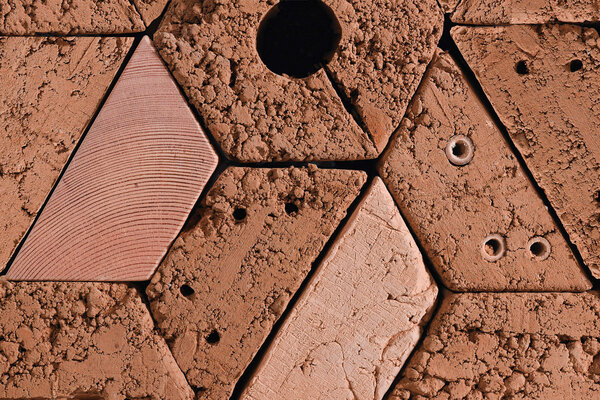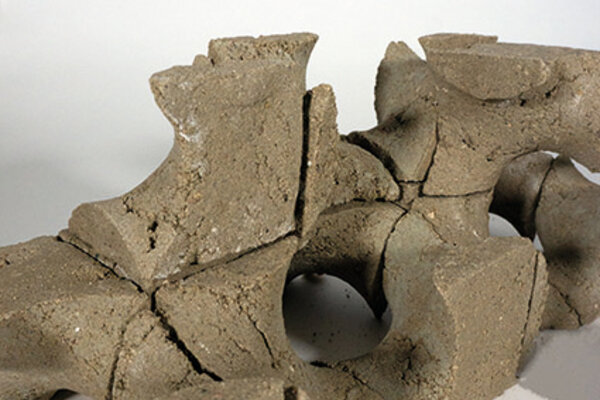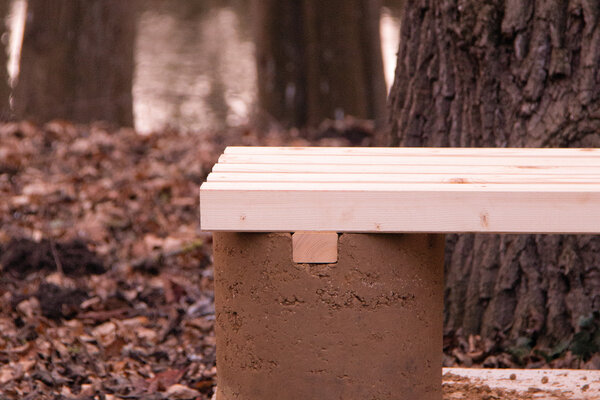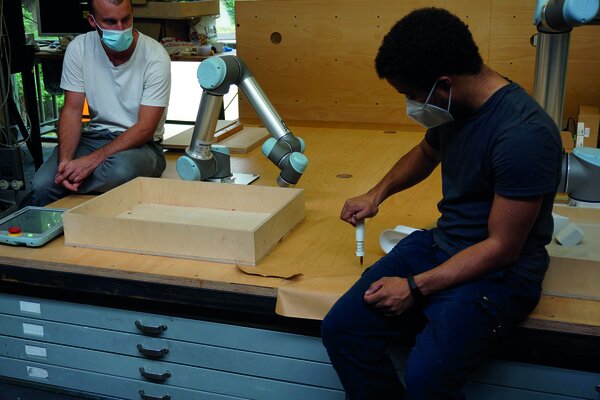
In this BurgLabs residency, XLab for AI and robotics collaborated with SustainLab for sustainability research. By combining the traditional manufacturing method "rammed earth" with new technologies such as robotics, formal, constructive concepts for sustainable applications are designed and developed.
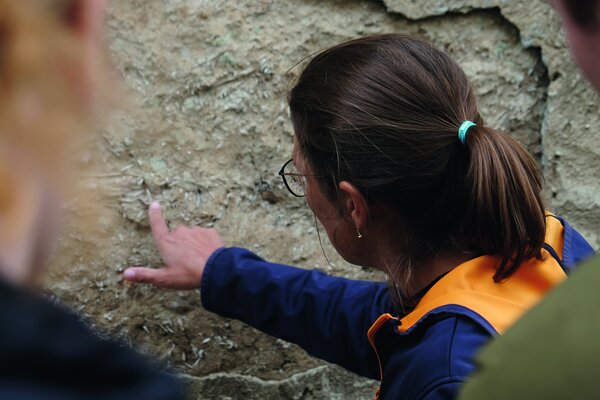
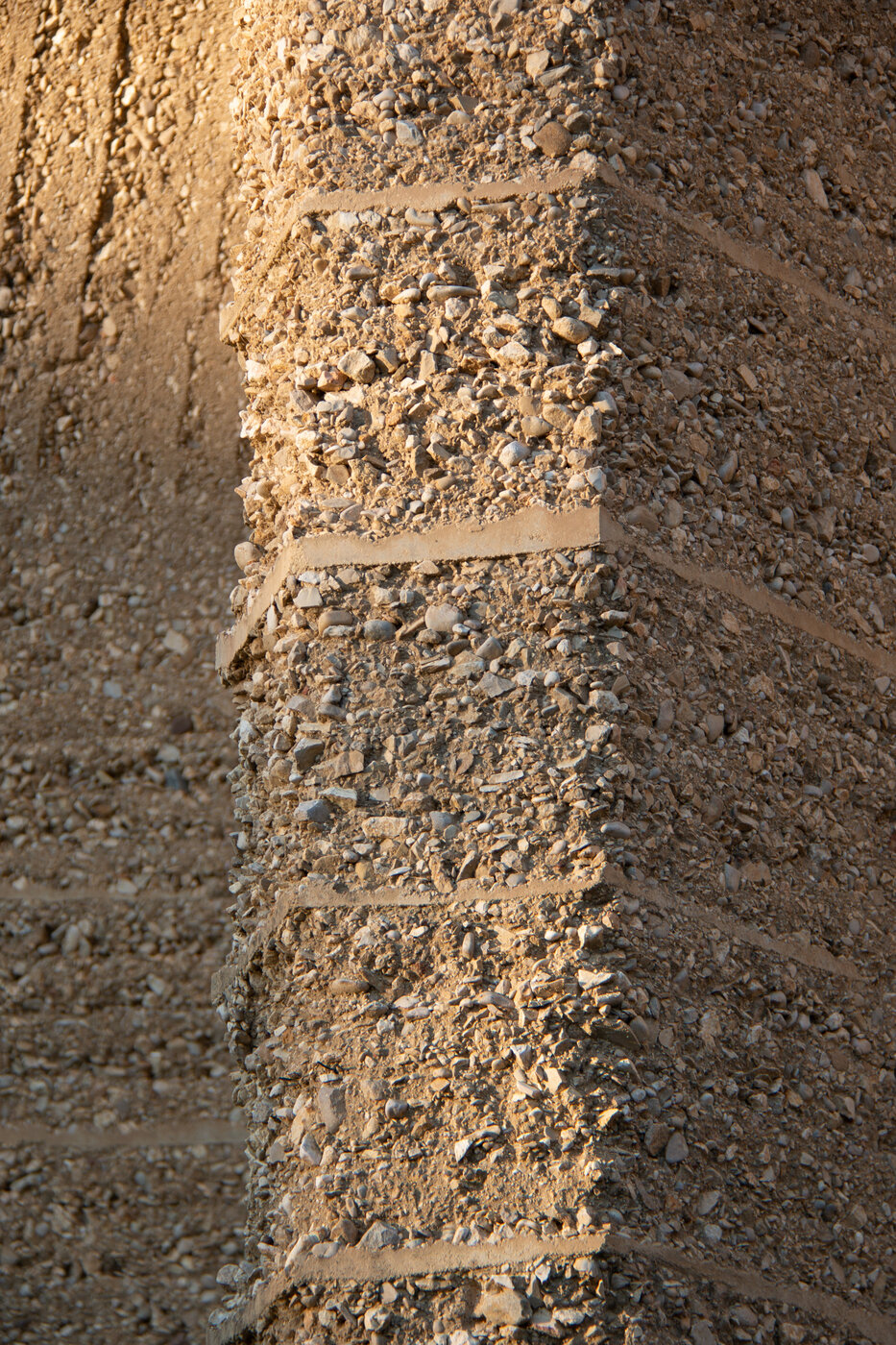
Rammed earth, terre pisé, terra battuta: Crumbly, earth-moist and relatively lean clay mass is poured into a formwork in layers and compacted by tamping. This form of construction is a building technique that is thousands of years old. While the compression of geogenic material shows great potential in architectural applications (made from existing overburden, recyclable, climate-regulating...), this very compression in a natural context is one of the biggest threats to our soils.
What are new design paths and forward-looking methods for a traditional process in dealing with local sediments? In what applications can compressed material be reversibly embedded? What formal and design possibilities can be created by new technologies? What is the role of the biological soil system?
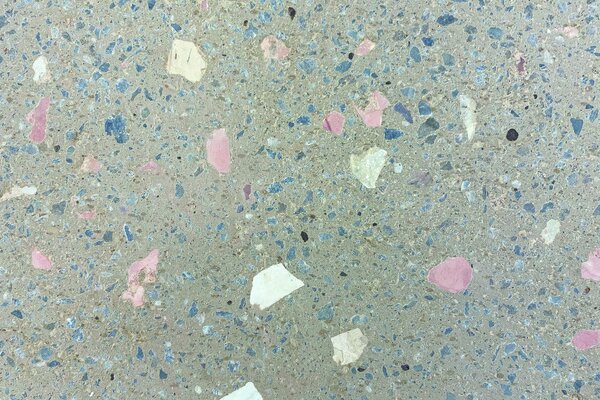
Automated processes, robotic participation and design methods meet local sediments. The task is the design and conceptual transfer into systemic and product-related contexts. The diverse design possibilities of the material composition, formal variants and integrated functions of rammed earth are investigated.
For example, how can hollow bodies or complex three-dimensional forms be realised through the precise (robotic) insertion of different material mixtures? Can some kind of probation be integrated through the precise laying of plant fibers?
How can such processes be designed? What formal qualities emerge? What potentials and fields of application do these new technical and design possibilities open up?
The task was,
1. to explore different material combinations in connection with experimental processing methods and critical perspectives.
2. to transfer resulting questions and ideas into application-oriented concept/product scenarios.
3. to constantly document the project and experiments in SustainLab and XLab and make them accessible to other students as a workshop and/or documentation.