Solar Circle explores an alternative approach to photovoltaic design by placing circularity and material responsibility at the center of solar energy production. While contemporary research and industrial development in photovoltaics largely prioritize efficiency and performance optimization, the question of sustainable resource use has not yet been sufficiently addressed. Solar Circle proposes a shift in perspective, framing the solar module not as a sealed, disposable product, but as a system designed for disassembly, reuse, and material recovery.
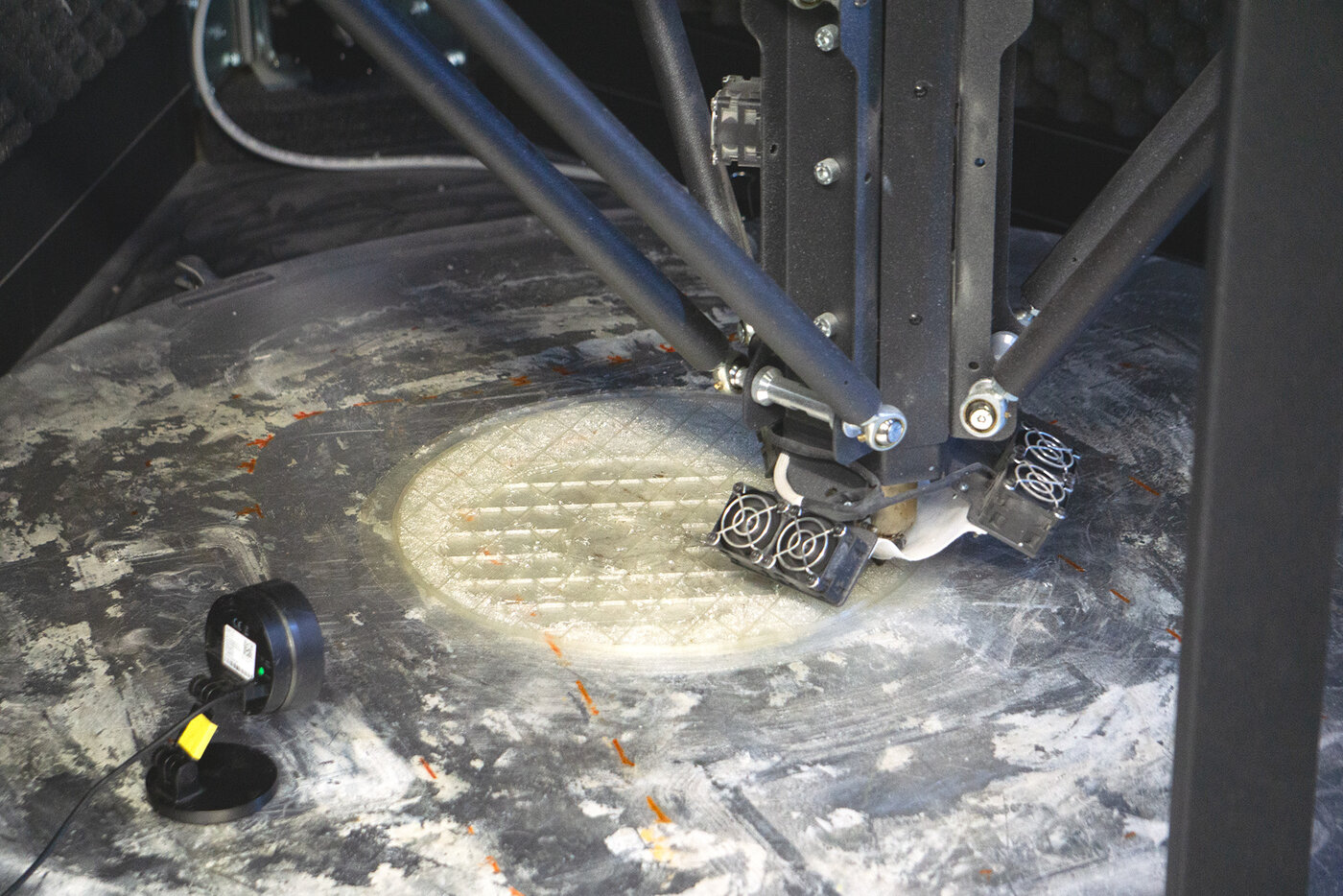
At the core of the project is a modular construction principle. In contrast to conventional photovoltaic modules, whose functional layers are permanently bonded, the layers of the Circle module are mechanically compressed and sealed in a watertight manner. A circular, injection-moldable mounting structure made from recycled high-density polyethylene (HDPE) holds the layers together without the use of adhesives. This design enables the material-pure separation of components such as plastic, glass, copper, silicon, and silver, while also allowing individual elements to be replaced in the event of damage. The project addresses a critical issue in current photovoltaic recycling practices. During conventional manufacturing, silicon wafers are coated and metallized, resulting in a material fusion that prevents a full recovery to solar-grade silicon quality after use. The Circle module addresses this limitation by intervening earlier in the industrial process chain. Prior to squaring, coating, and metallization, through the use of untreated, round-shaped M12 silicon wafers with a diameter of 30 cm. This approach has the potential to eliminate several energy-intensive processing steps and enables complete material separation at the end of the product’s life cycle.
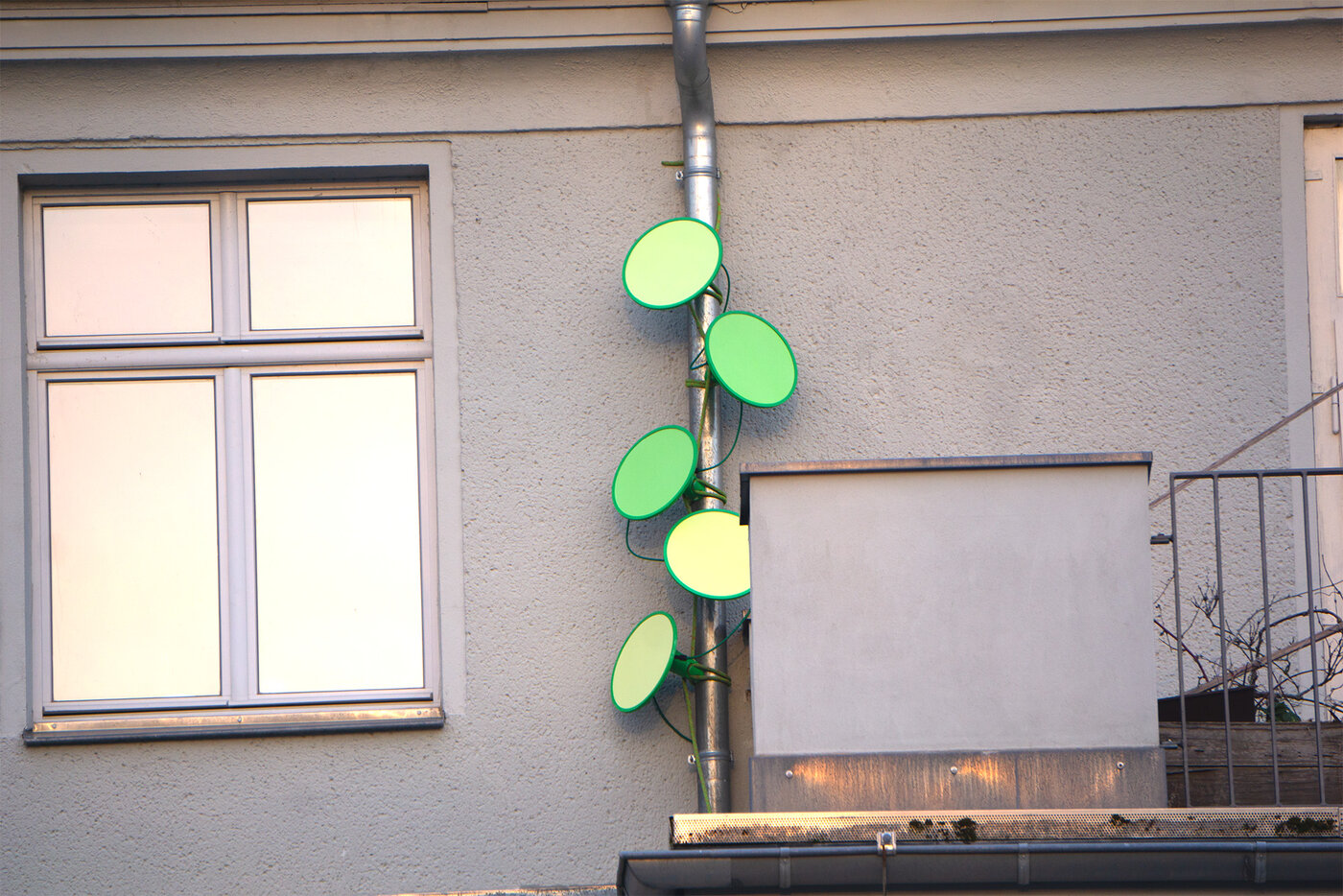
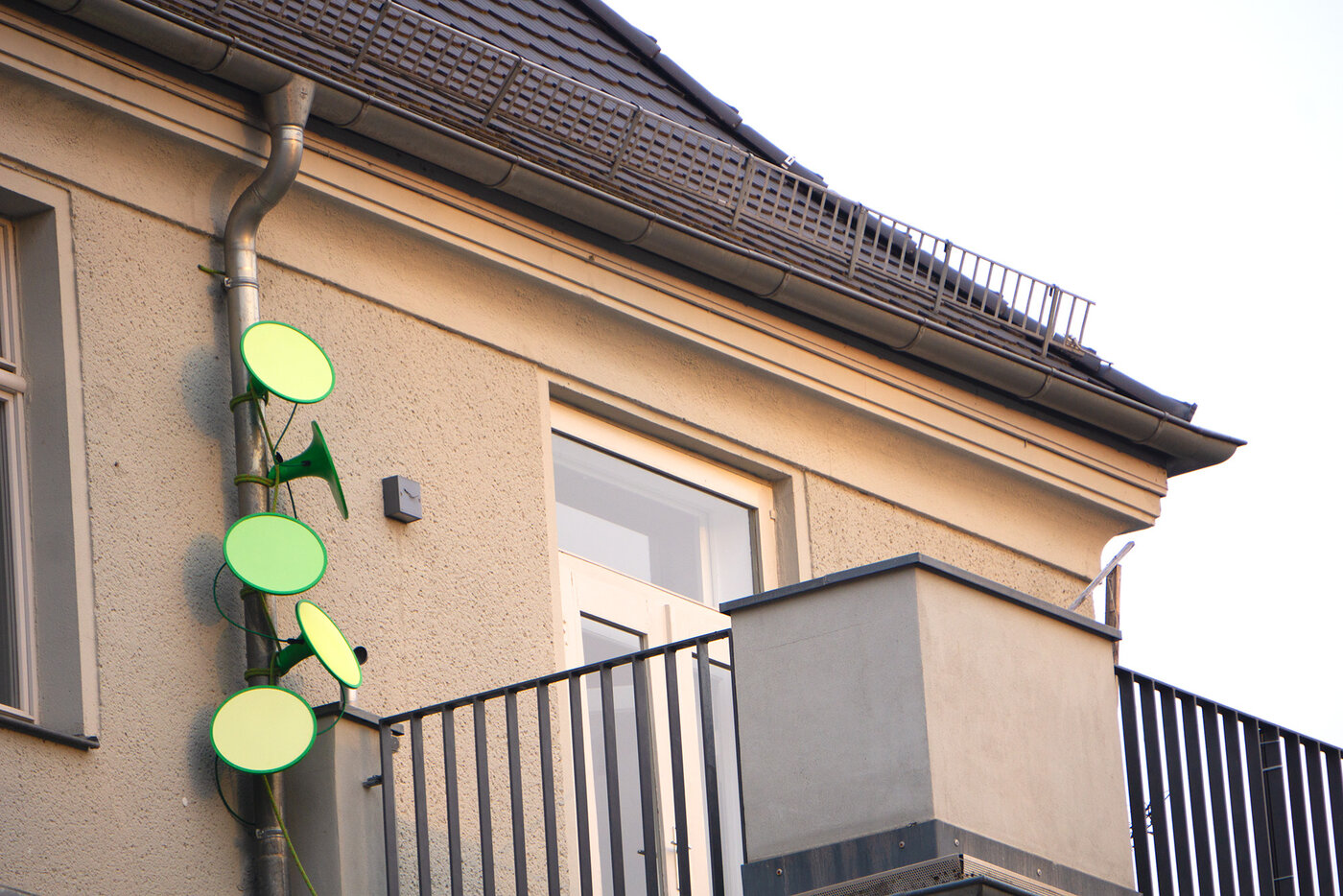
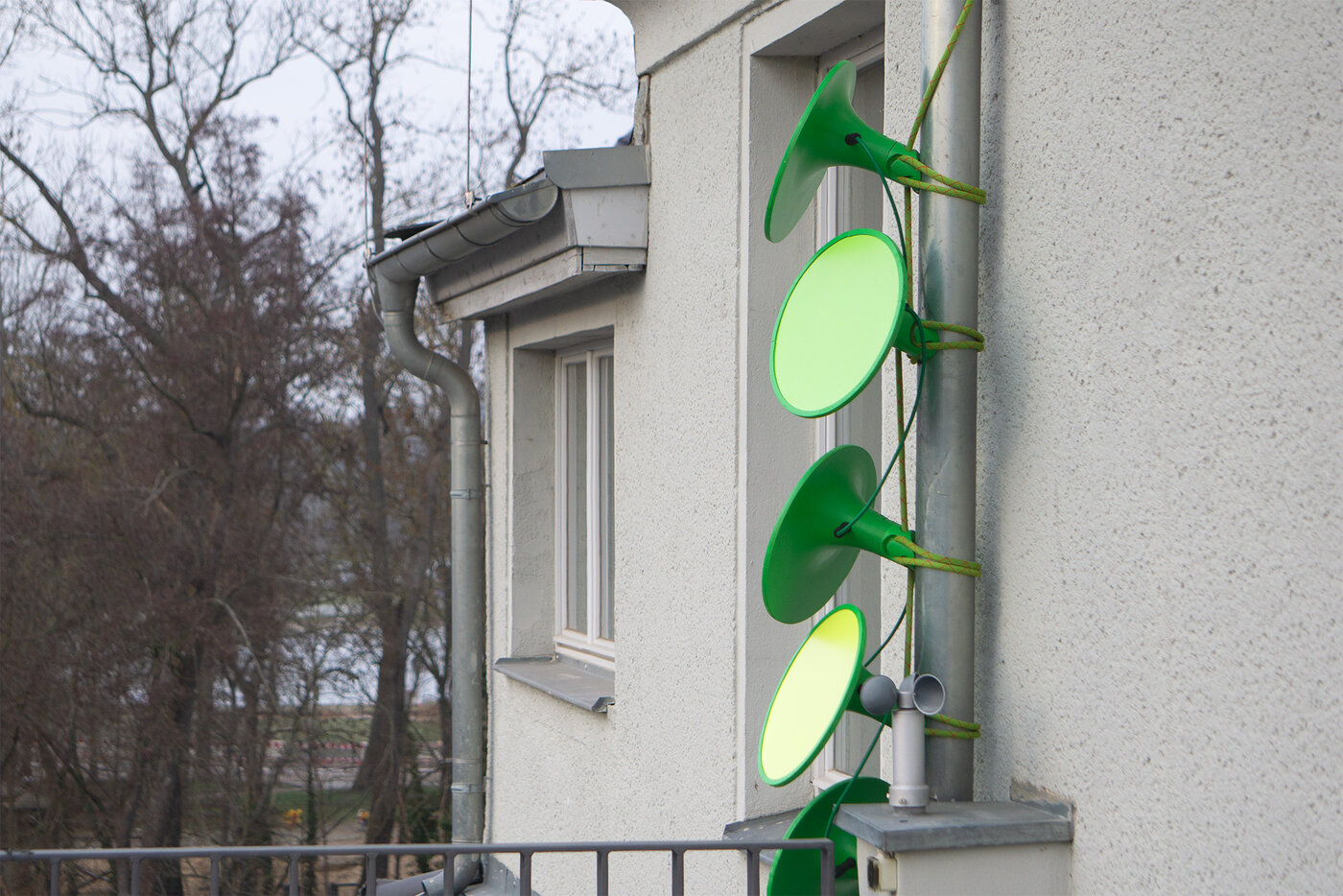
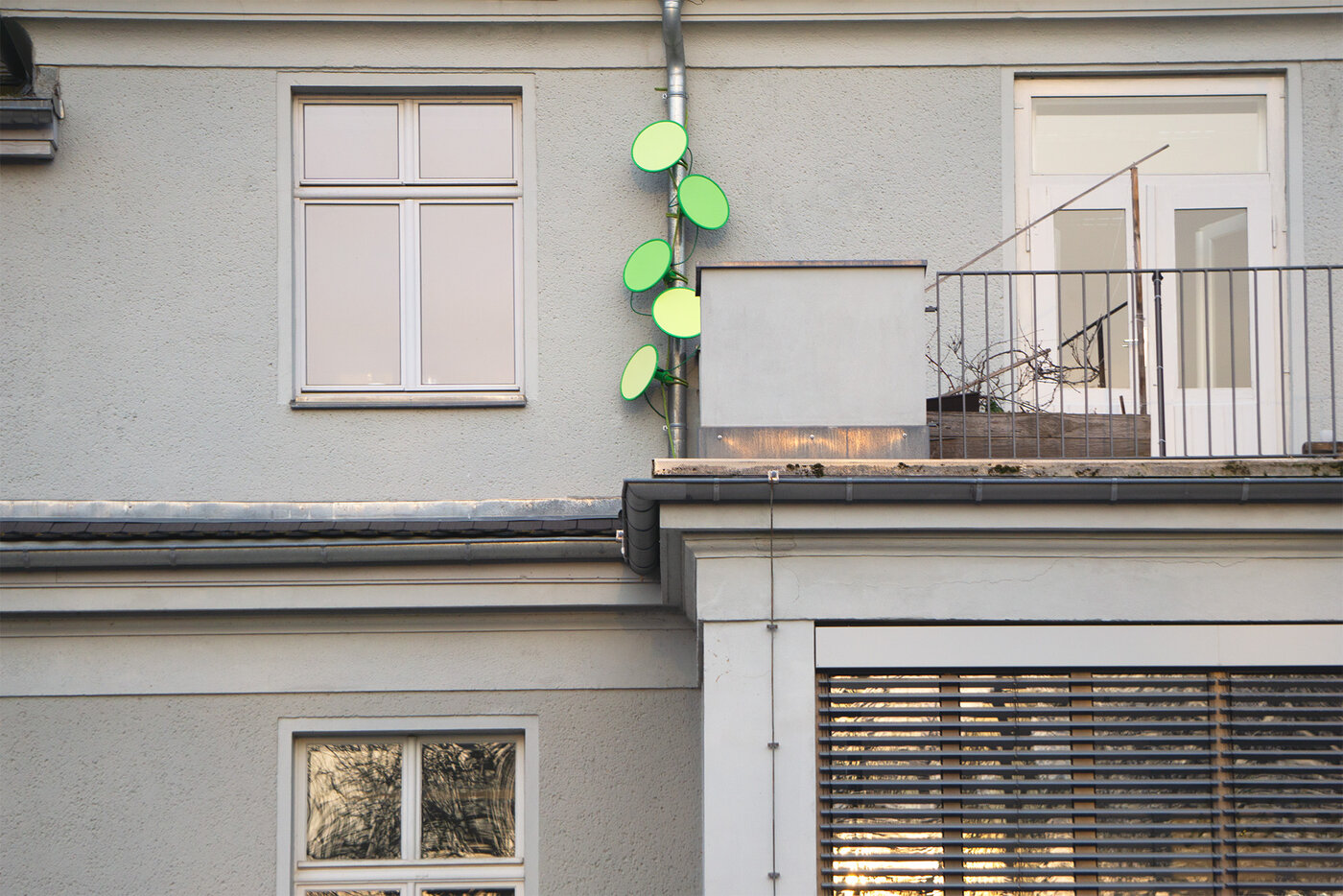
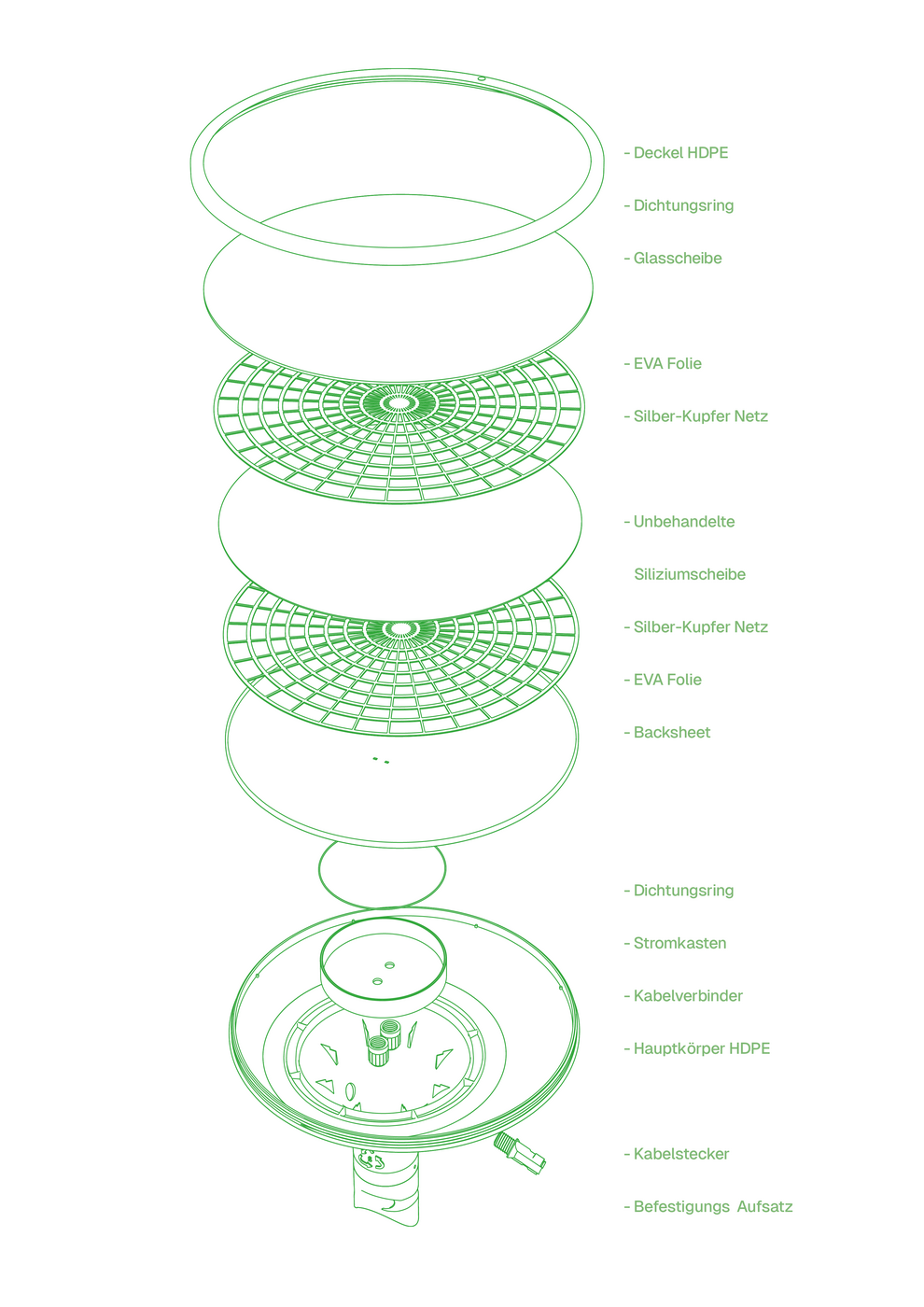
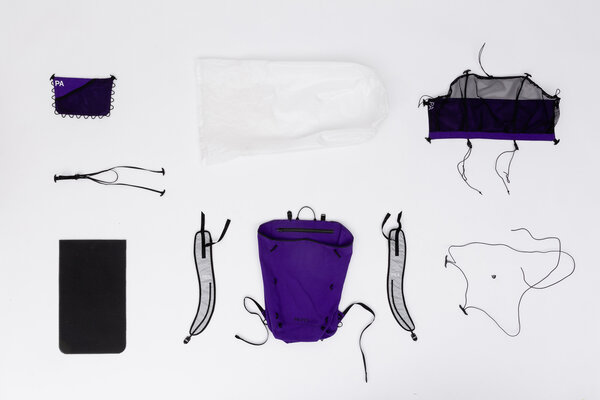
Material choice plays a central role in the project. Recycled HDPE was selected for its high UV stability, water resistance, and compatibility with industrial injection molding. Although widely used in food packaging and piping systems, HDPE often loses its food-grade certification after its first life cycle. Solar Circle repositions this material within a new context, proposing photovoltaic production as an alternative and meaningful secondary material stream. Structurally, the module consists of a threaded cover that applies pressure to a stack of functional layers via a sealing ring. These include a morphocolor-coated glass layer for variable visual appearance, an EVA film to ensure a tightly sealed interface, a silver-copper conductive mesh, and the silicon wafer itself. An additional conductive mesh layer and a further EVA film complete the assembly, while a backsheet stabilizes the structure. An integrated junction box transfers the generated electrical energy through a watertight plug connection to the exterior of the module. The conceptual framework was supported by theoretical and technical validation provided by experts from the Fraunhofer Institute. Beyond its material and technical considerations, Solar Circle also explores new modes of installation and use. A modular mounting attachment enables suspension using climbing ropes, allowing the modules to be mounted on existing infrastructures such as balcony downpipes, streetlights, or scaffolding systems. Individual modules can be detached, repaired, or replaced. In this scenario, the climbing ropes themselves may also enter a second life cycle, reinforcing the project’s commitment to reuse across all components. Solar Circle presents photovoltaic technology not only as an energy-generating device, but as a designed system embedded in broader material, spatial, and ecological cycles. By combining modular construction, alternative material streams, and flexible deployment, the project proposes a speculative yet technically grounded vision for circular solar futures.