PROZESS: Guest Lectures

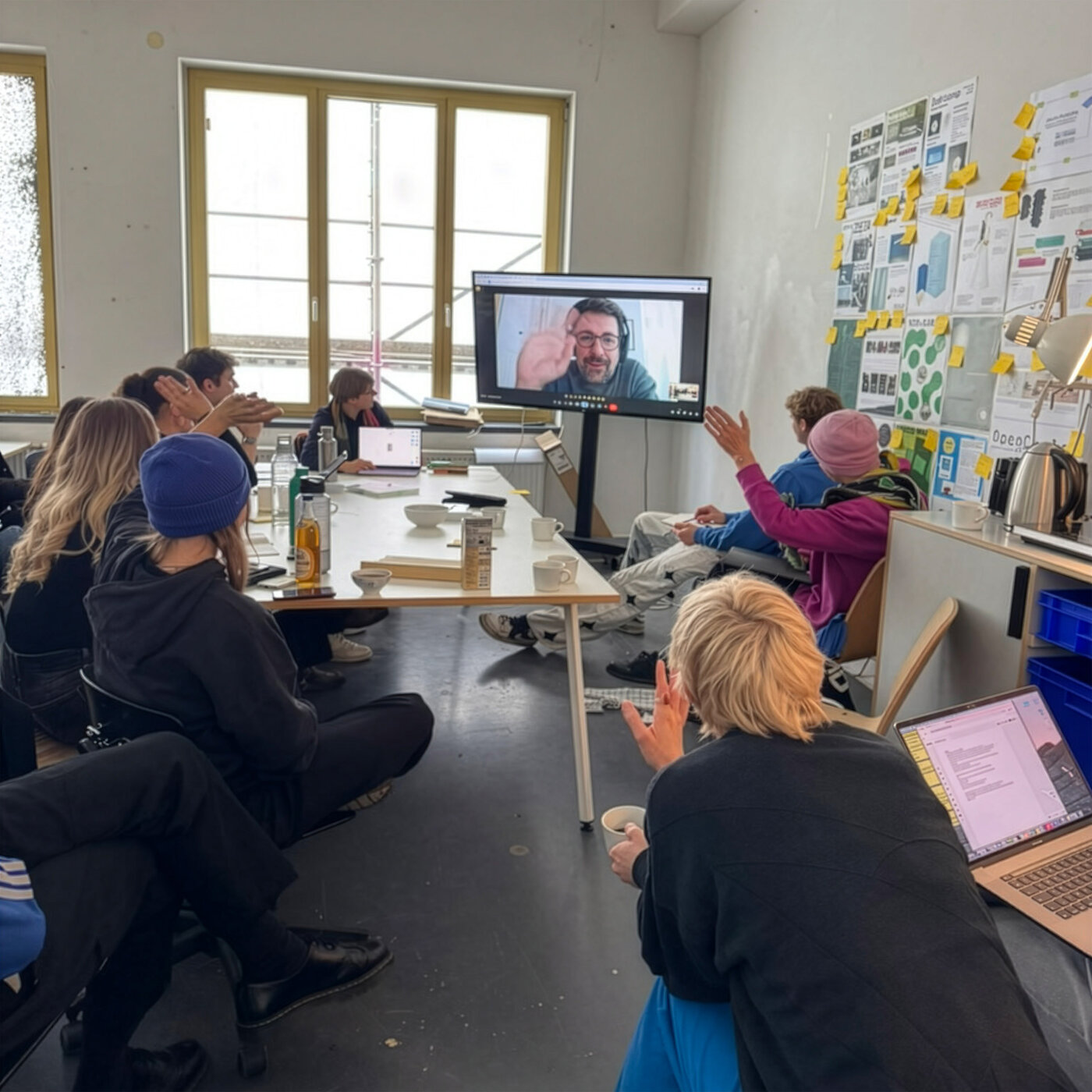
David Brüll - „Electric Society“
14.10.2025, Halle (Saale) / Berlin

David Brülls Vortrag zur „Electric Society“ beschreibt eine Zukunft, in der Energie nicht nur produziert, sondern intelligent verteilt, gespeichert und erfahrbar gemacht wird. Statt einfach flächendeckend Ladestationen für Elektrofahrzeuge zu installieren, geht es um deren sinnvolle Einbindung in ein dynamisches, datengestütztes System. Eine marktfreundliche Ladestation reagiert auf Preisschwankungen und lädt, wenn Strom günstig ist, eine netzfreundliche hingegen orientiert sich an der Netzlast und kann bei Engpässen Energie zurückspeisen. Dieses Prinzip gilt auch für Solarpaneele, Batterien oder Wärmespeicher – verbunden durch ein digitales Netzwerk, das in Echtzeit Energieflüsse steuert und ausbalanciert. Im sogenannten Energie-Erlebnisraum wird dieses Konzept räumlich und sinnlich erfahrbar. Auf einem Areal von einem Quadratkilometer werden Photovoltaik, Windkraft, Eisspeicher, Batteriespeicher und Wasserstofftechnologien verknüpft. Eine zentrale Leitstelle zeigt den Energiefluss live, während Themenkuben zu Mobilität, Wärme oder Wasser interaktive Datenvisualisierungen bieten. Besucher können Energieproduktion und Verbrauch nachvollziehen und durch Simulationen lernen, wie sich Tageszeiten oder Netzbelastungen auswirken. Besonders eindrücklich sind die edukativen Installationen, die Energiezyklen spielerisch vermitteln. Haushaltsgeräte werden durch eine Autobatterie betrieben, um das Potenzial von Elektrofahrzeugen als Energiespeicher zu verdeutlichen. Durch transparente Leitungsmodelle wird sichtbar, wie Abwärme und überschüssige Energie in zentrale Speicher zurückgeführt werden. Brülls „Electric Society“ zeigt, wie technologische Infrastruktur, Umweltbewusstsein und Design zu einem partizipativen Energiesystem verschmelzen können – ein Zusammenspiel aus Daten, Raum und sozialer Erfahrung.
 

Matthias Futterlieb - Federal Environment Agency
21.10.2025, Halle (Saale)

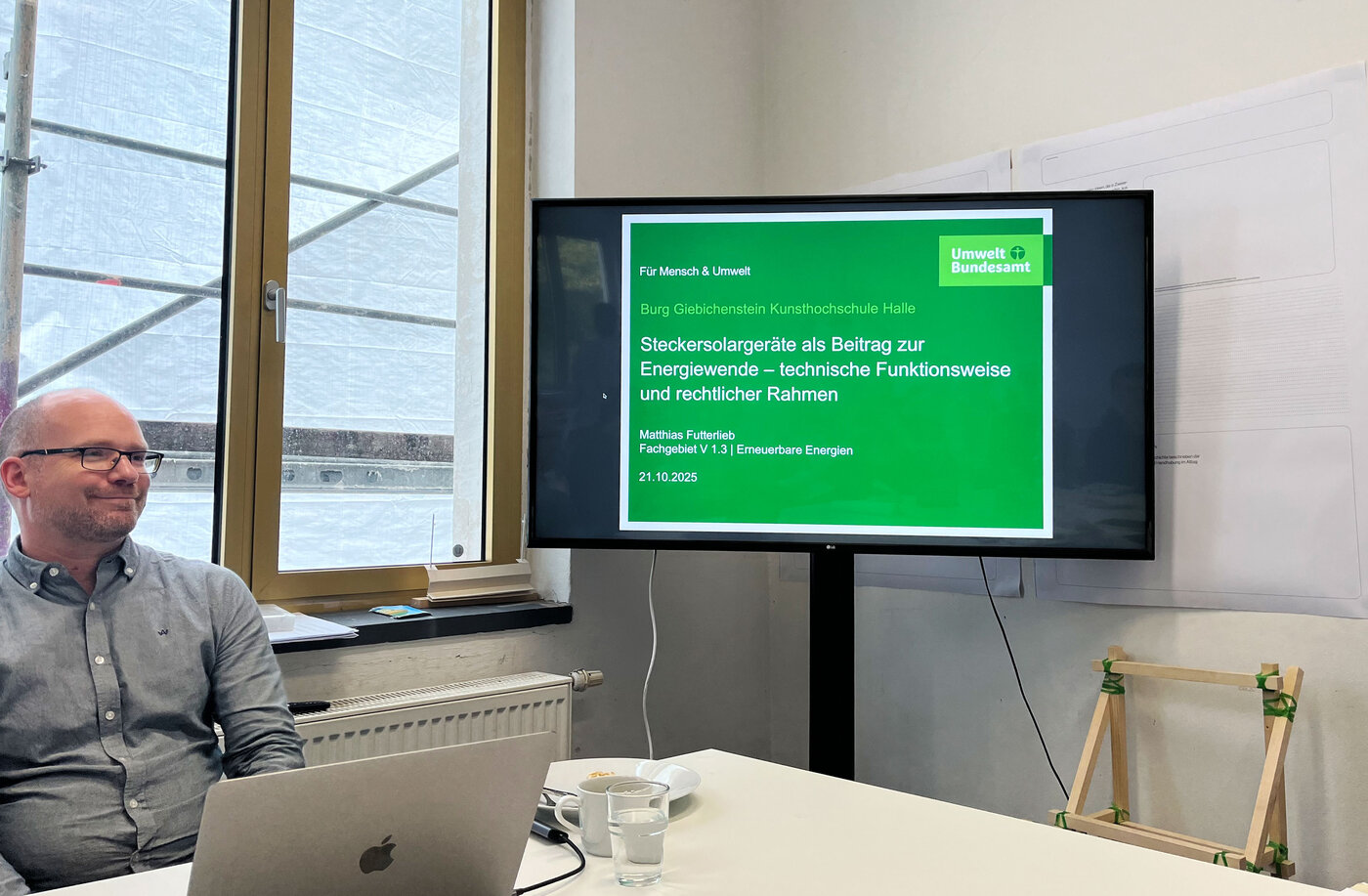
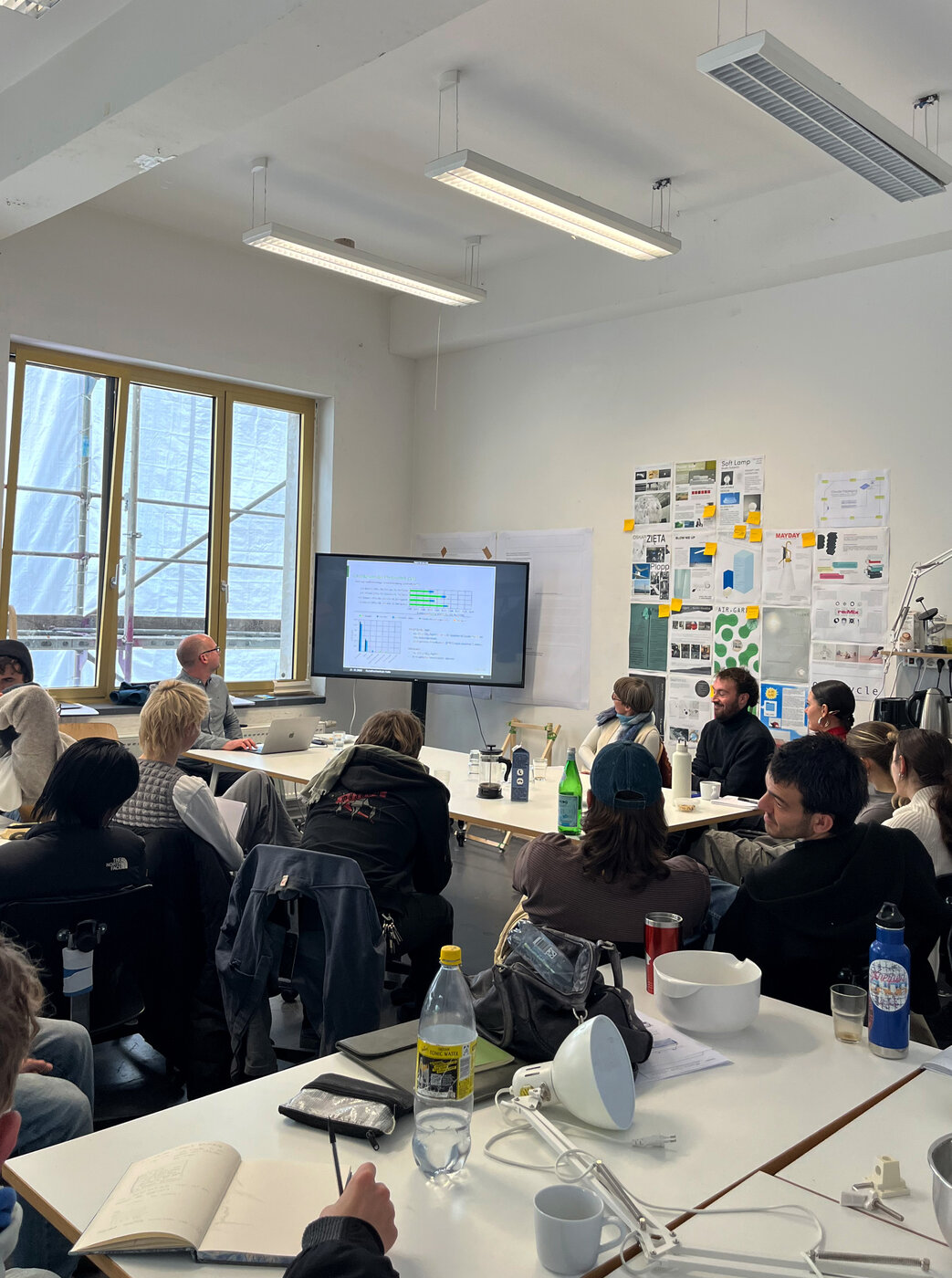
On Tuesday, October 21 2025, we welcomed Matthias Futterlieb, who gave a lecture on plug-in solar modules and their contribution to the energy transition.  
It became clear how low-threshold technologies, exemplified by plug-in solar devices, enable participation in the energy transition.  
Although these devices do not make a major contribution to the overall capacity of renewable energy, they lower the barrier to engaging with solar power. They encourage awareness of sustainable consumption and strengthen self-sufficiency.  Particularly important is the legal framework, which has been significantly simplified in recent years. The straightforward registration in the national market data register and the possibility of putting devices into operation immediately have accelerated their spread. As a result, plug-in solar units are no longer tied to bureaucratic hurdles but can be installed and operated with ease.  

Looking more closely at the ecological balance, it becomes evident that the energy required for production is offset after about two years. Over their lifetime, the devices make a clear contribution to reducing greenhouse gas emissions.  
Futterlieb also addressed possible rebound effects. Some households consume more electricity after installing a PV system because the self-generated electricity is perceived as “free.” This shows that technical solutions must always be accompanied by conscious energy use.  Plug-in solar devices bring people into direct contact with renewable energy, promote personal responsibility, and foster acceptance. Their strength lies in making the energy transition tangible and turning it into a project shared by everyone.  


Marco Mehringer - Mining Noise
21.10.2025, Halle (Saale)

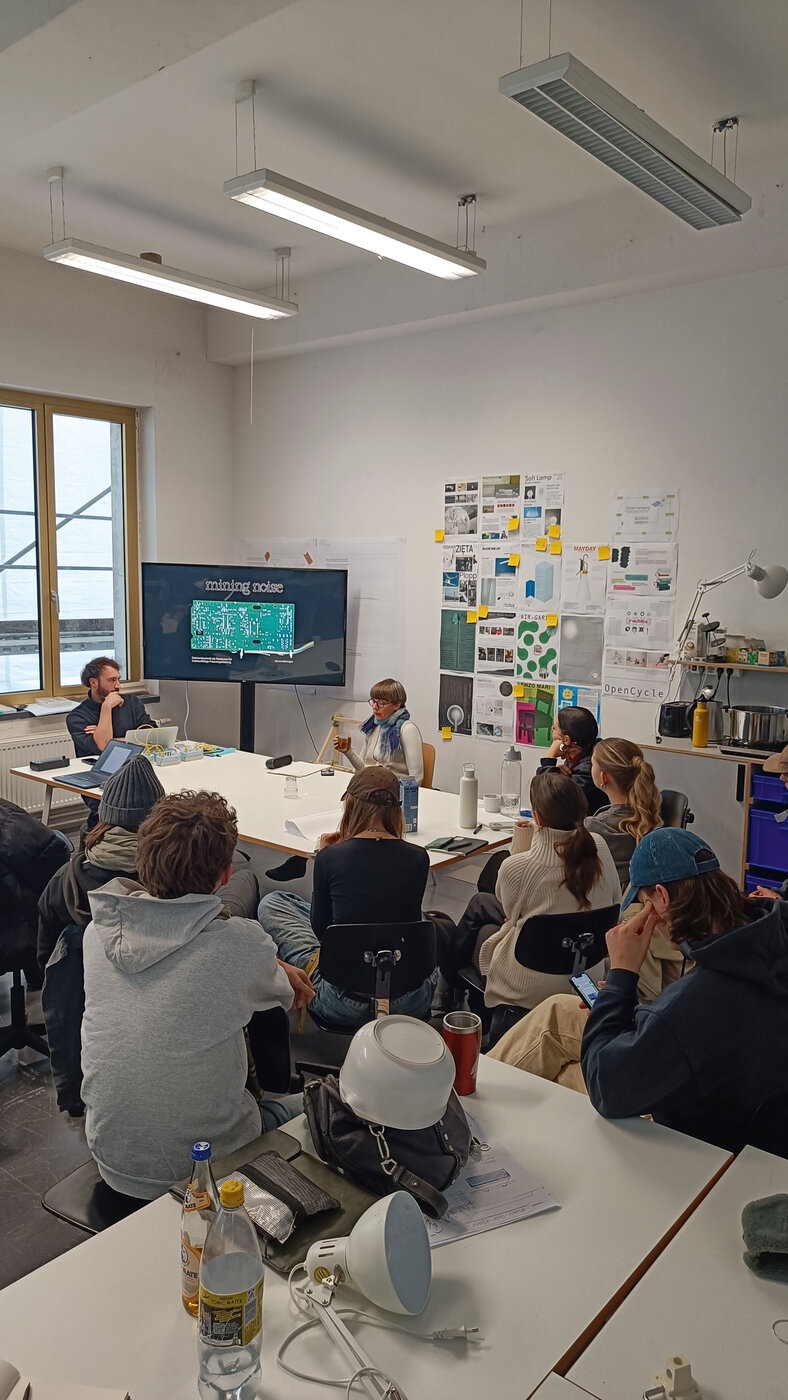
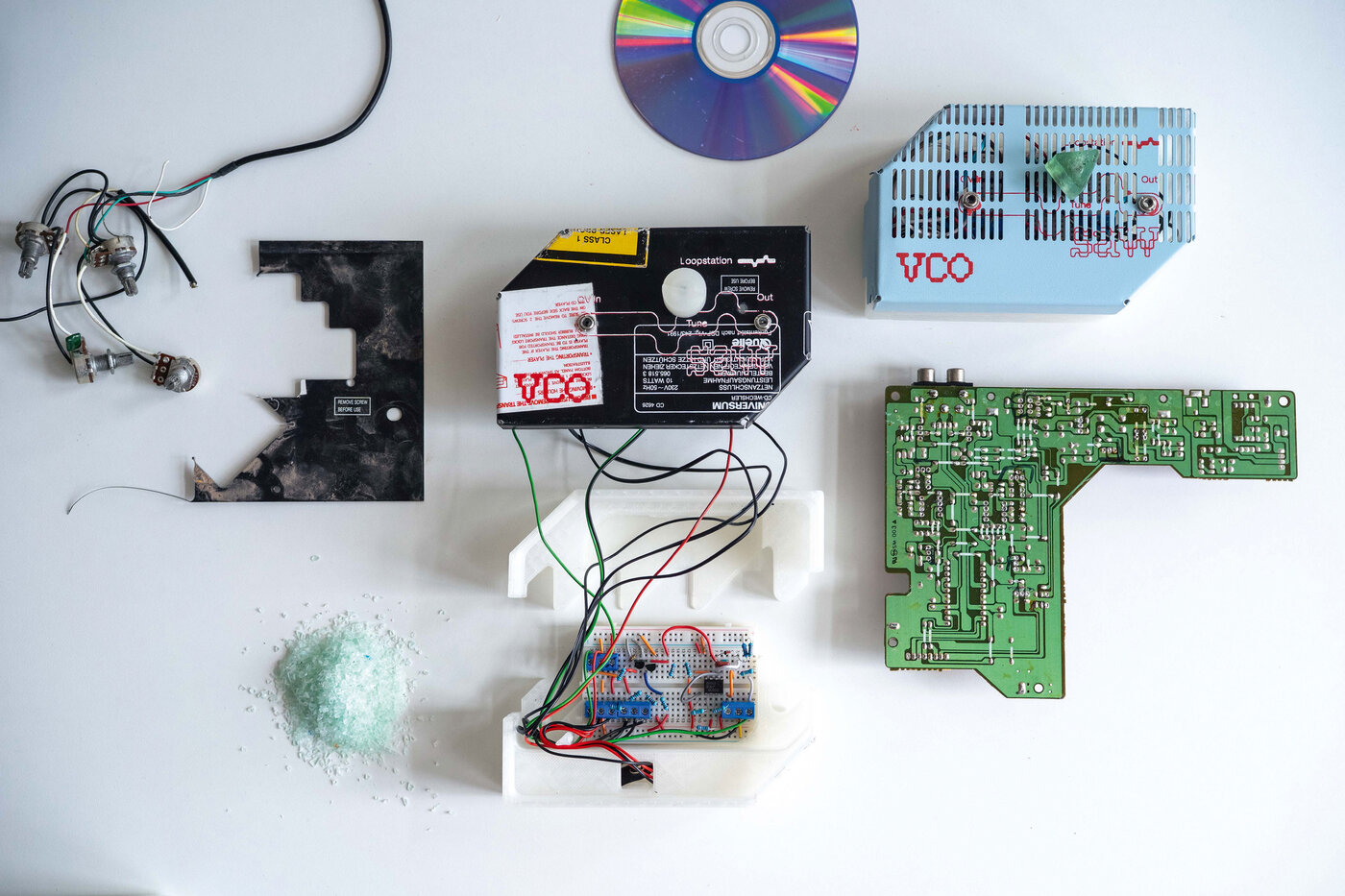
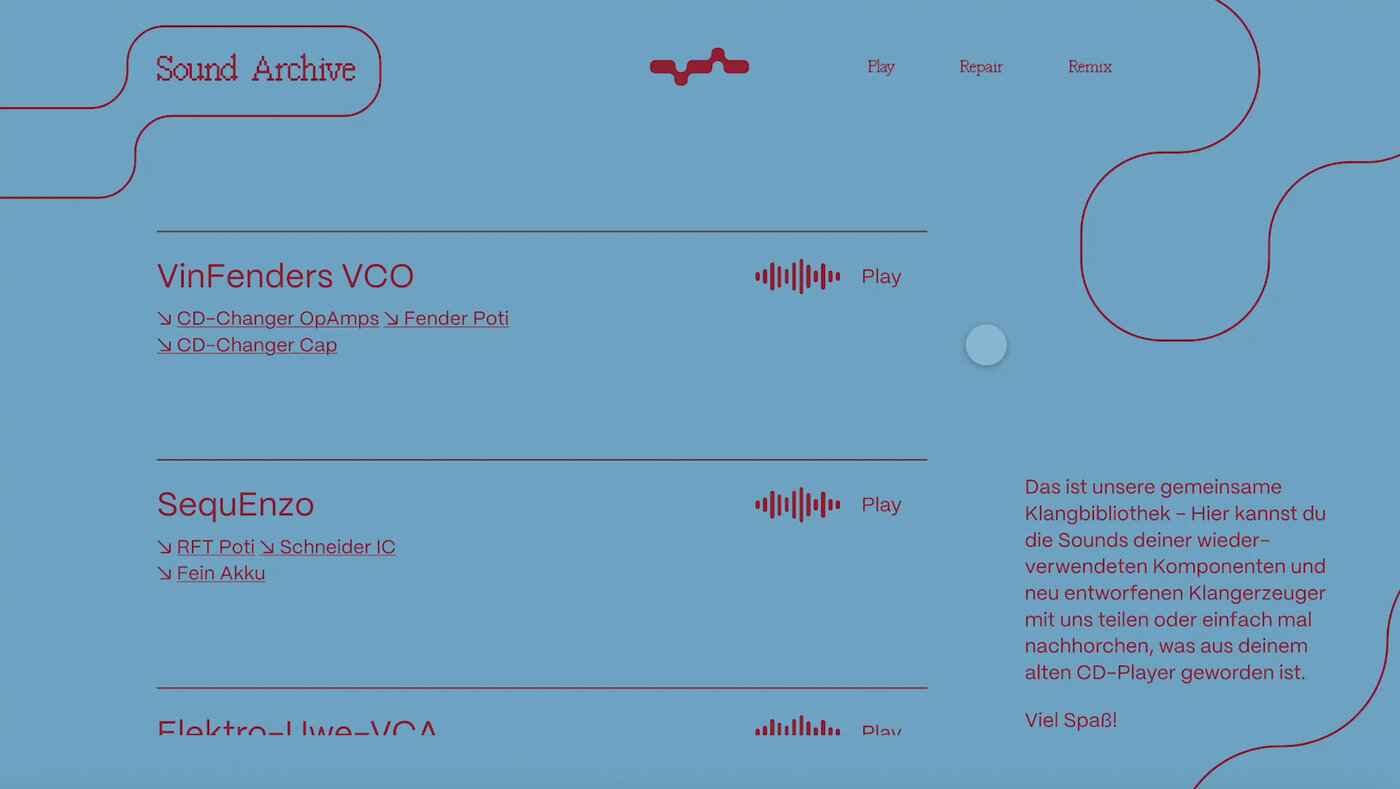
Marco Mehringer's master's project, ‘Mining Noise,’ explores ways to reuse electronic waste, particularly defective small appliances, in new products. Based on the growing amount of electronic waste, limited recycling options, and the resulting destruction of valuable resources, Mehringer attempts to identify new ways to reuse these materials. This is illustrated by the construction of a synthesiser made exclusively from components of various old, defective audio devices. The necessary electrical components can be desoldered, while a more complex part of the synthesiser, a VOC, can be constructed from commercially available electrical components. The synthesiser's housing and keys are made either from old housings that are cut and bent into the right shape, or from injection-moulded or 3D-printed plastic from old CDs. The result is a musical instrument made entirely from old devices or waste.
Building on the experience gained from this project, a complementary public website was developed. It contains building instructions, project documentation, a digital version of the synthesiser, a sound archive and additional information on the materials and electrical components. The aim is to inspire people to tackle similar projects using the information provided and to learn more about the subject.
 

Josua Roters – About making, learning, and the joy of creating
20.10.2025, Halle (Saale)

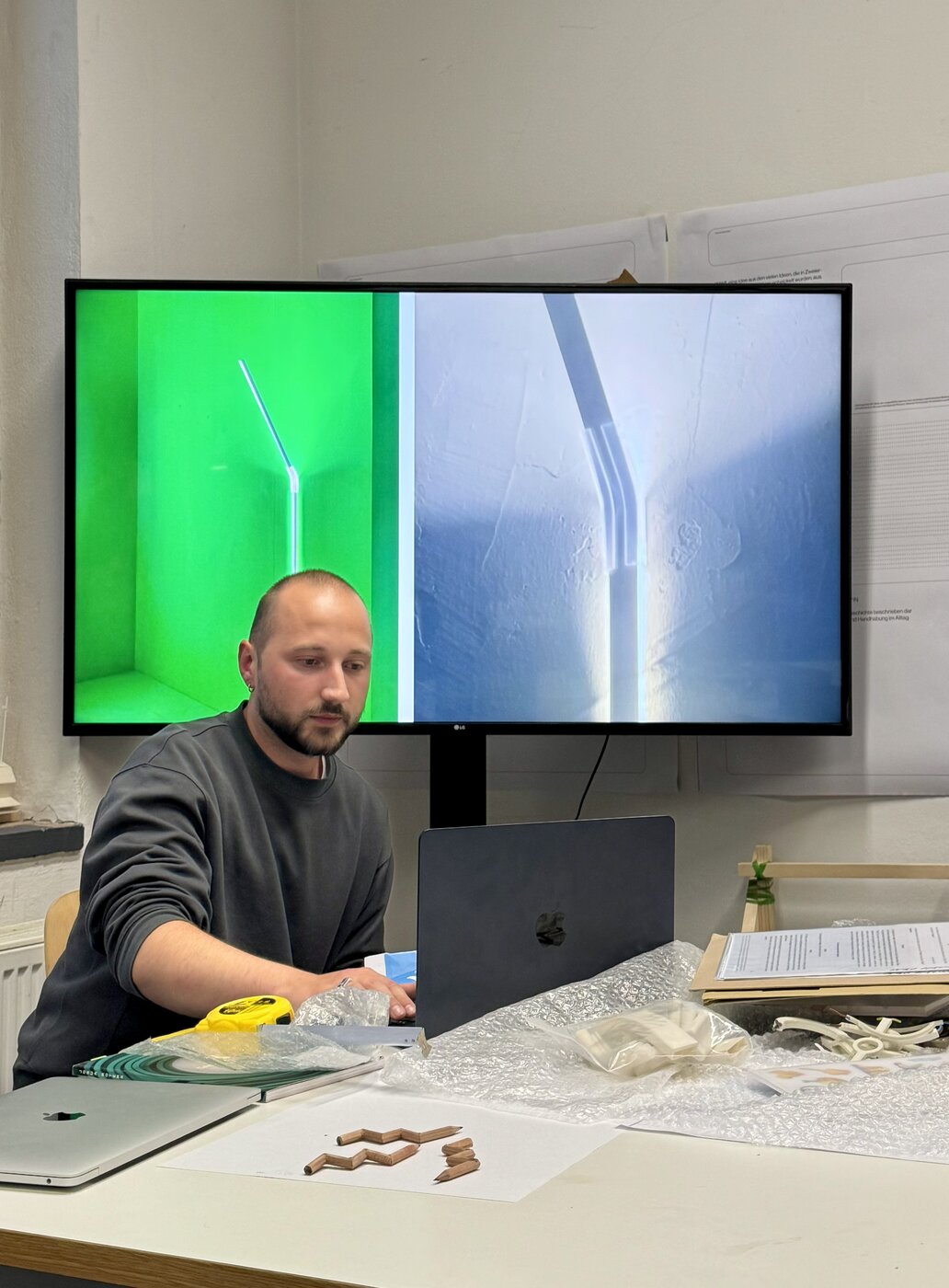
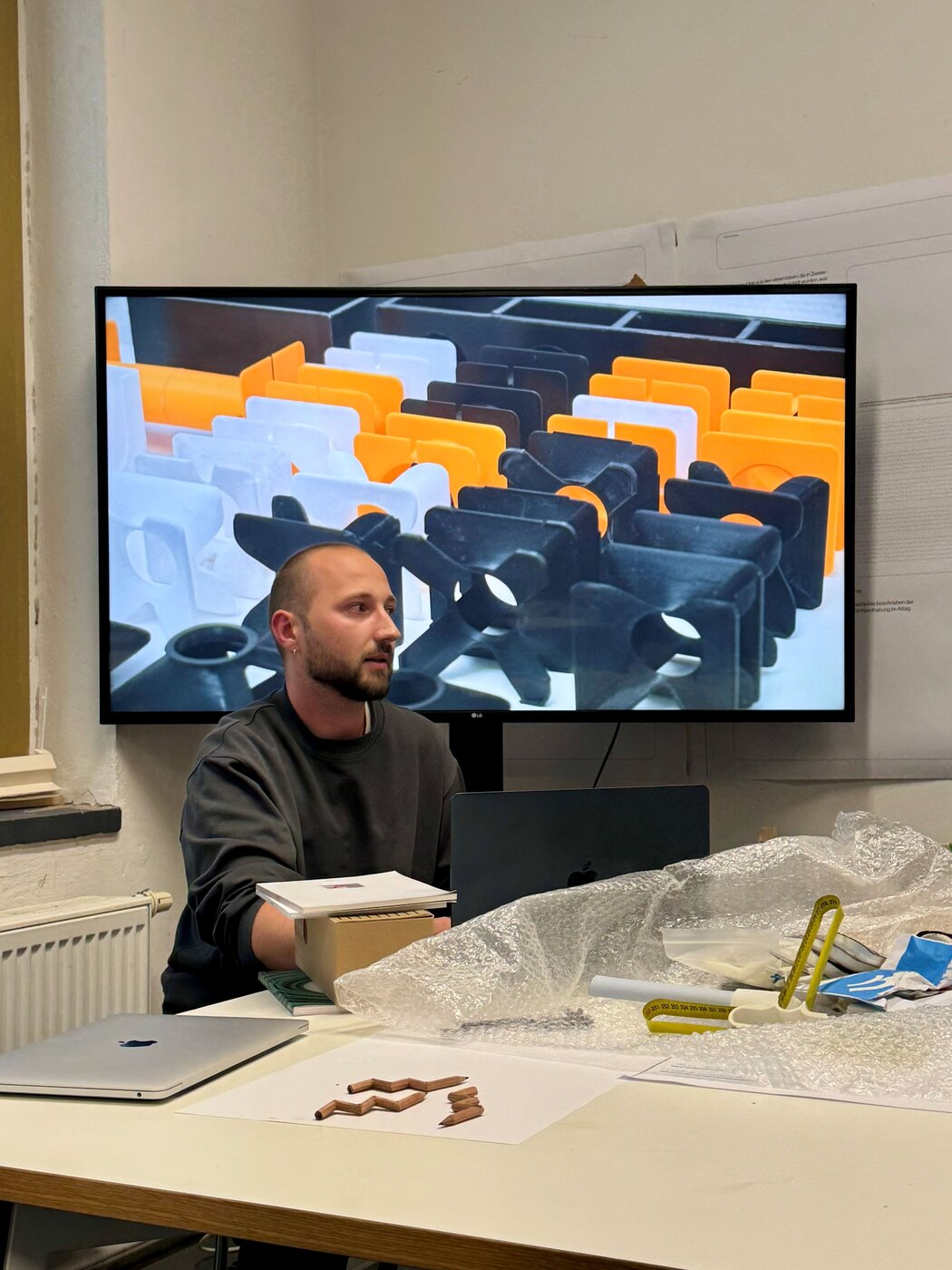
On October 20, 2025, designer Josua Roters visited the Design Campus of Burg Giebichenstein University of Art and Design Halle to talk about his work, his path through his studies, and what good design means to him. Open and approachable, he shared what he has taken from his time as a student and how curiosity, experimentation, and joy in making continue to shape his practice.
Roters emphasized that studying design means having the freedom to try, to fail, and to learn from it. For him, it’s not about perfection but a conscious attitude toward making: a prototype doesn’t have to be flawless but should clearly communicate its idea. Within a limited timeframe, it’s about setting priorities and asking where can I simplify without losing the essence? This way, results stay coherent and achievable. Equally important is remaining open to new tools and techniques—sometimes learning something unfamiliar works better than holding on to what feels safe.
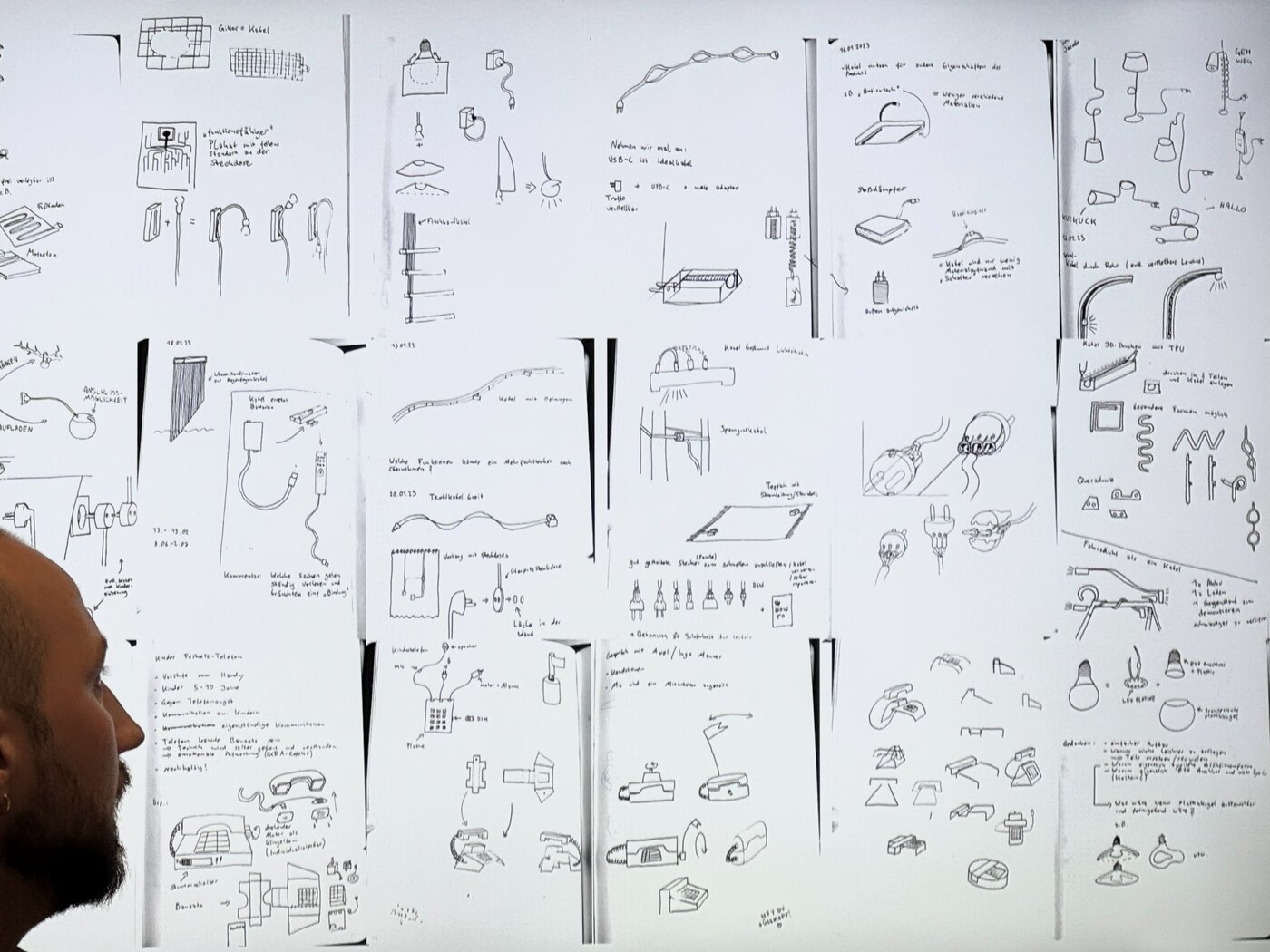
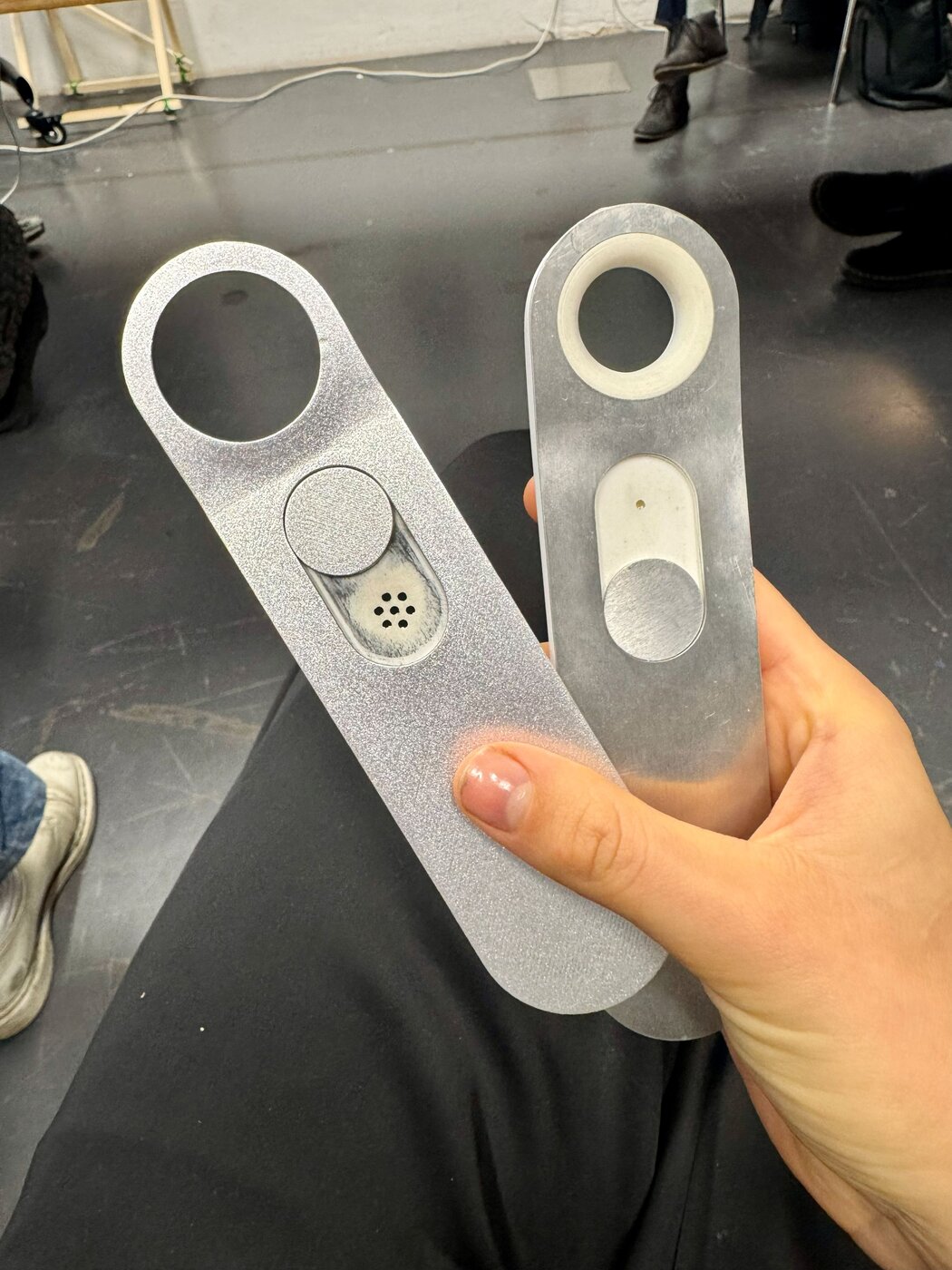
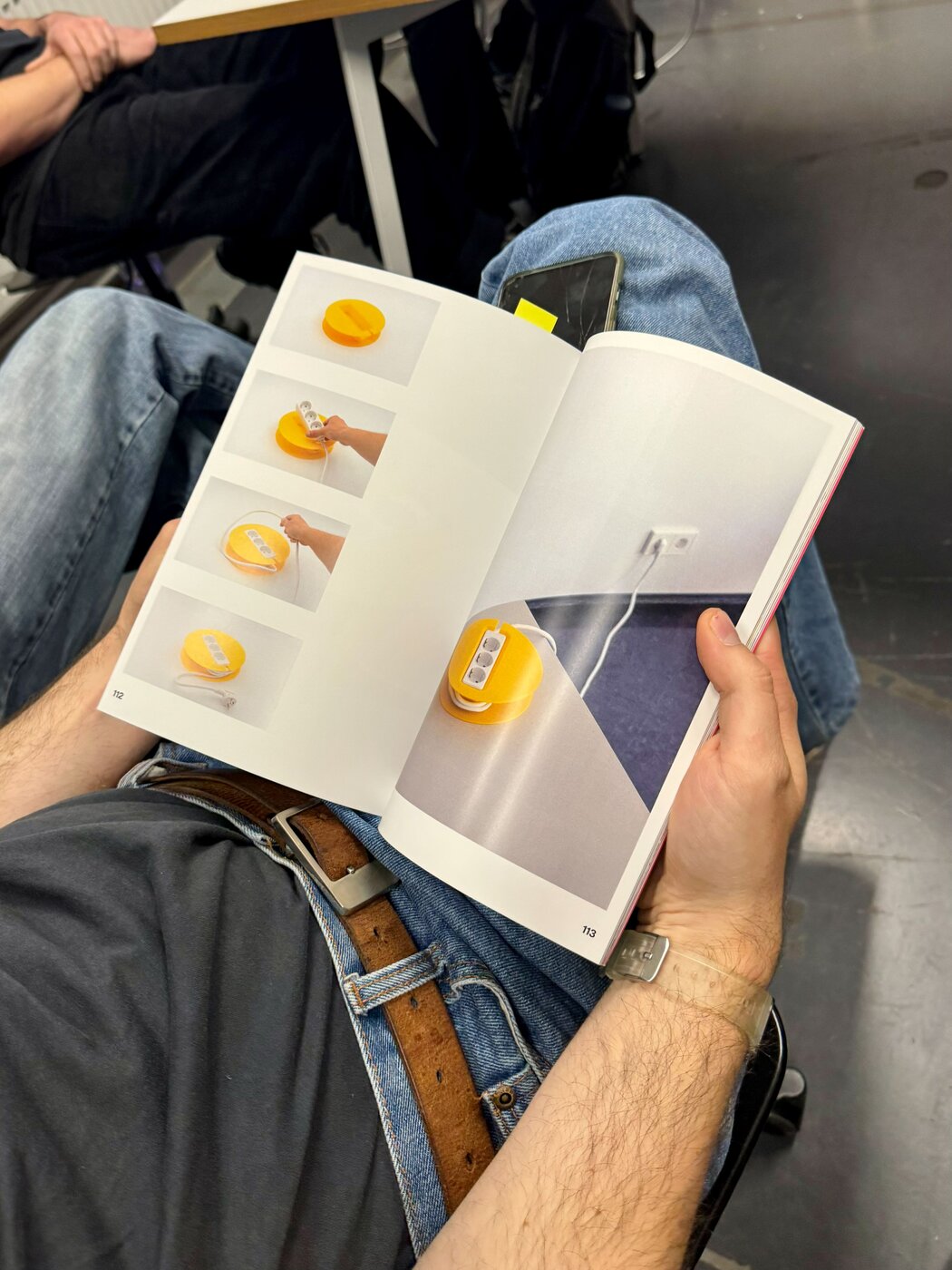
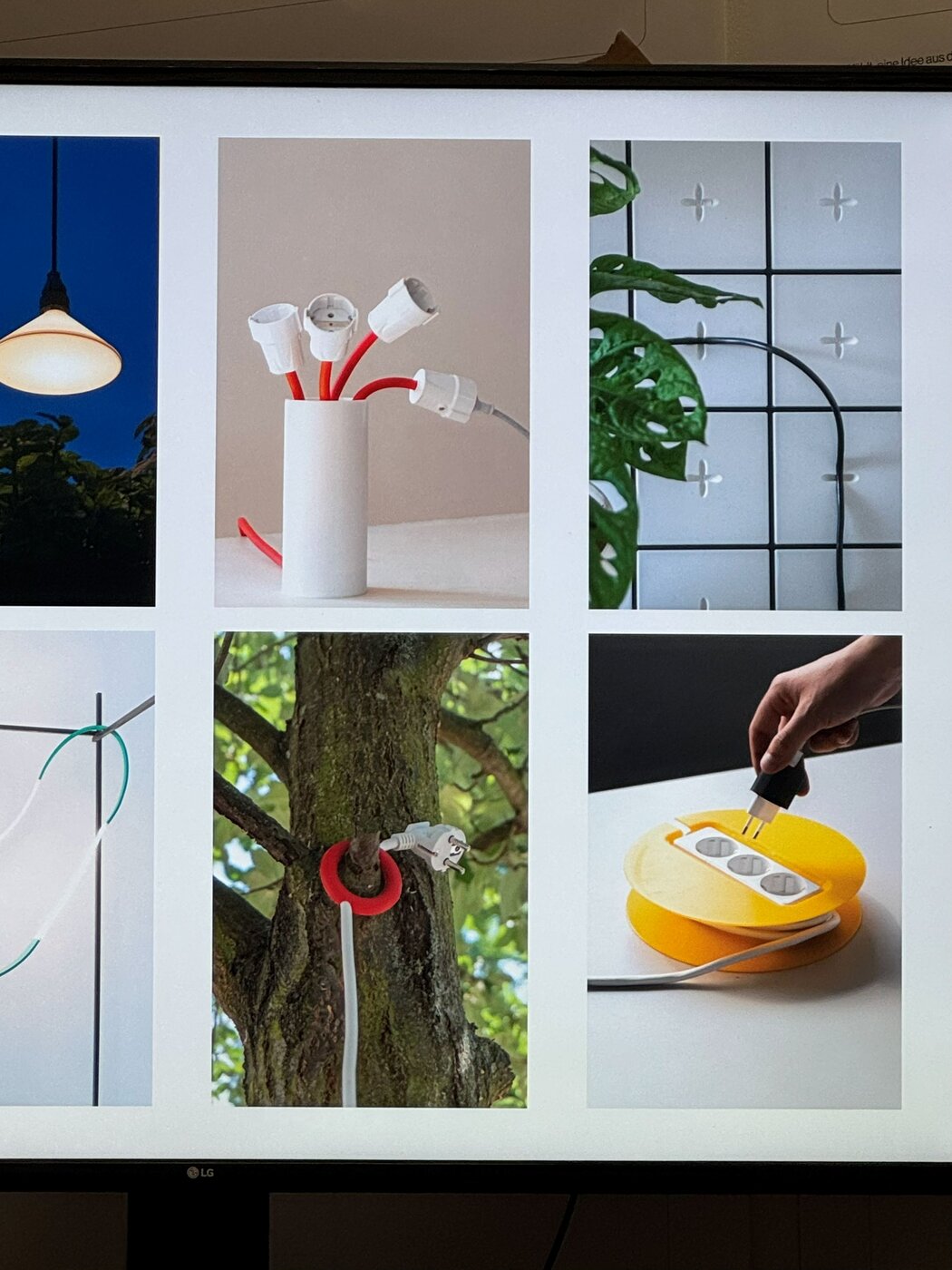
Through his projects – including the Maßbandleuchte, the On-Off Light Switch, and his master’s project Cable Mania – Roters showed how everyday observations can evolve into distinct design concepts. The Maßbandleuchte merges the mechanism of a measuring tape with a flexible light source, combining function and interaction. The On-Off Light Switch rethinks energy use and attention through a simple physical gesture.
His lecture highlighted design as a balance between idea and form—and as an attitude grounded in openness, communication, and genuine enjoyment.


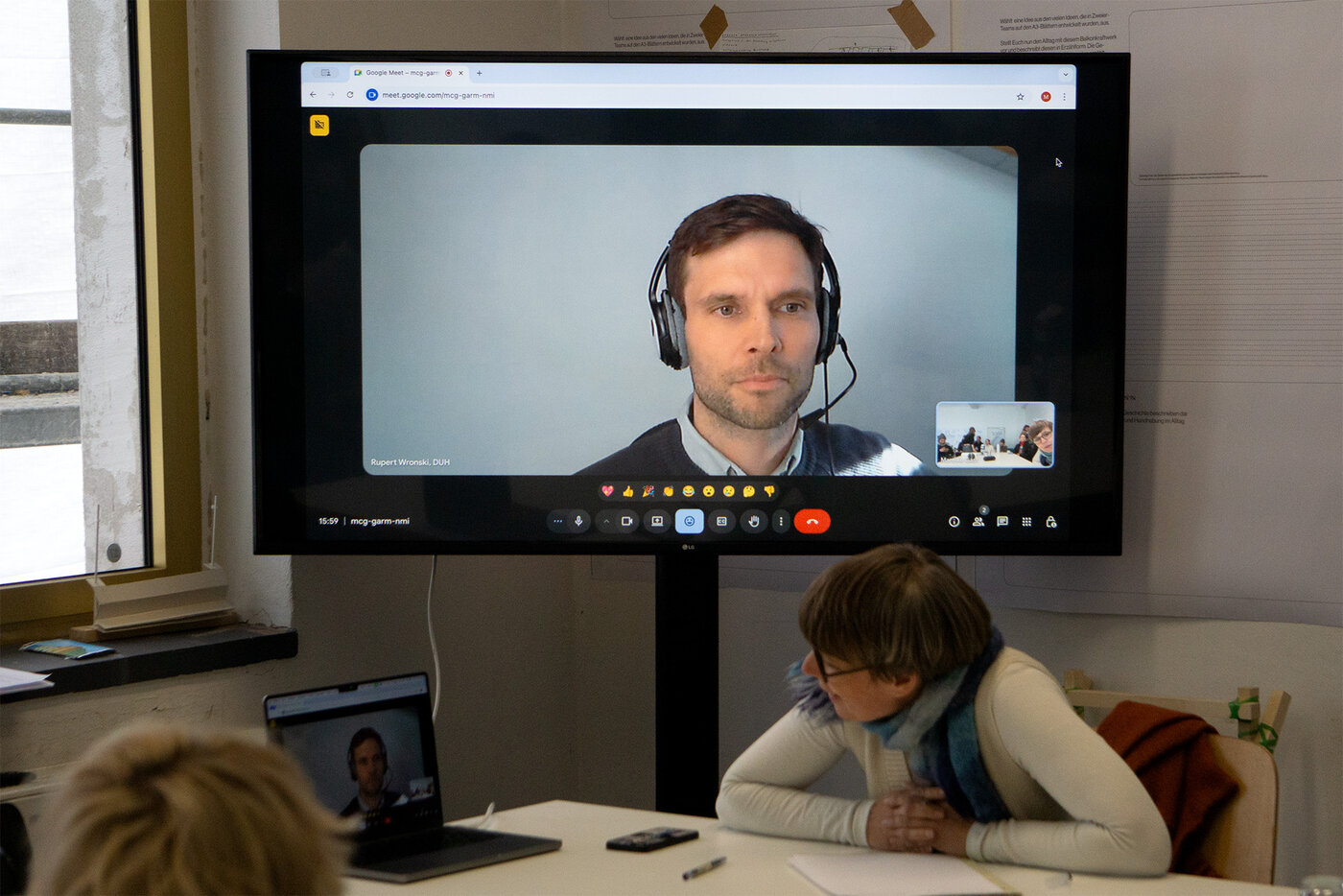
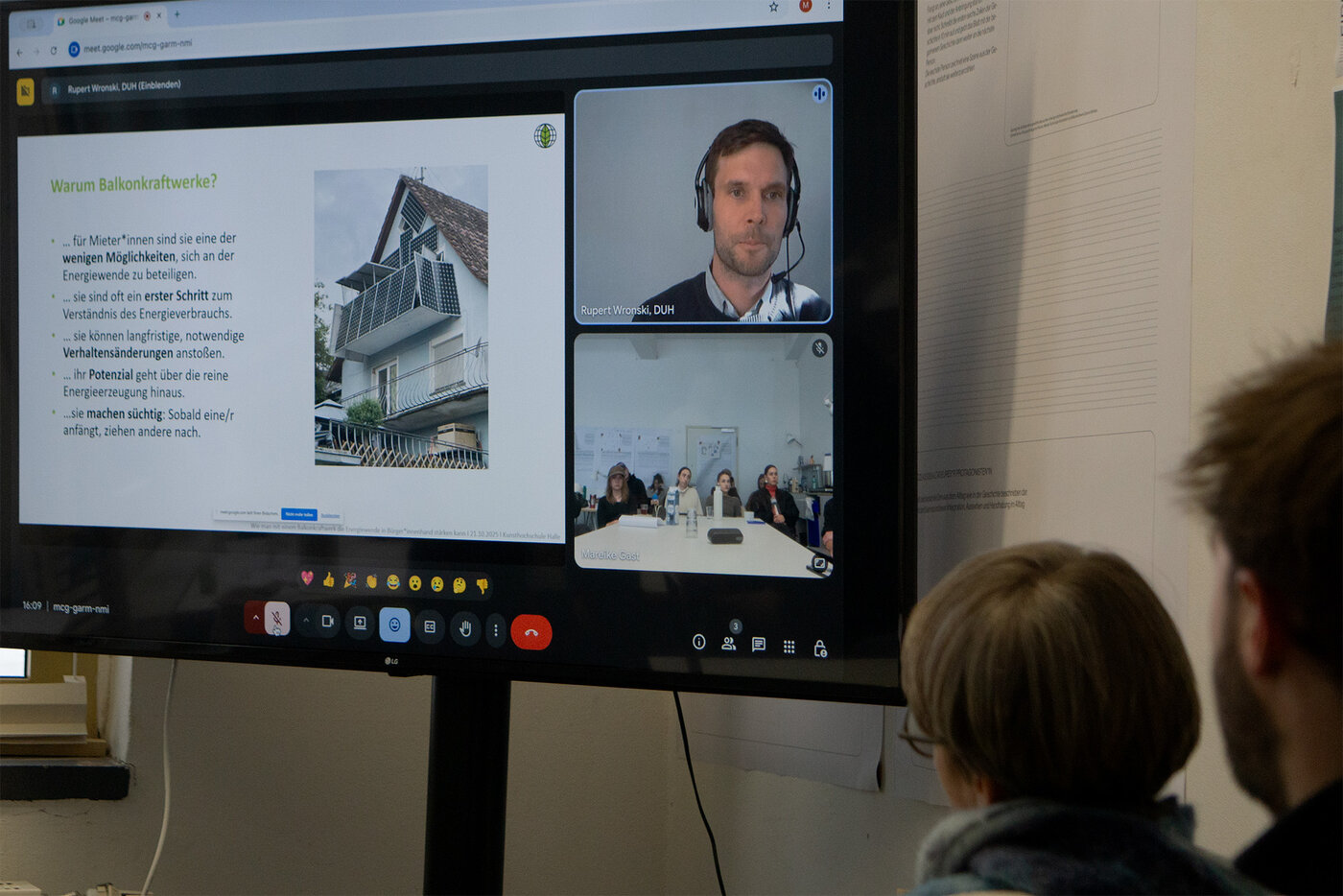
Rupert Wronski - German Environmental Aid
21.10.2026, Halle (Saale)

On Tuesday, we gained an insight into the practices of the German Environmental Aid (Deutsche Umwelthilfe). Climate protection as a fundamental right for all is their central guiding principle. They organize information events, workshops, and engage in political advocacy. In addition, they provide legal support in climate-related matters and fight for landmark court rulings that can significantly simplify subsequent legal proceedings and lawsuits. For example, the organization is currently working on cases in which tenants are prohibited from installing an 800-watt solar module on their balcony. Reasons for rejection may include structural stability, fire safety, installation issues, wind loads, aesthetics, or the “socket design.” However, in most cases, these reasons are merely used as a pretext to conceal deeper underlying issues. Thus, the organization operates at the interface between users, landlords, and the law. In doing so, it promotes the energy transition from a perspective that is often overlooked by the public. Nevertheless, certain obstacles can be identified for designers that may need to be overcome, since the weaknesses of solar power systems could be specifically improved. We also gained insight into the political and legal history surrounding the topic of balcony power plants. This made it clear how strongly sustainable solutions depend on political decisions.