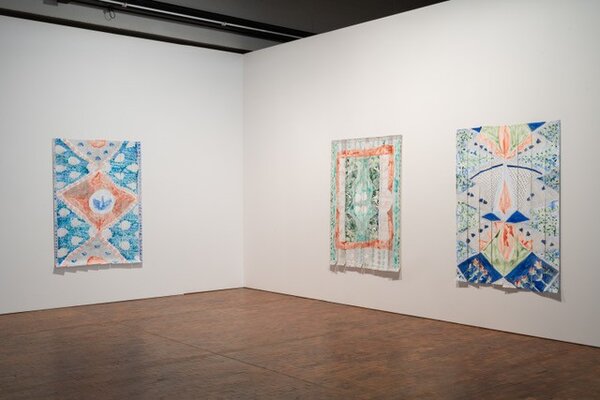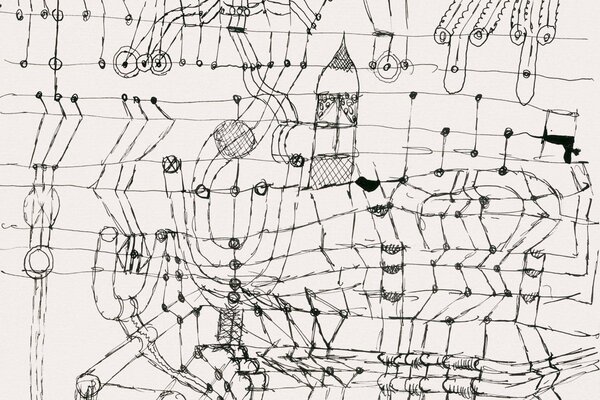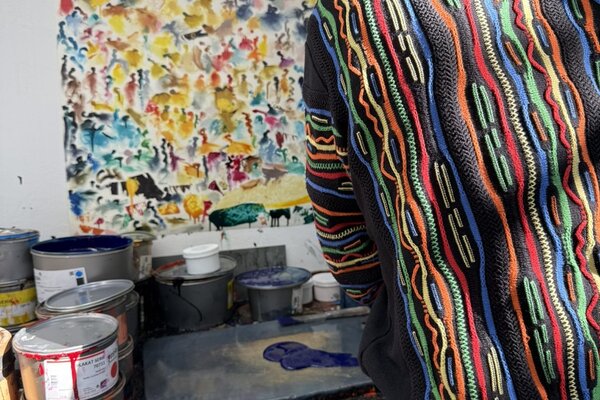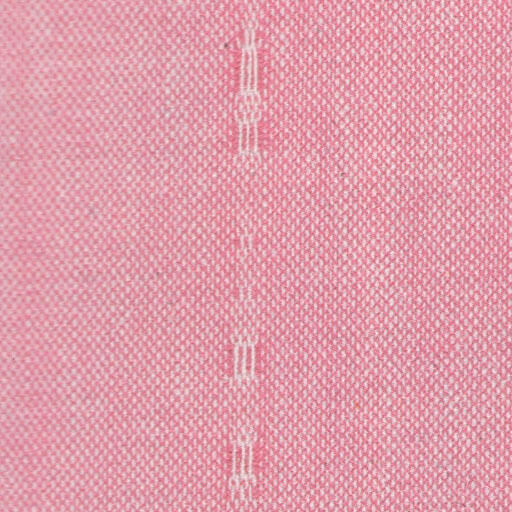
An error is a deviation from an expected state or outcome. It indicates that a specified requirement has not been met. To recognise a state or outcome as an error, the underlying expectation of what it should be must first be described or defined. What is observed can then be compared with this expectation and evaluated. Such an evaluation depends on norms, including social, linguistic or technical conventions. Depending on which norms are familiar or applied, one person may perceive a state as an error, while another may see no deviation from the expected standard.
Being judged a disruption or flaw is therefore not an inherent property of a material or image. This judgement is relational – it arises in relation to an expected order, function, surface, norm or legibility.
When, how and for whom does a deviation become a disruption? Why do we describe a state as flawed in the first place? What becomes visible when we set this judgement aside and examine, dissect and categorise its properties?
When we no longer regard something as a flaw, its properties remain. How can we identify these properties? What qualities do they offer for design? When does a state judged to be flawed become a design element in its own right?
—
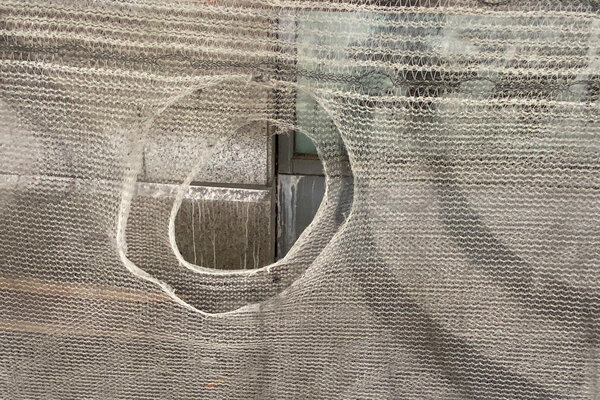
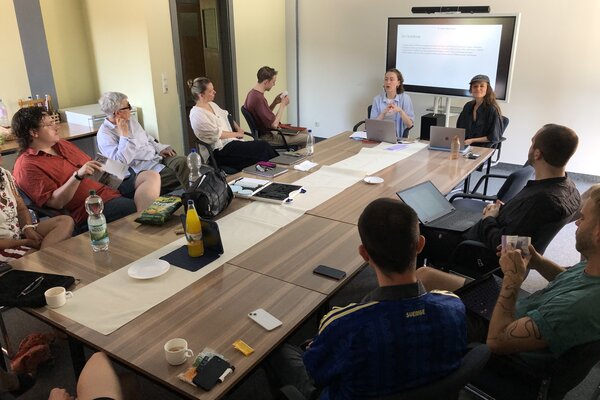
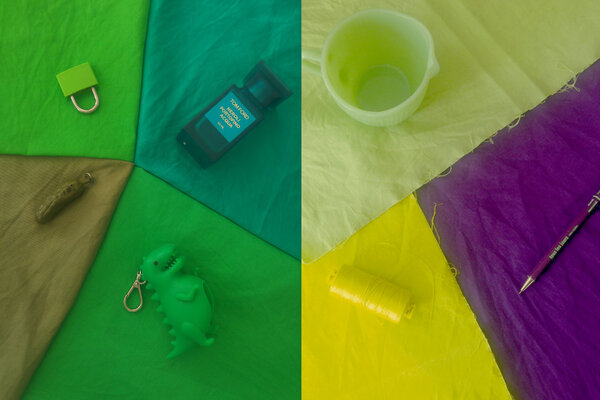
In the semester project “Finde den Fehler”, we embark on a field study to examine the properties of errors, visual disruptions, irritations and imperfections. We explore both the relationship between expectation and deviation and the characteristics of the phenomena we encounter, considering their potential for design. These findings are considered independently of their classification as flaws, and their properties are translated into textile materials. Through this process, students develop a design awareness of uniform surfaces, deliberately placed ornamentation and repeating patterns.
Students work within a monochromatic violet palette, varying lightness and saturation. They use textile surface techniques including dyeing, textile printing and embroidery, as well as fabric manipulation.
Process
Ongoing sourcing of suitable fabrics and materials to supplement existing workshop supplies
Dyeing
Printing: dye and pigment printing, as well as working with Acrodur, Schäumi, devoré paste and speciality pastes by Daniel Henry
Embroidery: hand embroidery, work with hand-guided machines and the industrial embroidery machine
Fabric manipulation
Keeping a study journal throughout the semester, including sketches, samples, recipes and other process documentation
End-of-Semester Submission
Approx. 30 textile samples, each measuring 40 × 40 cm
Documentation of the semester’s work
Project Objectives
Confident and safe use of the workshops and their equipment
Acquisition and development of technical knowledge
Understanding of textile design parameters such as solid colour, pattern, repeat and ornamentation
Acquisition of a design method that students can use as a tool in their own design processes whenever needed throughout the rest of their studies