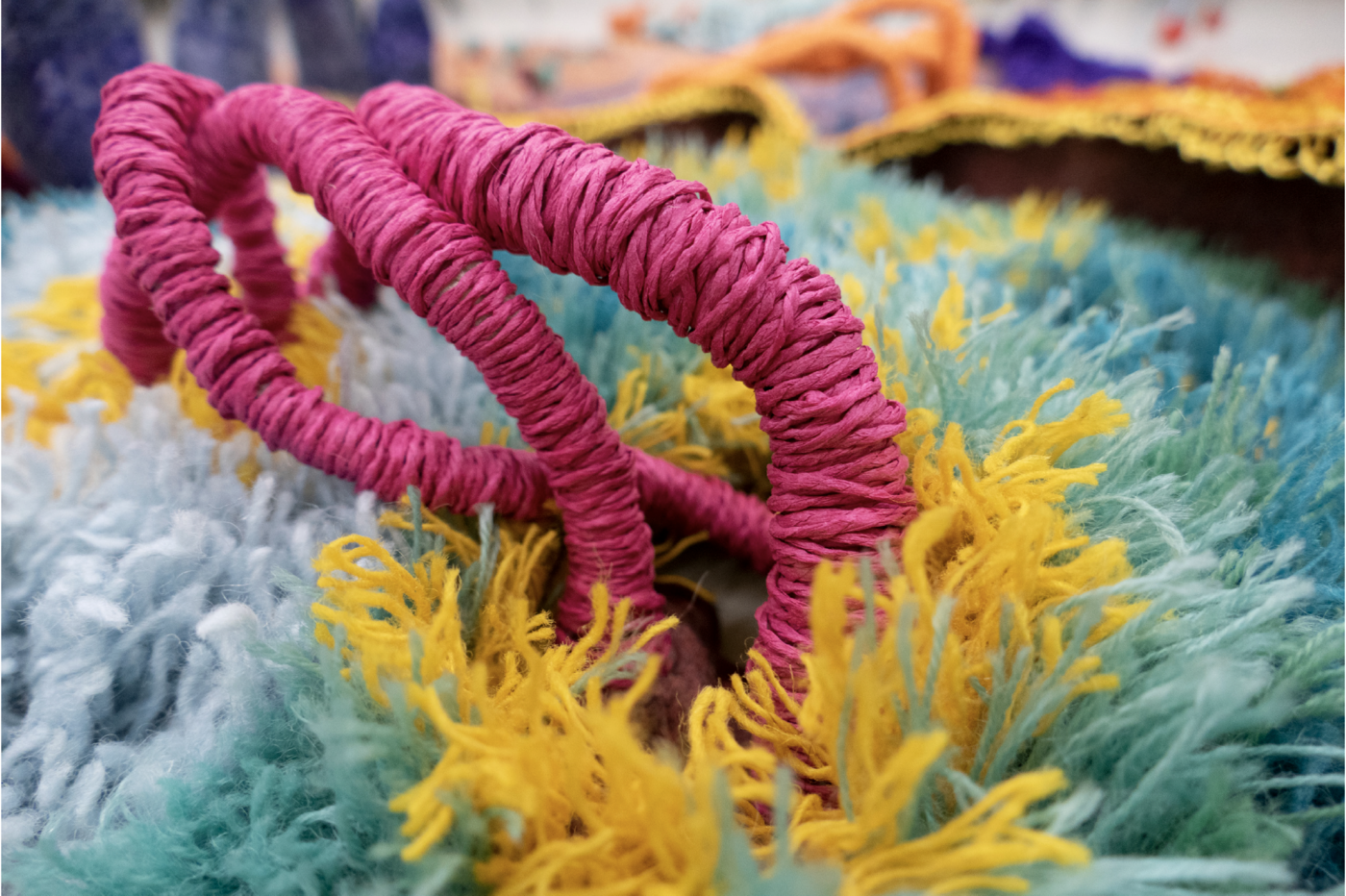
The carpet is one of the oldest cultural textile products and is associated with nomadic lifestyles, rituals and narrative ornamentation. In Western culture, it is usually used for decorative purposes or for insulation. In other cultures, however, this is not the case; for example, in Japan, Iran, Mongolian yurts or in Eastern Europe, where it is hung on the wall. We are focusing on the floor beneath our feet and seeking a more emotional connection.
To this end, we ask – both personally and culturally – what kind of flooring there was in our own homes, how others live, and what we can learn from them. The end result is our own idea for a carpet or something else to be placed on the floor.
In practical terms, there are two parallel approaches. The free design can be a carpet, an object or a scenario, and is realised in full scale, as a model or as a digital spatial simulation. The second approach is an industrially producible carpet, whether tufted, printed or woven, which may draw on the free design.
For this, Econyl from Aquafil – a recycled polyamide – is used in at least two high-contrast yarns. A 30 x 30 cm sample is produced for each technique (tufting, pile fabric, printing). Partners include Halbmond for printing and Spandauer Velour for woven pile; tufting is carried out in the workshop.
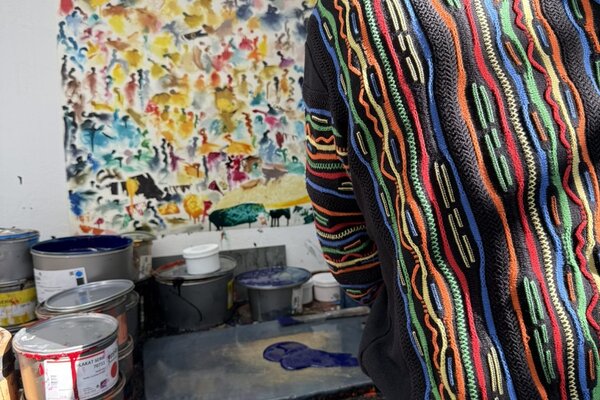
The project began with trialling the techniques, followed by company visits and a day spent with Birgit Krah from the Reuber Henning label in Berlin.