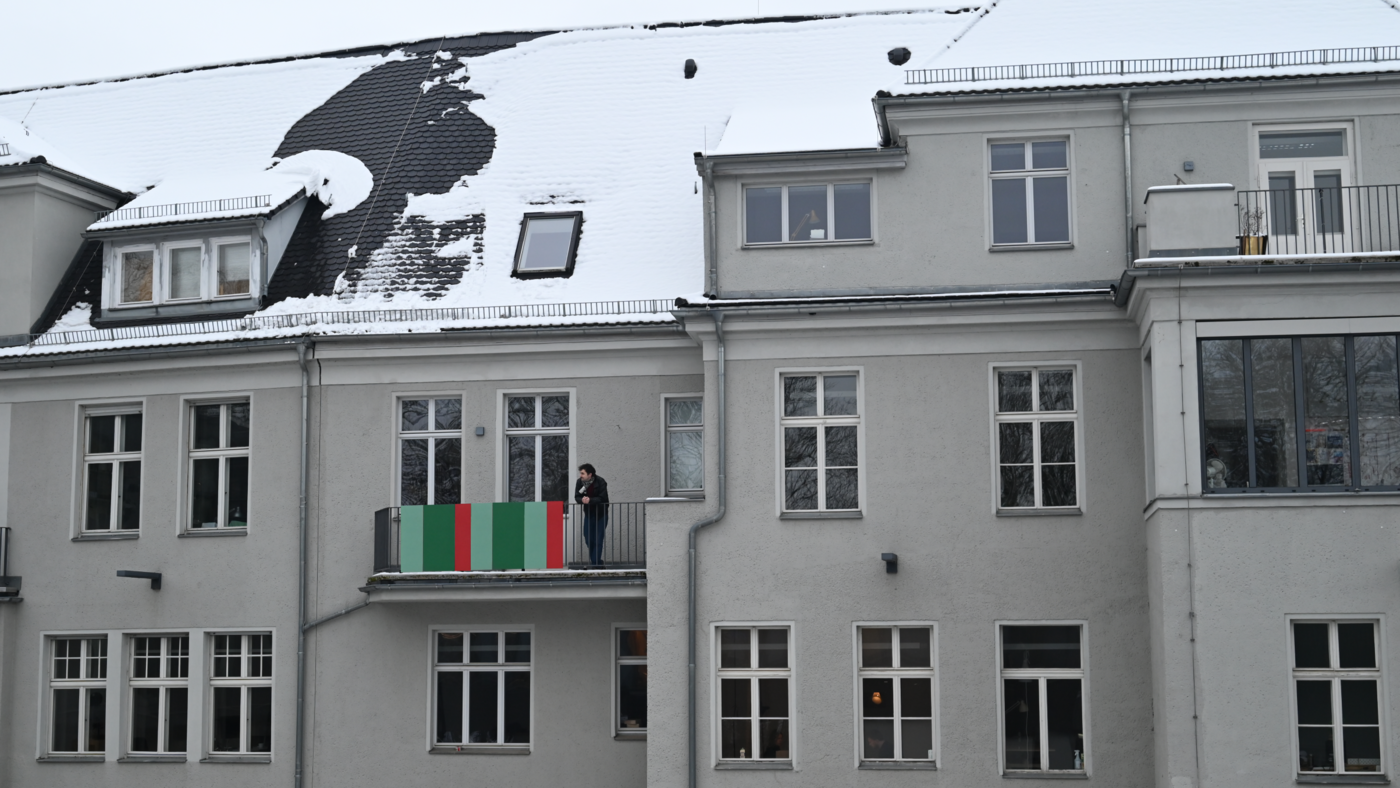
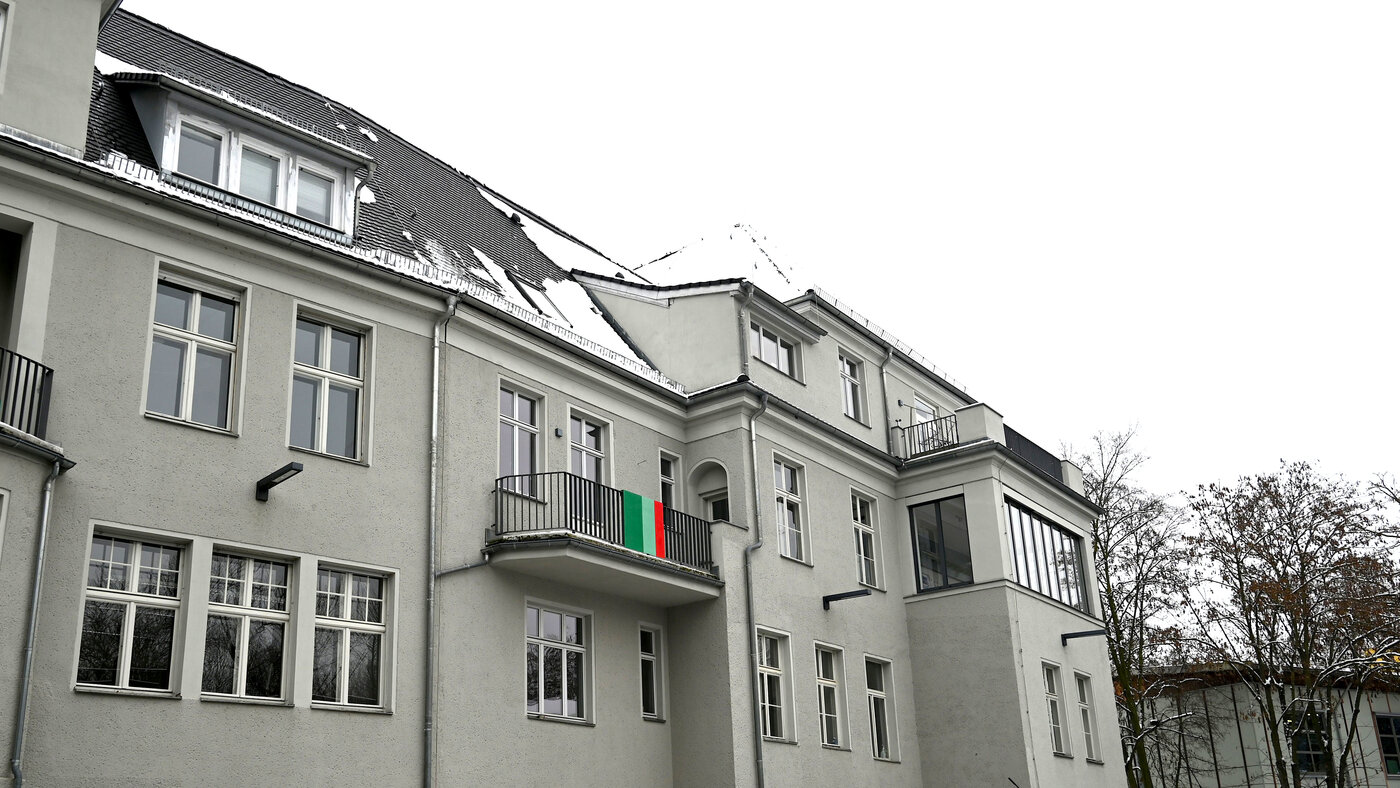
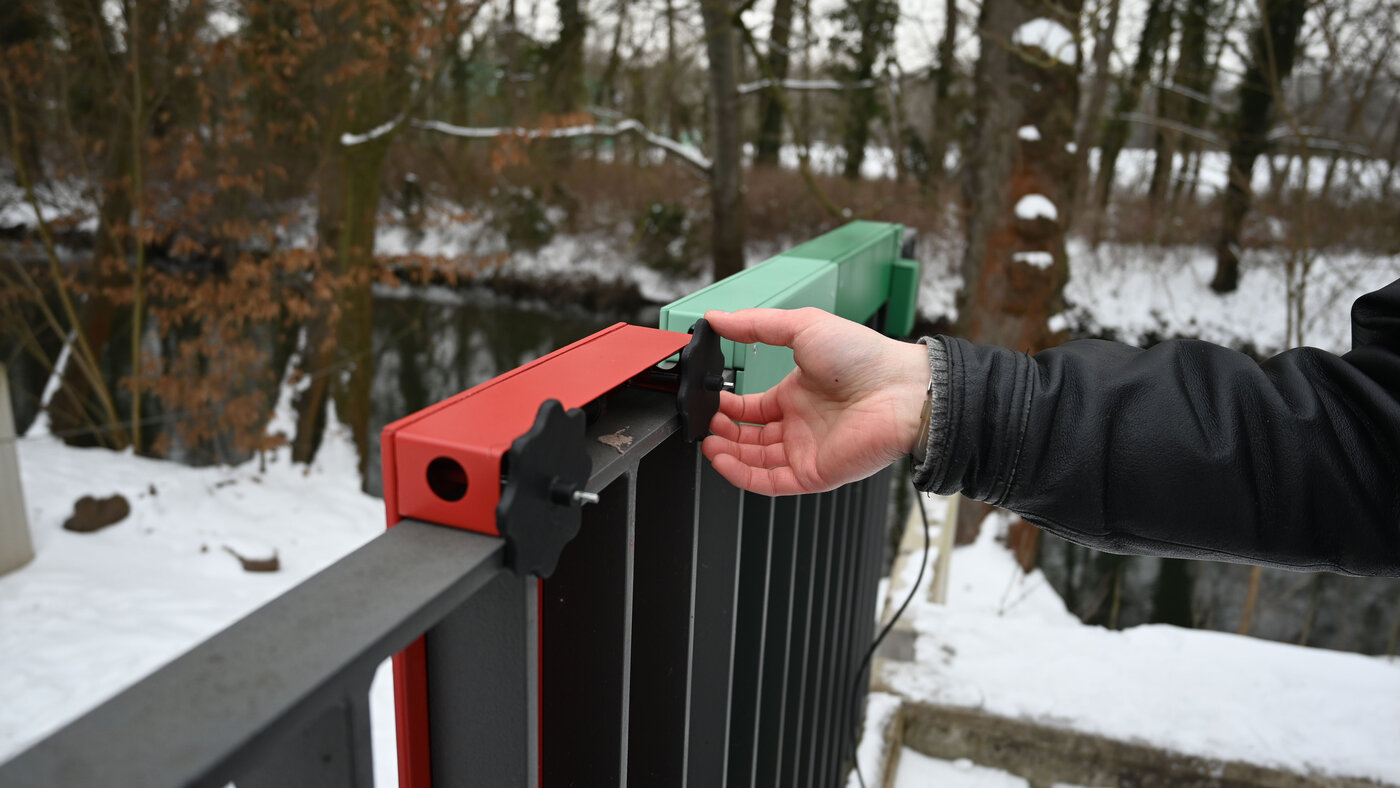
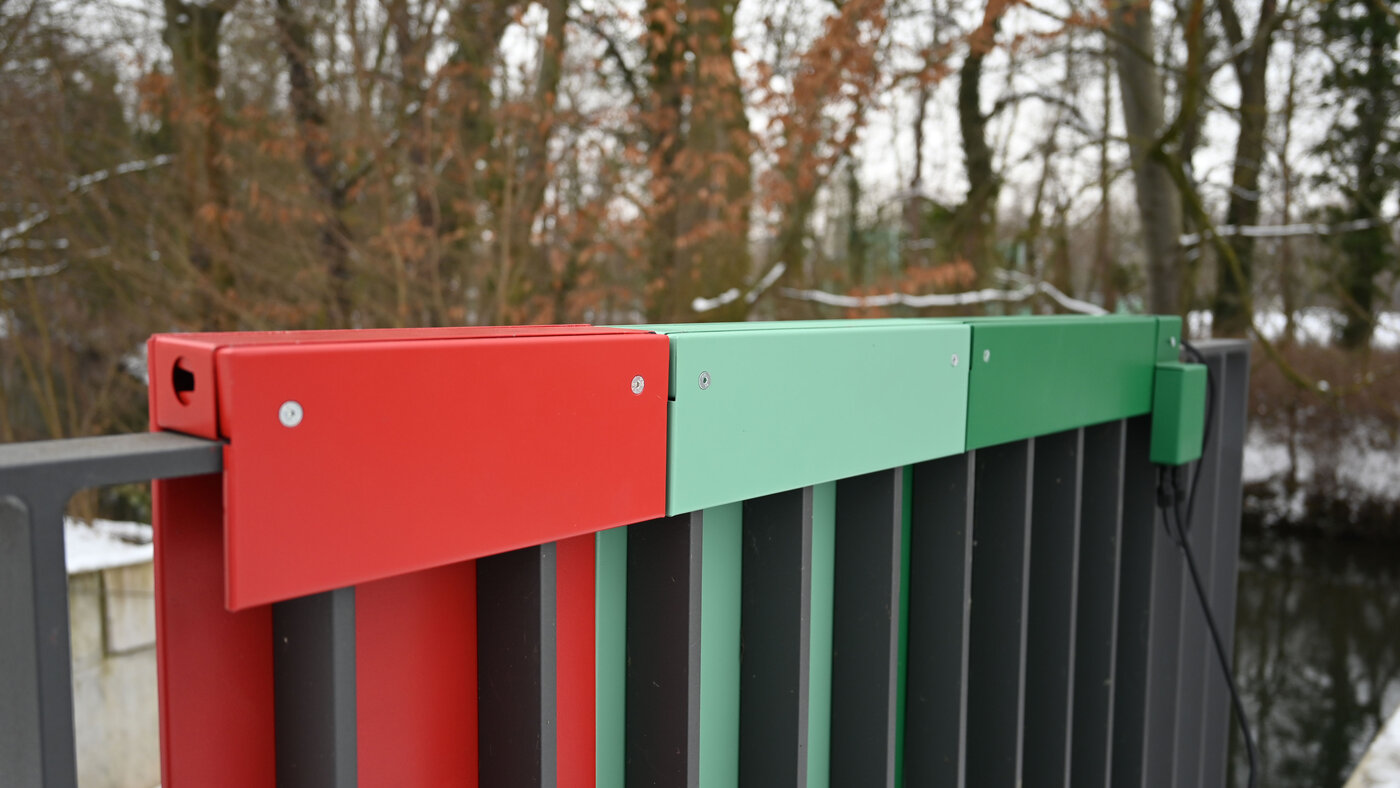
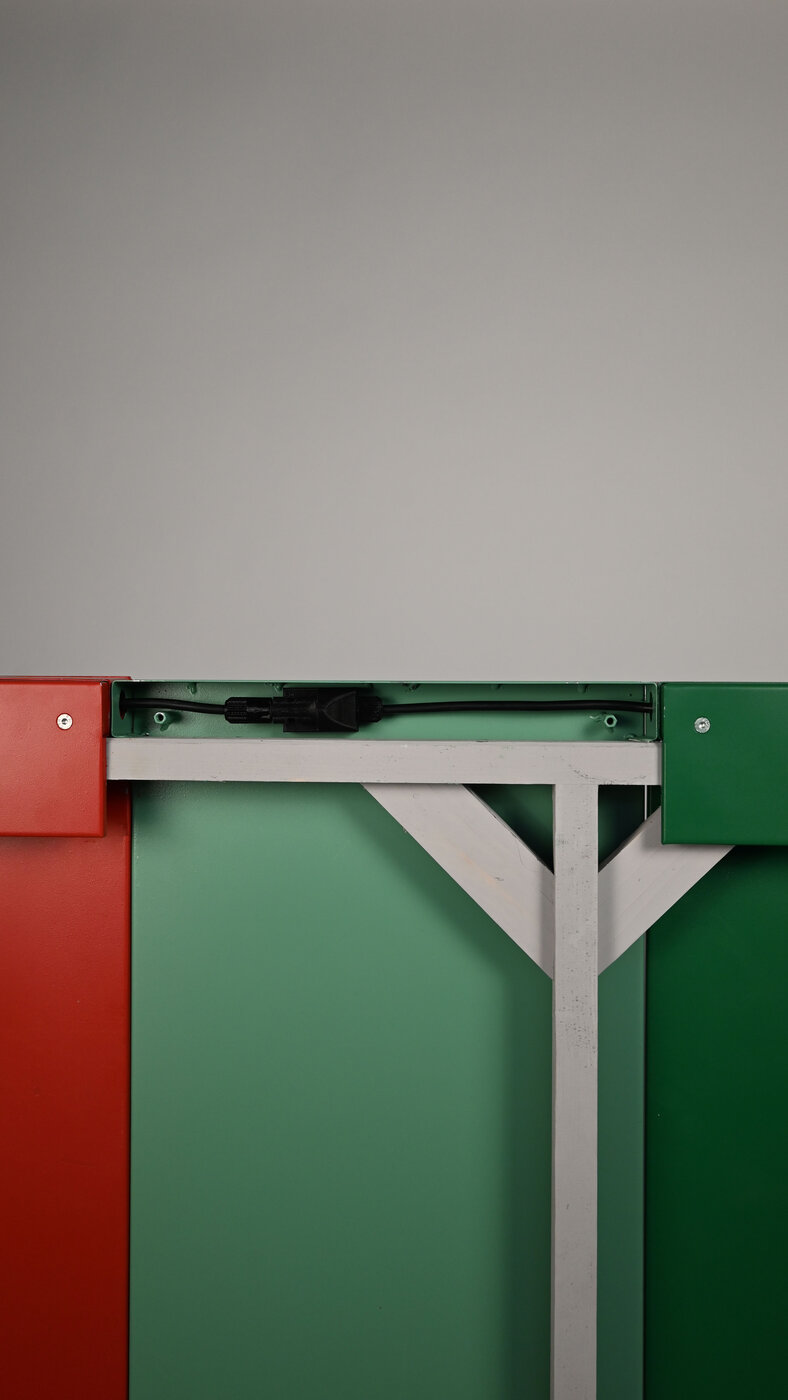
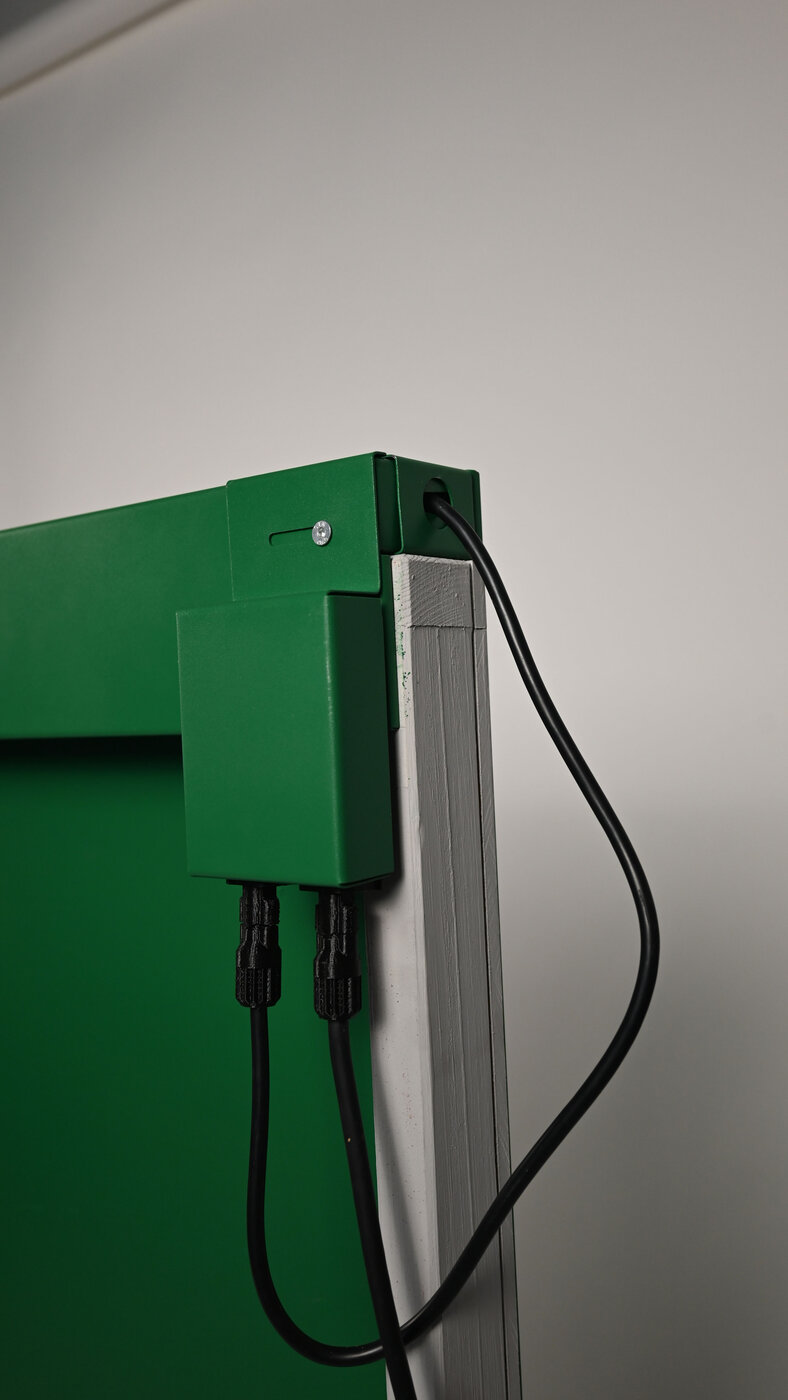
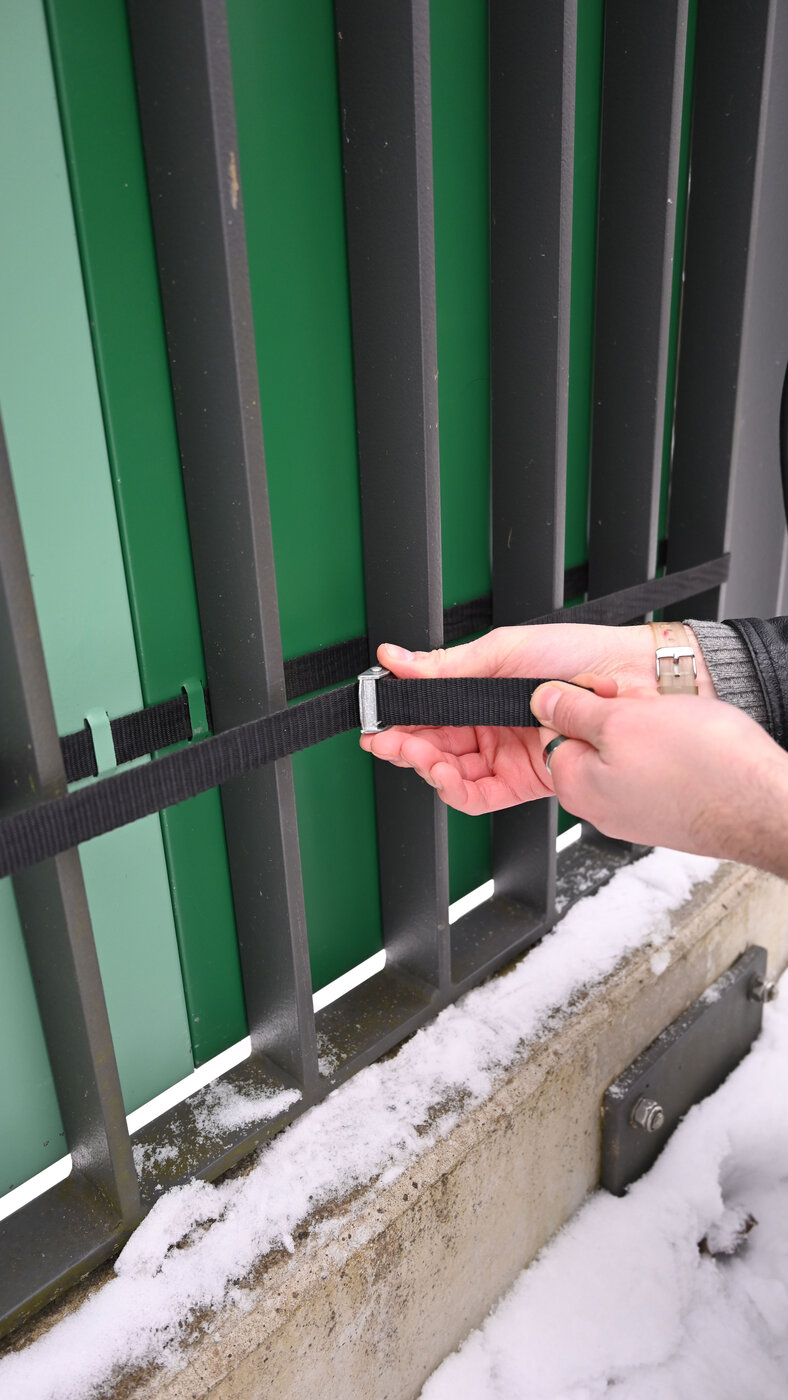
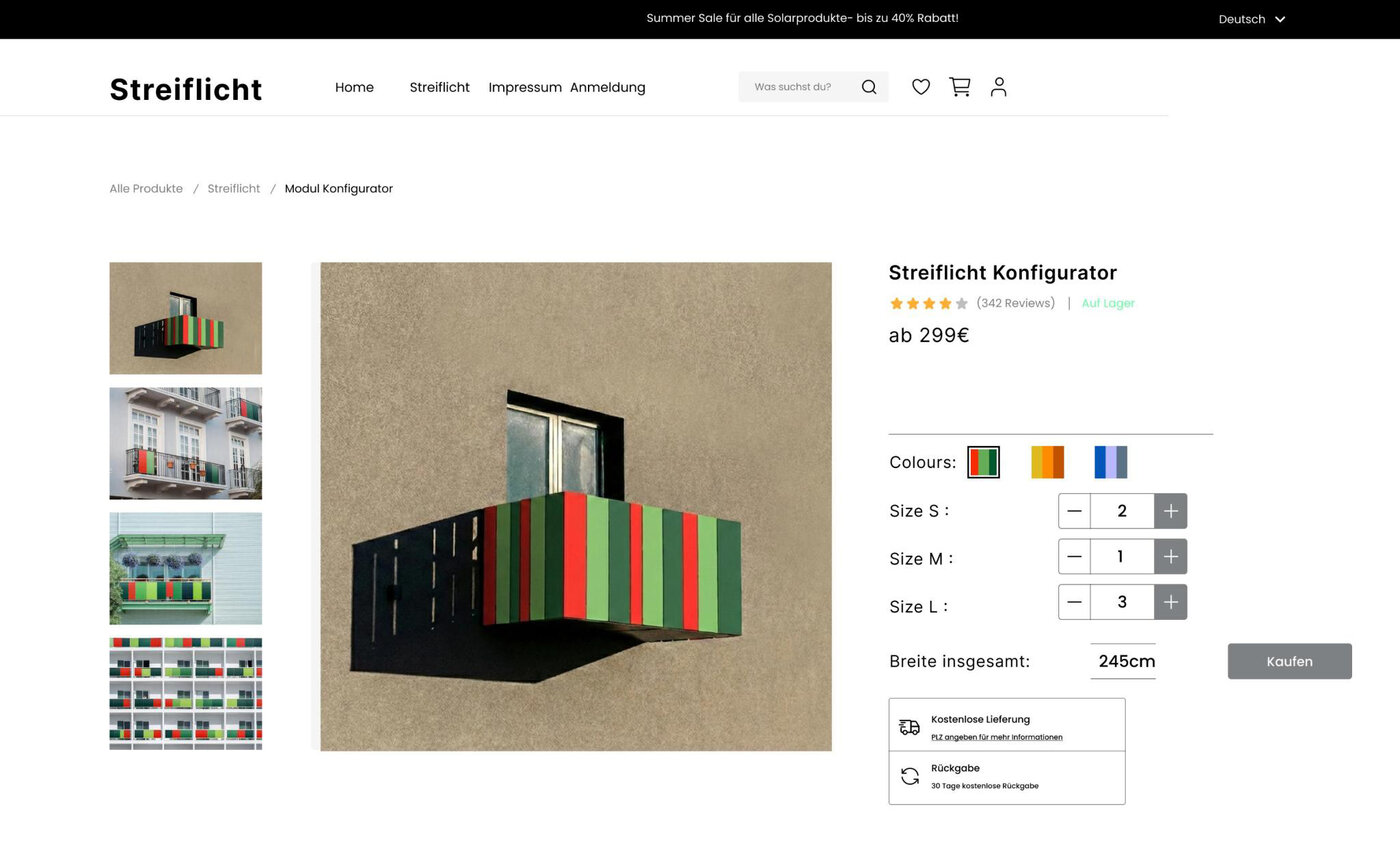
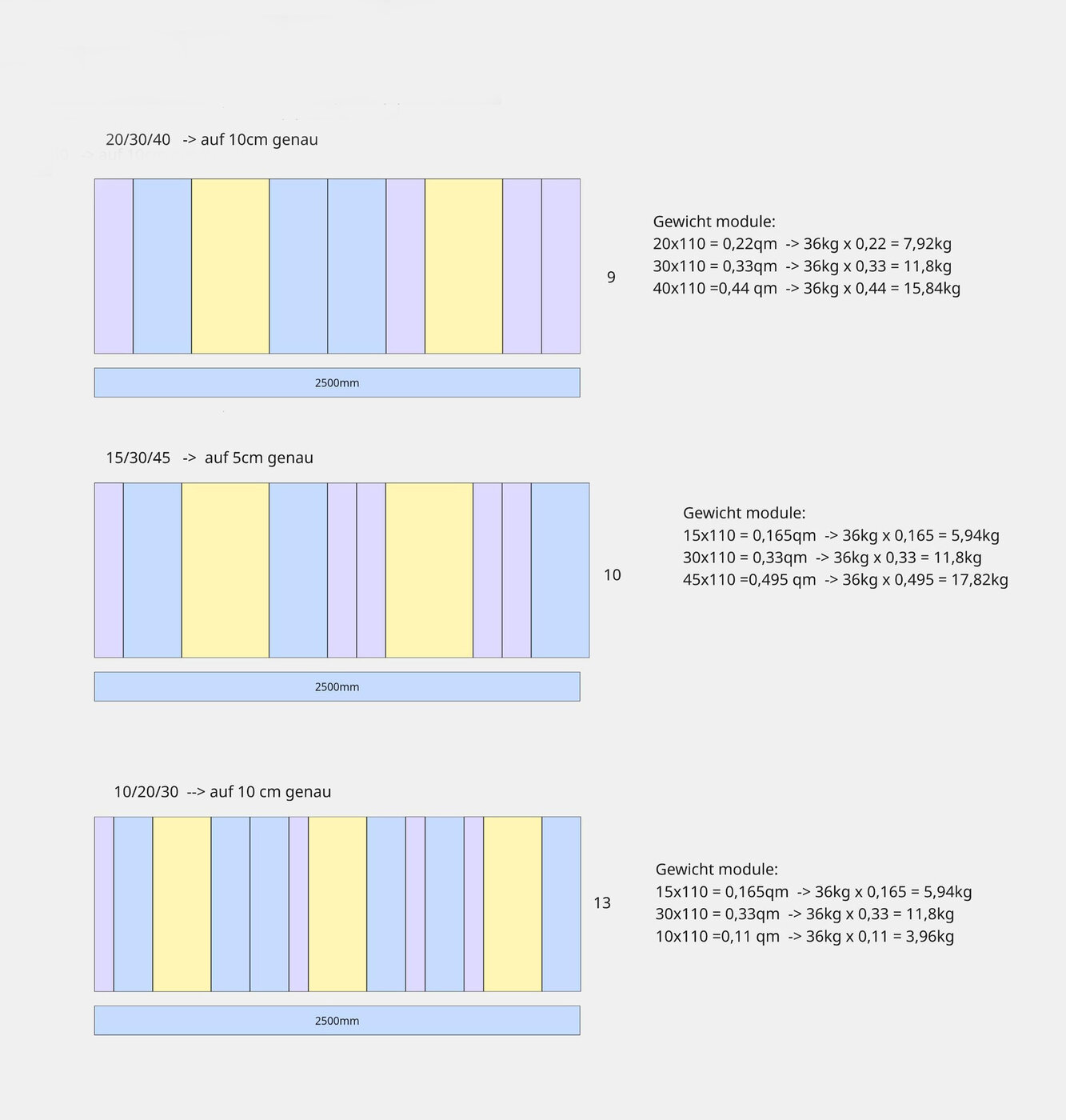
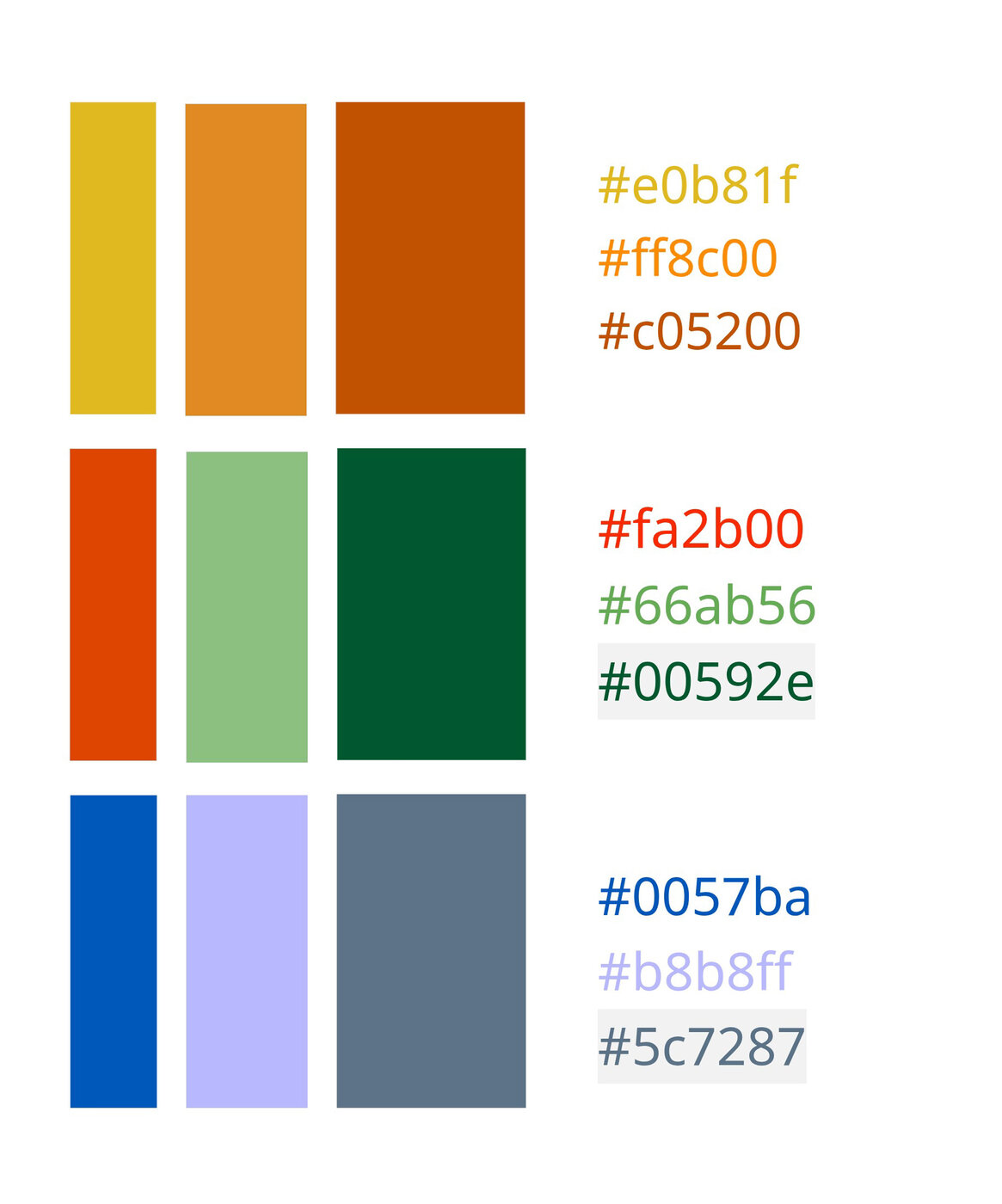
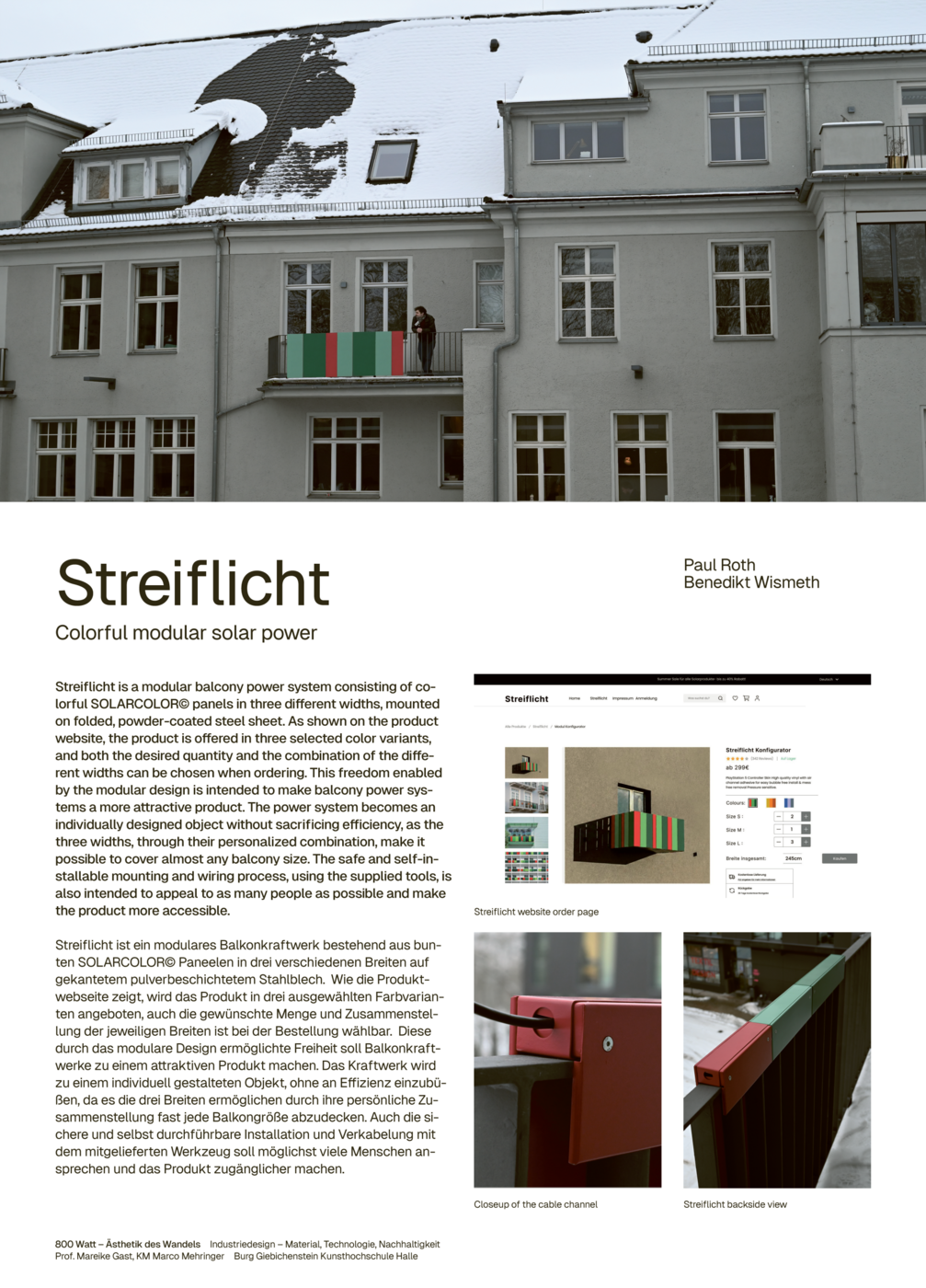
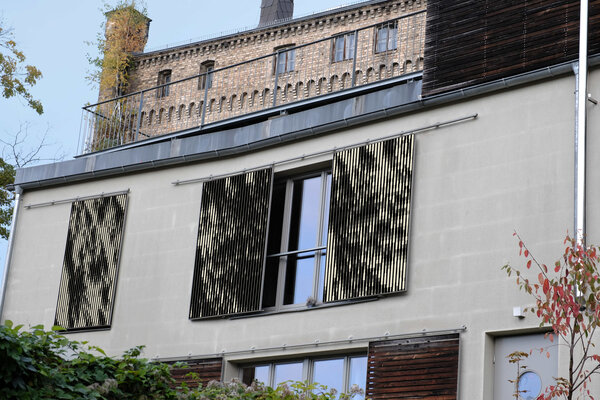
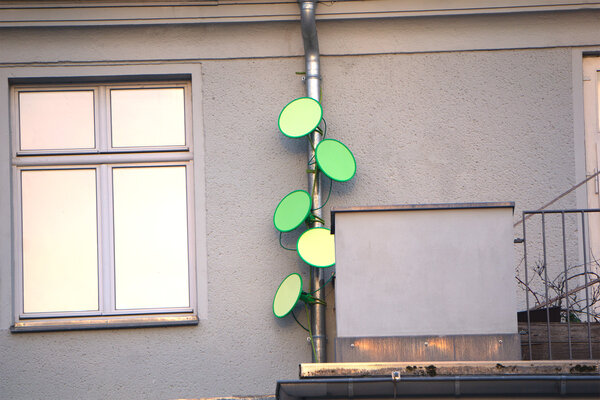
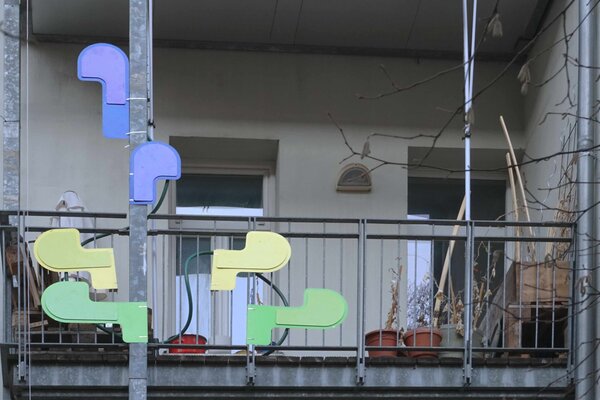
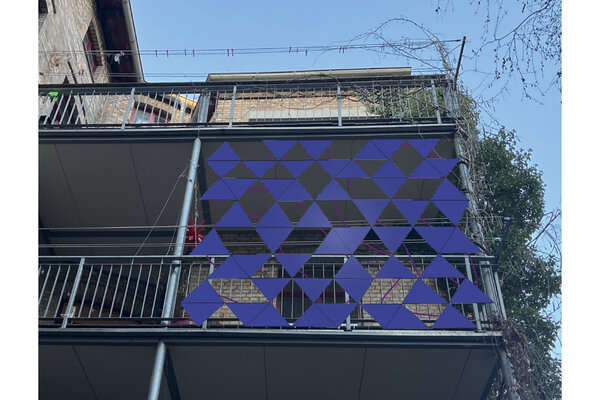
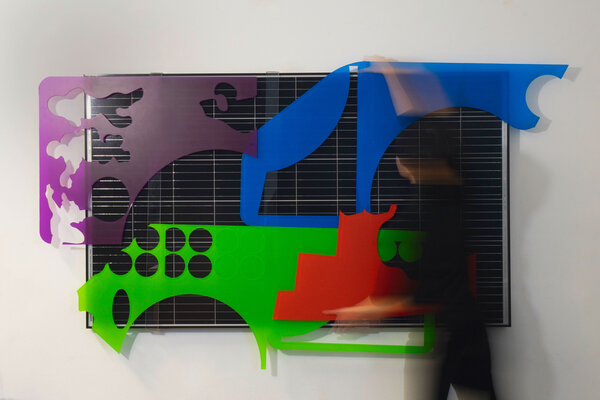
The base material is sheet steel, which has been powder-coated for outdoor use to protect against corrosion. The raw sheet metal was cut to shape using a laser and formed solely through various bending operations. By applying spot welds at the appropriate locations, the thin 1 mm sheet metal is transformed into a very rigid and robust frame. Due to its wide availability and the ability to industrially cut and bend sheet steel, the choice of this carrier material also helps keep the price of the final product as low as possible. Colorful Morphocolor solar modules, matched in color to the powder coating, are then bonded into the sheet metal frame. The modules are not coated with pigments; instead, the surface is treated so that only specific wavelengths of visible light are reflected. This results in only minimal efficiency losses compared to conventional modules, while still achieving strong, vivid colors. The three available widths—25, 35, and 50 cm—were selected for various reasons. The smallest size was determined by the dimensions of standard connectors used for balcony power systems. One of the core goals of the project was to use semi-finished components that already exist on the market, so that the product could, in principle, be implemented directly in an industrial production process. The largest strip width was limited by weight considerations: the modules needed to be installable by a single person and capable of being lifted over a balcony railing. The optimal weight—and thus the module dimensions—was determined through ergonomic tests using large, bulky weights designed to simulate the finished modules. The intermediate size of 35 cm was then selected based on aesthetic criteria. The sizes were also chosen so that different combinations of modules can effectively cover a wide range of balcony widths. This allows a larger surface area to be used for power generation while simultaneously creating a clean, uniform overall appearance on the balcony, with only minimal gaps at the edges. A configurator on the ordering website is planned to enable customers to create the ideal module combination. The colors are also intended to be configurable. In selecting the color scheme, we drew on the well-known, balanced color palette developed by Sanzo Wada.The idea was that a large portion of the target audience would prefer pre-defined color combinations over creating their own custom palettes. After extensive consideration and testing of various combinations, three palettes were selected, loosely inspired by forests, deserts, and the sea. As a compromise between a “predefined concept” and “individual color choice,” these nine colors are designed to be freely combinable with one another and to harmonize well when used together.